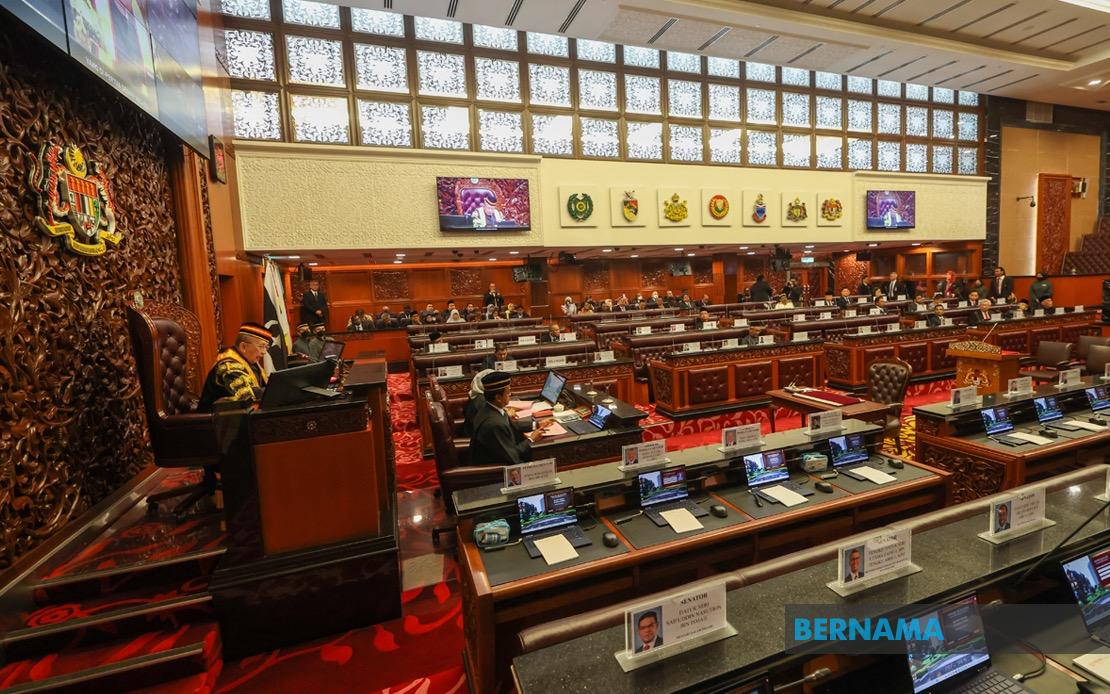
Malaysia's Dewan Negara has formally concluded the second meeting of the fifth session of the 15th Parliament with the successful passage of two significant pieces of legislation aimed at strengthening institutional accountability and statistical governance. The 10-day sitting, which ran from July 20 through early August, resulted in the passage of the National Trust Fund (KWAN) Bill 2026 and the Statistics Bill 2026, both central to the government's wider reform agenda addressing fiscal sustainability, investment attraction, and economic competitiveness across multiple sectors.
The National Trust Fund Bill, tabled by Deputy Finance Minister Liew Chin Tong, represents a significant step toward imposing greater transparency and stricter controls on fund withdrawals. This legislation underscores mounting concern within government circles about the need for clearer governance frameworks that protect accumulated public resources while ensuring their judicious deployment. The Statistics Bill 2026, brought forward by Deputy Economy Minister Datuk Mohd Shahar Abdullah, establishes a modernised legal architecture for collecting, managing, and disseminating national statistical data—a foundational requirement for evidence-based policymaking in an increasingly complex economic environment.
Throughout the sitting, government representatives repeatedly emphasised the importance of economic resilience in an uncertain geopolitical context. On the opening day, ministers assured parliament of proactive measures to protect public welfare and maintain sustainable growth amid escalating tensions in West Asia. These safeguards encompassed strategies to secure critical supply chains, prevent inflationary pressures, support domestic industries, and fortify overall economic stability—concerns that resonate deeply across Southeast Asia given regional supply chain interdependencies and commodity price volatility.
Prime Minister Datuk Seri Anwar Ibrahim used the occasion to provide context around the Retirement Fund (Incorporated) (KWAP), which recently recorded a net profit of RM12.9 billion. Acknowledging KWAP's investment challenges, particularly the eFishery venture, the Prime Minister framed these experiences as valuable lessons rather than failures, signalling government commitment to learning-oriented investment governance. This candid approach reflects growing recognition that high-quality institutional investments require sophisticated risk management rather than reflexive blame-shifting.
Postal services reform featured prominently in parliamentary discussions, with government undertakings to advance Pos Malaysia's transformation strategy through network optimisation, digital channel expansion, and improved cost controls. Beyond operational restructuring, discussions centred on establishing a dedicated Postal Service Fund as a long-term financing mechanism, suggesting government recognition that legacy mail services require structural innovation rather than temporary subsidies to remain viable.
Energy security emerged as a critical parliamentary theme. Officials briefed the House on assessments regarding a potential strategic petroleum reserve, with deliberations weighing fiscal constraints against operational necessity and international precedents. Significantly, the government highlighted a recently concluded 20-year fuel supply agreement with Russia covering petrol, diesel, crude oil, and gas as complementary to Malaysia's National Energy Transition Roadmap objectives. This positioning reflects the government's effort to balance diversification of energy sources with its stated commitment to green energy transition—a tension that Malaysia shares with other middle-income economies simultaneously managing development imperatives and climate commitments.
Foreign direct investment trends dominated several parliamentary exchanges. Japanese investments in Malaysia's electrical and electronics sector totalled RM10.5 billion across 46 projects between 2021 and 2025, generating approximately 9,009 jobs and buttressing high-technology manufacturing capabilities. These figures underscore Malaysia's enduring appeal as a destination for Asian manufacturing networks, though they also illustrate heavy reliance on geographically concentrated investment sources that merit diversification efforts.
Competitiveness rankings provided another focal point for discussion. Deputy Economy Minister Mohd Shahar reported that Malaysia remains positioned to join the world's 12 most competitive economies by the conclusion of the 13th Malaysia Plan, supported by improved standing in the 2026 World Competitiveness Ranking. This aspiration, while ambitious, reflects government determination to move beyond commodity-dependent growth toward innovation-driven competitive advantage—essential for upper-middle-income countries navigating the middle-income trap.
Financial sector governance reforms garnered parliamentary attention, with Bank Negara Malaysia preparing a new Performance Measurement Framework for Development Financial Institutions taking effect in July 2027. This framework promises more rigorous assessment of development impact alongside operational efficiency, addressing longstanding concerns about whether development financing institutions adequately balance commercial returns with developmental mandates—particularly relevant for Malaysian regional development and small-and-medium enterprise financing.
The electric vehicle ecosystem featured in fiscal discussions, with the Ministry of Investment, Trade and Industry confirming that private sector leadership would drive EV adoption without government-imposed price controls on public charging infrastructure. As of May 31, Malaysia had deployed 6,416 public EV chargers nationwide, reflecting nascent but accelerating transition toward vehicle electrification. This market-driven approach contrasts with more interventionist strategies adopted by some regional competitors, reflecting government confidence in competitive dynamics and price discovery.
Fiscal reform persisted as an overarching parliamentary theme. The Finance Ministry reported that the federal fiscal deficit had narrowed for the fifth consecutive year following comprehensive economic and fiscal reforms, with federal debt remaining comfortably within statutory limits. Expenditure controls implemented during the first half of the year achieved nearly RM5 billion in spending restrictions while preserving critical public service delivery, indicating improved public financial management efficiency.
Liew Chin Tong's contributions to parliamentary discourse revealed government commitment to disciplined fiscal management as foundational to investor confidence and long-term macroeconomic stability. These measures, implemented across multiple sectors and constituencies, suggest coherent reform architecture rather than ad-hoc austerity—an important distinction for assessing fiscal credibility and sustainability prospects in Southeast Asia's largest Muslim-majority economy.

