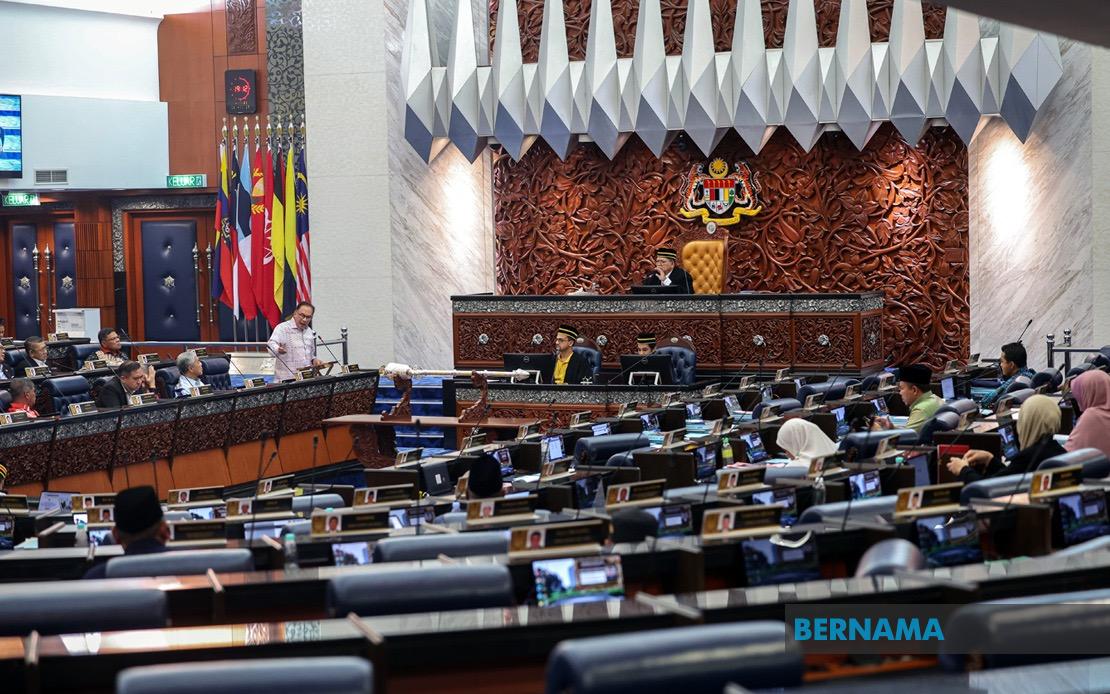
Parliament's lower house has given its backing to channelling RM14.5 billion in leftover Malaysian Government Investment Issues (MGII) proceeds into the Development Fund, marking another step in the government's approach to financing infrastructure and development projects. The Dewan Rakyat passed the motion by majority voice vote following deliberation between Datuk Seri Ismail Abd Muttalib from Maran and Datuk Zulkafperi Hanapi, with Deputy Finance Minister Liew Chin Tong presenting the technical resolution to lawmakers.
The Development Fund itself operates through a combination of revenue streams, including allocations from the Consolidated Revenue Account, the Consolidated Loan Account, loan repayments, and income generated from various development activities. The Consolidated Loan Account serves as a crucial conduit, funnelling proceeds from Malaysian Government Securities, MGII issues, Treasury Bills, and overseas borrowing into development expenditure channels. This multi-source funding approach reflects the complexity of Malaysia's fiscal architecture and the government's effort to balance spending across different economic priorities.
Liew provided crucial context regarding the scope of MGII issuance for 2026, disclosing that the government planned to issue approximately RM95 billion in total across the calendar year. Breaking down this substantial figure, the Deputy Finance Minister explained that RM55 billion would address the refinancing of MGII instruments nearing maturity, a routine but necessary obligation. An additional RM2 billion would be earmarked to partially retire Malaysian Islamic Treasury Bills, short-term shariah-compliant debt instruments previously issued by the government. The remainder, comprising RM38 billion, would be channelled toward managing the projected 2026 fiscal deficit and supporting development initiatives.
The mechanics of the current transfer underscores how government borrowing mathematics work in practice. Between January and May 2026, gross MGII issuance reached RM40 billion. However, subtracting the RM25.5 billion committed to refinancing maturing instruments yields net proceeds of RM14.5 billion available for transfer to the Development Trust Account. This distinction between gross and net figures is important for understanding true new borrowing versus debt restructuring, a nuance that often gets overlooked in public discourse around government debt levels.
Under Malaysia's existing constitutional and legal framework, the government faces strict constraints on how it may deploy borrowed funds. Development expenditure, encompassing infrastructure projects, capital investments, and long-term economic enhancements, may be financed through borrowing mechanisms. Operating expenditure, by contrast—covering salaries, administrative costs, and day-to-day government functions—must be sourced entirely from tax revenue and other regular government income streams. This structural separation is designed to prevent borrowing from fuelling recurrent spending and creating unsustainable debt dynamics, though the distinction sometimes blurs in practical implementation.
Liew signalled that further MGII transfers are anticipated, noting that parliament will likely approve an additional motion during the next parliamentary session to handle MGII issuances spanning June through December 2026. This staged approach to parliamentary approval suggests the government prefers regular, transparent oversight of its borrowing and resource allocation decisions rather than seeking blanket authorisation for the entire year upfront. Such periodic presentation to parliament allows lawmakers to maintain scrutiny while reducing administrative friction in executing fiscal policy.
During the parliamentary discussion, concerns emerged regarding potential market distortions stemming from sustained government borrowing. Zulkafperi raised the spectre of a "crowding out" effect, whereby substantial government securities issuance might discourage or displace private sector borrowing in domestic credit markets. This phenomenon becomes particularly relevant when major institutional investors such as the Employees Provident Fund and the Retirement Fund Incorporated purchase government debt securities in large quantities, potentially limiting capital availability for private enterprises seeking to finance expansion or operational needs.
Liew's response to these concerns carried important reassurances. He pointed out that the government has deliberately reduced new borrowing volumes on a year-by-year basis over several preceding years, suggesting a commitment to fiscal consolidation even as short-term deficits necessitate some continued issuance. More substantively, the Deputy Finance Minister reframed government securities issuance as a positive development for institutional investors, arguing that these instruments provide stable, secure investment avenues enabling Malaysia's largest pension and retirement funds to generate competitive returns while maintaining capital within the domestic economy. Without such domestic investment alternatives, he suggested, these institutions might seek overseas opportunities, potentially weakening demand for Malaysian assets and exerting downward pressure on the ringgit.
This argument reflects a broader economic reality facing middle-income Southeast Asian nations. Malaysia's large institutional investors, particularly the EPF with its massive asset base, require substantial volumes of liquid, low-risk securities to match their liabilities and satisfy regulatory requirements. By issuing government debt domestically rather than relying solely on external borrowing, the government effectively recycles savings within the financial system, supporting ringgit stability and financial system depth. The trade-off between this benefit and concerns about resource allocation efficiency remains an ongoing policy consideration.
The approval of this motion occurs against the backdrop of Malaysia's broader fiscal challenges. Economic growth, while resilient by regional standards, has not consistently generated sufficient revenue expansion to fund the government's development ambitions without recourse to borrowing. The persistence of deficits, even as the government works to reduce them, reflects both persistent structural demands on the budget—including wages, subsidies, and debt servicing—and deliberate policy choices to invest in infrastructure and social programmes. The MGII programme, by allowing shariah-compliant borrowing at scale, has become central to managing these pressures.
For Malaysian investors and financial institutions, parliamentary approval of these transfers carries practical implications. The guaranteed demand for MGII securities underpins yield expectations and risk assessment across the broader bond market. Financial planners and fund managers incorporate government borrowing patterns into their forecasts of interest rates and credit availability. The transparency with which these decisions are brought to parliament, while sometimes generating political debate, provides the market clarity needed to function efficiently.

