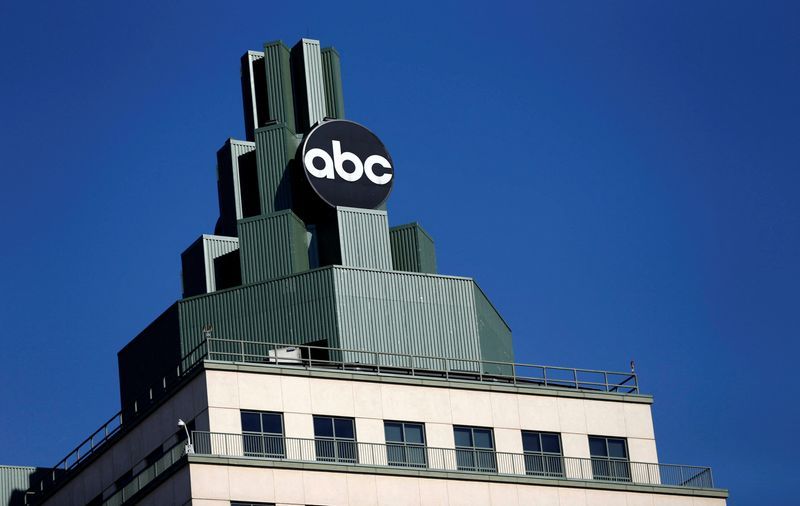
Disney and its ABC broadcast network have launched a legal challenge against the Federal Communications Commission, seeking to block an expedited review of broadcast licenses for eight stations. The lawsuit, filed in U.S. District Court in Washington on Tuesday, frames the FCC's actions as unconstitutional retaliation against a news and entertainment organisation that has resisted pressure from the Trump administration over its editorial and programming choices. The case represents a significant confrontation between government regulatory authority and media independence, with fundamental questions about free speech protections hanging in the balance.
The dispute stems from a broader pattern of presidential pressure on American broadcasters. President Donald Trump has repeatedly called for the removal of comedy and news programs he views as hostile to his administration, and has explicitly demanded on multiple occasions that the FCC revoke ABC's broadcasting licenses. This escalating conflict reflects an intensifying tension between executive branch demands for media compliance and the constitutional protections that news organisations claim over their editorial decisions. The latest chapter in this two-year battle erupted after ABC refused to broadcast a prime-time presidential speech focused on election issues, prompting renewed calls from Trump for license revocation.
Disney's legal filing argues that the FCC is weaponising its regulatory authority to silence a network that refuses to capitulate to administration demands. The company characterises the agency's conduct as an "extraordinary assault on free speech" and contends that the licensing review process has been corrupted by political motivation rather than driven by legitimate public interest concerns. The lawsuit emphasises that the public comment period for the license renewal process concluded earlier this month, creating urgency for the court to intervene before the FCC can schedule formal hearings that could jeopardise ABC's ability to continue broadcast operations.
FCC Chair Brendan Carr initiated the accelerated reviews in April, despite the fact that the affected stations' license renewals were not scheduled for consideration until October 2028. This decision marked the first time in more than fifty years that the FCC has ordered early reviews of broadcast licenses, underscoring the unprecedented nature of the current regulatory action. Carr has defended the move by citing a year-long investigation into whether Disney's diversity policies constitute unlawful discrimination—a claim that Disney vehemently denies. The FCC chair has framed the agency's broader approach as an effort to enforce long-neglected public interest obligations for broadcasters using the public airwaves, an obligation that Carr argues the commission has failed to properly exercise for decades.
For Malaysian and regional readers, this dispute carries significance beyond American media politics. The case tests whether governments can use licensing mechanisms to pressure broadcasters into editorial compliance, a question with direct implications for media independence across Southeast Asia. Many countries in the region struggle with similar tensions between regulatory authority and editorial freedom, making the outcome of this American legal battle potentially instructive for understanding how courts weigh government power against journalistic rights. The precedent established could influence how regulators in other democracies approach their authority over broadcasters.
U.S. District Judge Loren AliKhan moved quickly to address the emergency nature of Disney's request, issuing an order on Tuesday that requires both Disney and the FCC to propose a schedule for the court to consider whether to issue a temporary restraining order. The judge also directed the FCC to notify her immediately if the agency proceeds with the formal process of revoking ABC's licenses. This judicial intervention suggests the court recognises the gravity of the potential harm to Disney if the licensing process advances without court review, though it does not prejudge the substantive constitutional questions at the heart of the dispute.
Democratic FCC Commissioner Anna Gomez sharply criticised the agency's approach, characterising it as a months-long "campaign of censorship and control" targeting Disney through the threat of license revocation. Gomez's statement highlights the politicised nature of the FCC itself, with commissioners divided along partisan lines over the appropriateness of the accelerated review. This internal disagreement within the regulatory body underscores how the licensing question has become entangled with broader political divisions. The partisan split within the FCC may complicate the agency's ability to justify its actions as neutral regulatory enforcement rather than politically motivated punishment.
The specific triggers for regulatory action reveal the pattern of retaliation that Disney alleges. In November, Trump called for license revocation after criticising an ABC News correspondent's question to Saudi Arabia's crown prince regarding the 2018 murder of a Washington Post columnist. More recently, the FCC began investigating ABC's daytime talk programme "The View" over alleged violations of equal opportunity rules for political candidates. Disney noted that since February, the programme has ceased inviting political candidates to appear, citing the FCC's implicit pressure. These examples illustrate how regulatory threats can effectively chill editorial independence even before formal enforcement action occurs.
The controversy intensified after Trump urged ABC to dismiss late-night host Jimmy Kimmel, demonstrating the administration's willingness to identify specific programming elements for removal. Kimmel's programme, which has featured political commentary and occasional criticism of the administration, exemplifies the type of content that has drawn presidential ire. The targeting of entertainment programming alongside news operations suggests the dispute extends beyond traditional journalistic concerns to encompass the full range of broadcast content that might be perceived as ideologically unfriendly.
Broadcast licensing represents a unique vulnerability for television networks compared to cable or streaming services. Because terrestrial broadcasters must use the public airwaves, they require FCC approval to operate—a dependency that gives regulators significant leverage. While license revocations have historically been extraordinarily rare, critics warn that the mere threat of losing a license can effectively pressure broadcasters into editorial self-censorship. Networks possess substantial First Amendment protections over programming choices, a principle that Disney's lawsuit places directly at odds with the FCC's assertion of regulatory oversight authority. The tension between these competing claims will likely determine the outcome of the case.
FCC Chair Carr has maintained that the agency has not yet decided whether to proceed with formal revocation proceedings, describing the current stage as an investigative phase aimed at understanding the full factual record. His statement that "we haven't made a decision about when we're making a decision" reflects the ambiguity surrounding the agency's ultimate intentions. This measured language contrasts sharply with the president's public demands, creating uncertainty about whether Carr is genuinely independent in his regulatory judgments or whether the investigation will inevitably lead toward the enforcement outcome the administration has already publicly declared. The court's assessment of this question will likely prove decisive in the case.
The broader context of media-government relations in the United States has deteriorated significantly, with Trump's attacks on "fake news" serving as a constant backdrop to regulatory actions. The FCC's historical function as a neutral arbiter of the public interest has been complicated by partisan polarisation, making it difficult to distinguish between legitimate regulatory oversight and political retaliation. For stakeholders in Malaysia and throughout Southeast Asia, the case demonstrates how regulatory systems designed to protect the public interest can be repurposed as tools of political control if institutional guardrails weaken. The outcome will likely influence debates about media regulation in democratic societies worldwide.

