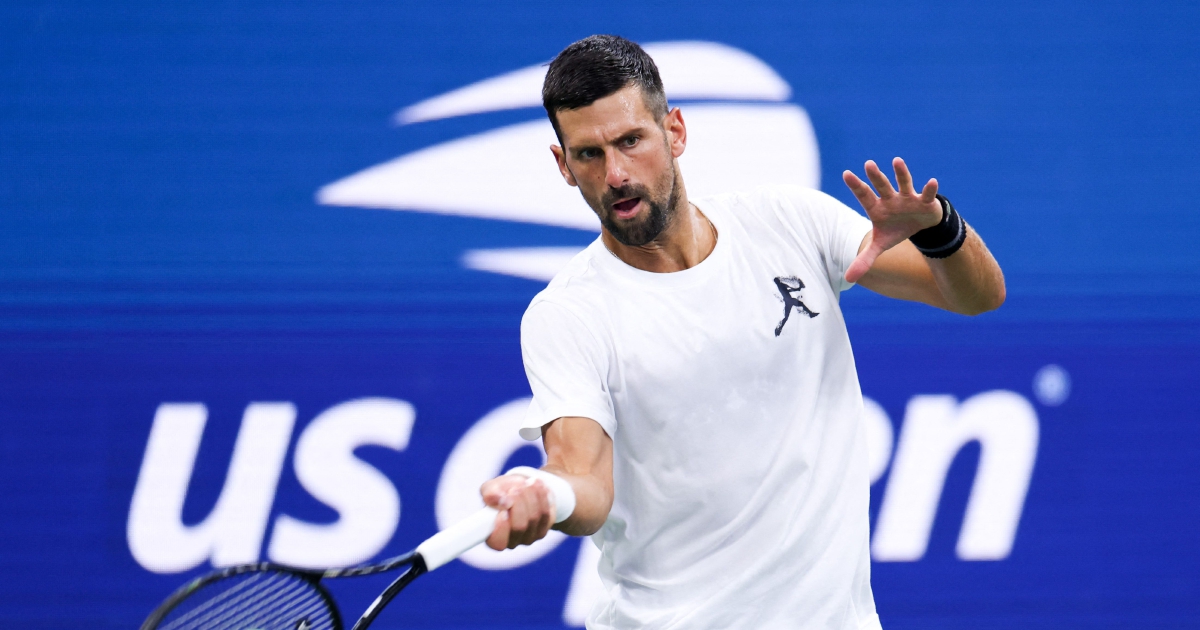
Novak Djokovic arrives at the US Open with singular focus: securing the 25th Grand Slam title that would elevate him beyond Margaret Court's historic tally and cement his status as the greatest tennis player of all time. Since capturing the 2023 US Open crown to draw level with the Australian legend's 24 major championships, the Serbian dominant force has pursued this elusive milestone with unwavering determination, approaching each tournament as a stepping stone toward immortality on the sport's grandest stage.
The significance of this quest transcends mere statistical achievement. Court's record has stood as the gold standard in professional tennis for decades, representing an almost mythical benchmark that many believed would never be surpassed. Djokovic's relentless pursuit reflects not just his physical prowess but his mental fortitude, a quality that has defined his career as he has overcome injuries, personal challenges, and fierce competition from generational rivals. At his current stage of career, where most athletes contemplate retirement, the 37-year-old competes with the hunger of a challenger rather than a defending champion.
The US Open represents particularly meaningful terrain for Djokovic's historic campaign. He has claimed the tournament twice before, most notably in 2023 when he locked with Court on 24 titles. The hard courts of Flushing Meadows suit his aggressive baseline game and powerful serve, factors that have consistently worked in his favour throughout his career. Yet this year's conditions and opponent calibre present fresh challenges as younger players continue to develop their games and challenge the established hierarchy.
Djokovic's preparation leading into the tournament reveals a competitor leaving nothing to chance. His training regimen, often documented through his disciplined approach to fitness and mental conditioning, emphasises the holistic preparation required to compete at the highest level. At an age when physical recovery becomes increasingly demanding, his commitment to maintaining peak condition demonstrates the exceptional standards he has set for himself throughout his professional journey.
The broader context of this pursuit deserves examination. Djokovic operates within a generational shift in tennis, where players like Carlos Alcaraz and Jannik Sinner have established themselves as formidable forces. These younger competitors possess the athleticism and innovation that characterise modern tennis, yet Djokovic's experience and tactical intelligence provide counterbalance. His ability to absorb pressure and execute crucial points during pivotal moments has repeatedly proved decisive in close matches against these emerging challengers.
For Malaysian and Southeast Asian tennis enthusiasts, Djokovic's quest carries particular resonance. His dominance across multiple decades demonstrates that sustained excellence requires unwavering mental commitment alongside physical capability. Asian players aspiring to grand slam success observe how Djokovic prepares, competes, and adapts his game—lessons applicable across sporting disciplines throughout the region.
The psychological dimension of chasing an all-time record cannot be understated. Djokovic has managed the pressure of successive major tournaments while maintaining motivation through what many would consider the final chapter of his playing career. This mental resilience, combined with technical mastery developed over two decades at tennis's apex, provides him with advantages that raw physical talent alone cannot replicate.
Victory at the US Open would represent more than personal achievement; it would reshape tennis's historical narrative. Djokovic has already transformed perceptions about longevity in sport through his sustained performance at the highest level. Capturing a 25th major would underscore that modern training methods, nutritional science, and mental conditioning allow athletes to compete effectively well into their late thirties—a paradigm shift from previous generations.
Opponents at Flushing Meadows understand they face not merely a skilled competitor but a player driven by historical purpose. This distinction often proves decisive in close matches where psychological momentum tips the balance. Djokovic's preparation, informed by his experience defeating virtually every significant player across multiple decades, positions him as a formidable contender despite his age.
The tournament unfolds against backdrop of broader tennis evolution. While the sport celebrates young talent's emergence, Djokovic's continued excellence reminds observers that experience, strategic thinking, and unwavering focus remain irreplaceable assets. His US Open campaign represents not nostalgia for past greatness but demonstration that sustained excellence transcends generational boundaries.
For Djokovic personally, the 25th Grand Slam represents vindication of the gruelling commitment required to sustain a champion's mentality across decades. Every training session, every dietary choice, every mental preparation exercise contributes toward this singular objective. The US Open stage provides the perfect venue for his historic pursuit, combining the tournament's prestigious standing with conditions that suit his game.
Regional sports observers should recognise that Djokovic's methodical approach to record-breaking—emphasising preparation, consistency, and resilience—offers valuable lessons extending beyond tennis. His career demonstrates how systematic dedication to improvement, combined with mental strength and strategic thinking, enables athletes to achieve seemingly impossible objectives throughout their professional lives.

