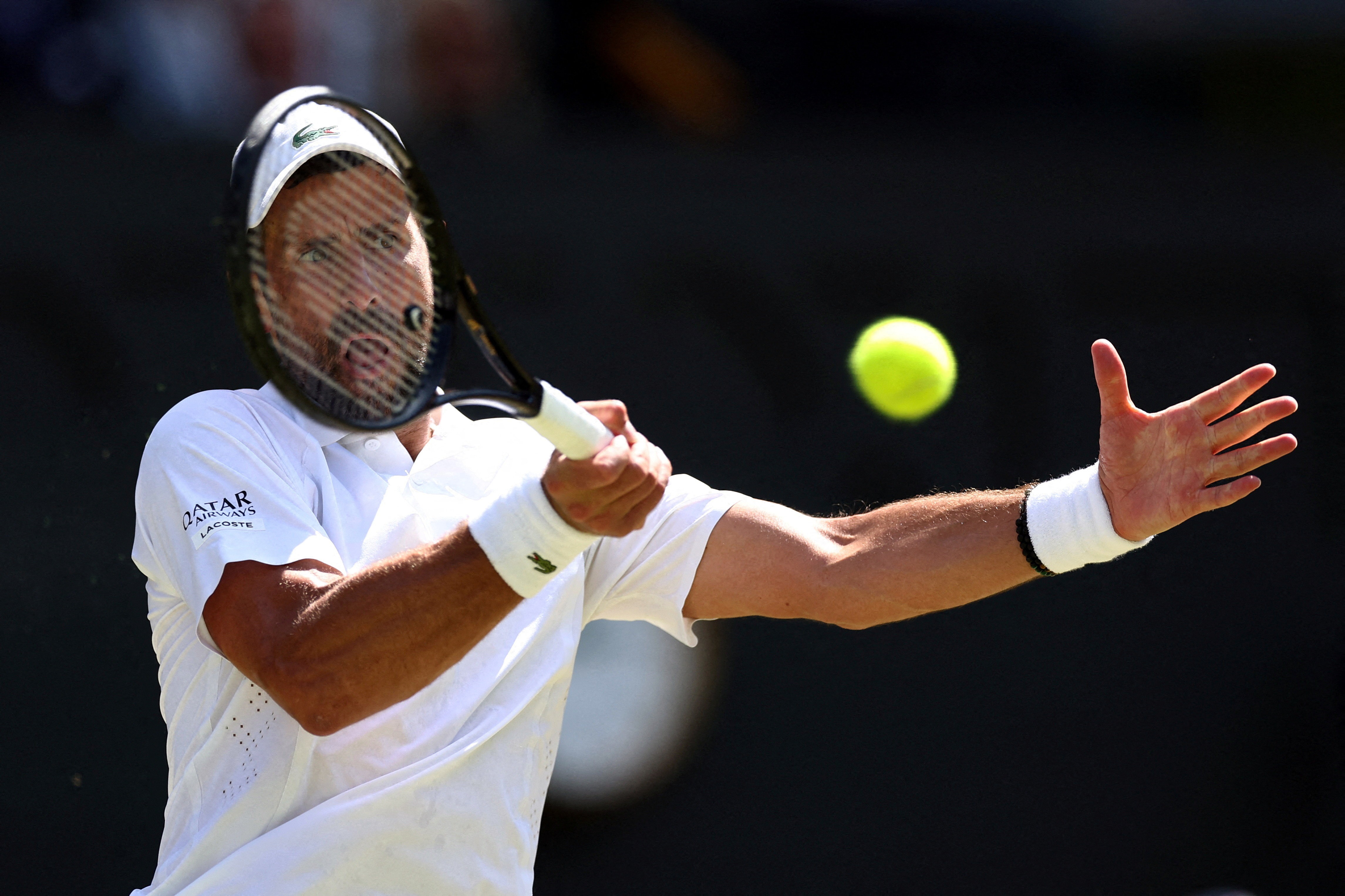
Novak Djokovic's relentless pursuit of an eighth Wimbledon title reached the semifinals after an extraordinary test of endurance and mental fortitude against Canada's Felix Auger-Aliassime, consuming five hours and 15 minutes of Centre Court in one of the championship's most gruelling quarterfinals on record. The 39-year-old Serbian emerged victorious with a scoreline of 7–6 (12–10), 3–6, 6–3, 6–7 (4–7), 7–6 (10–4), finishing mere minutes before the tournament's 11 pm curfew, signalling the intensity of a contest that tested not only the players' physical reserves but also their mental resolve under mounting pressure.
The match became as much about navigating the administrative protocols of professional tennis as it was about executing shots across the grass court. When tournament referee Denise Parnell descended to Centre Court at 7.40 pm to inform the competitors that the roof would be closing, Djokovic openly challenged her reasoning, contending that sufficient daylight remained to complete another set. His frustration boiled over as he questioned the consistency of decision-making, noting that in his first-round encounter against Wu Yibing, the roof had remained open until nearly 8.30 pm. The Serbian icon's aggressive stance revealed the psychological stakes at play—the closed roof would have favoured Auger-Aliassime, who specialises in indoor conditions and possesses superior comfort playing under artificial lighting.
Parnell, however, stood her ground, referencing a cautionary incident from Jannik Sinner's fourth-round match against Shintaro Mochizuki, when encroaching darkness had forced roof closure mid-set. Djokovic's response was characteristically unfiltered, declaring that Sinner's circumstances were irrelevant to his own match and dismissing the comparison as immaterial. The tension between player and official highlighted the sometimes contentious relationship between competitors and tournament administration, where rules around light conditions, player welfare, and competitive fairness collide in real-time decision-making. Yet Auger-Aliassime's gruelling 14-minute hold of serve in the second game of the third set appeared to validate Parnell's caution, suggesting that outdoor conditions were indeed deteriorating.
Despite these organisational theatrics, Djokovic's physical challenges proved equally significant. The world-renowned competitor had required a medical timeout during the first set after appearing to sustain a minor left calf strain, grimacing visibly with each serve delivery. The injury concern threatened to derail his campaign, yet his competitive instincts remained undimmed. He successfully navigated the opening set's tiebreak, which extended to 12–10 before he claimed it, and subsequently demonstrated improved mobility through the succeeding sets, suggesting either that the injury was superficial or that adrenaline and determination overrode physical discomfort.
Auger-Aliassime, seeded third at the tournament, presented formidable resistance throughout the encounter. The Canadian's serving prowess had been remarkable this fortnight, requiring Djokovic until the third set to engineer his first service break. Auger-Aliassime's youth—at 25 years old, he possessed a 14-year advantage over his opponent—should theoretically have provided stamina benefits in such an exhausting contest. His success in the second set and a dominant display in the fourth-set tiebreak, which he won 7–4, demonstrated that he possessed the weaponry to trouble arguably the greatest player in tennis history, even under circumstances seemingly tailored to Djokovic's preferences.
The deciding set evolved into a first-to-10 points tiebreak scenario, the ultimate dramatic theatre of professional tennis. Djokovic's experience in such high-stakes scenarios—accumulated across nearly two decades of Grand Slam competition—proved decisive. He closed out the encounter 10–4 in the final tiebreak, converting the match point with the emphatic finality expected of a champion who has won 24 Grand Slam titles. His survival of this marathon encounter demonstrated not merely technical superiority but exceptional mental resilience and an ability to sustain focus across the five-hour span.
Post-match, Djokovic offered philosophical reflection on his achievement, crediting his racket, emotional fortitude, and capacity to manage the extreme tension inherent in such contests. His comment that he wished the outcome had been the final itself—thereby eliminating anxiety about physical recovery before the next encounter—underscored the genuine toll such matches extract even from champions. At his age, when physical durability becomes increasingly precious, five hours of competitive tennis represents a significant investment of bodily resources with potential ramifications for subsequent matches.
Djokovic's reward for this triumph is a semifinal showdown with defending champion Jannik Sinner, the Italian prodigy who has emerged as the dominant force in men's professional tennis this season. Sinner's dominance throughout Wimbledon and his seeding advantages position him as the favourite, yet Djokovic's demonstrated capacity to overcome extraordinary obstacles and his historical record in championship moments suggest the semifinal will provide compelling theatre. The contrast between the seasoned campaigner and the rising superstar adds narrative complexity to what promises to be an intriguing encounter.
The broader implications of Djokovic's advancement extend beyond this tournament. His continued competitive viability at 39 years old challenges conventional wisdom about athletic longevity and suggests that elite-level tennis at the highest echelons remains accessible to veterans who maintain exceptional dedication. For Southeast Asian tennis observers and aspiring players, Djokovic's continued success provides a compelling case study in professional longevity, mental fortitude, and the technical mastery required to compete against younger, physically superior opponents. His willingness to engage directly with tournament officials, whilst occasionally crossing into disrespect, also illuminates the pressures that elite professional athletes navigate and the sometimes fraught relationship between competitor and administrator in sport governance.

