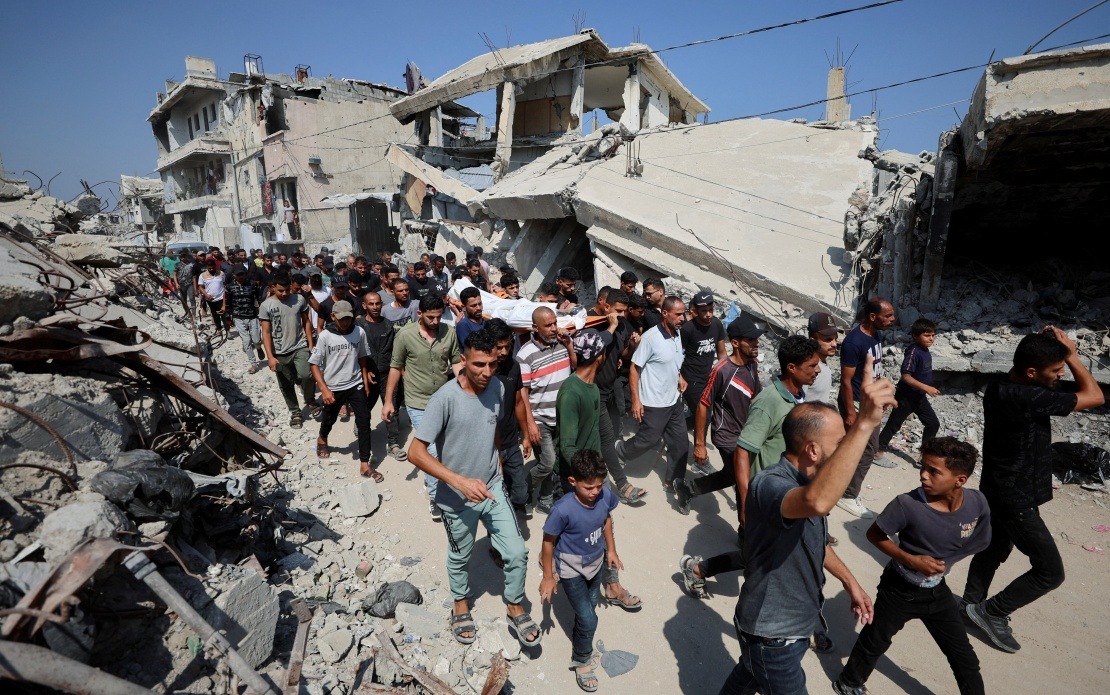
Doctors Without Borders delivered a scathing rebuke to Israel's military establishment on Thursday, accusing it of refusing to properly investigate the deaths of MSF personnel in Gaza by simply closing the cases without initiating any criminal inquiry. The humanitarian organisation's statement represents a fresh escalation in tensions between aid groups and Israeli authorities over accountability for civilian casualties in the besieged territory, underscoring the deep fractures in international efforts to document alleged violations during the conflict.
The French-registered medical charity's denunciation comes nearly two years after it first demanded proper investigations into incidents involving its staff, with MSF having escalated the matter to Israel's Supreme Court when the Military Advocate General proved unresponsive. This protracted period of seeking redress without satisfaction highlights the systemic difficulties facing international humanitarian groups attempting to secure accountability through Israeli legal channels, a concern resonating throughout Southeast Asian nations that host significant diaspora communities affected by the Gaza crisis.
MSF's core contention centres on what it characterises as manifest institutional failure within Israel's military justice system. The organisation argues that permitting the armed forces to investigate themselves has proven fundamentally inadequate for addressing potential violations that could constitute war crimes under international law. This structural critique carries particular significance for Malaysian audiences, given the nation's emphasis on international humanitarian law and its role within the Non-Aligned Movement, which has consistently advocated for independent accountability mechanisms in conflict zones.
The humanitarian group maintains that Israeli forces possessed comprehensive identification data regarding its personnel and vehicles. MSF staff names and operational locations had been explicitly shared with Israeli military units, and the organisation's convoys and facilities were distinctly marked. This detailed information sharing, intended to facilitate humanitarian access and ensure protection of aid workers under international conventions, renders the resulting casualties more difficult to characterise as inevitable consequences of warfare rather than preventable tragedies stemming from operational failures or deliberate actions.
Two specific incidents underscore MSF's allegations. In November 2023, an Israeli military operation targeted an MSF convoy, killing two individuals connected to the organisation's operations. One victim, Alaa Al Shawa, held dual status as a volunteer collaborating with MSF medical personnel at Al-Shifa Hospital. Subsequently, in February 2024, forces attacked an MSF shelter located in Khan Younis, resulting in the deaths of one staff member's wife and daughter-in-law, alongside injuries sustained by six other individuals, predominantly women and children. These incidents reflect patterns that MSF contends demonstrate either systematic targeting or reckless disregard for civilian protection obligations.
The scale of health worker casualties compounds the concern. MSF has documented fifteen of its staff members killed by Israeli forces since October 2023, part of a broader humanitarian catastrophe claiming approximately 1,700 healthcare professionals during the identical period. This decimation of medical capacity directly undermines civilian health infrastructure across Gaza, creating cascading consequences for disease control, maternal health, and treatment of wounded civilians. The loss resonates with particular force in Malaysia and throughout the region, where medical professionals view their colleagues' experiences as cautionary lessons regarding professional vulnerability in conflict settings.
MSF explicitly rejects the adequacy of internal military review processes as substitutes for genuine independent accountability. The organisation demands that an impartial international investigative body assume responsibility for examining incidents involving its personnel, implying that no meaningful examination can emerge from structures inherently compromised by institutional self-interest. This position reflects broader international disquiet regarding military judicial systems' capacity to deliver justice when investigating their own personnel, a concern transcending the immediate Gaza context and reflecting systemic challenges recognised by human rights organisations globally.
The humanitarian group frames these case closures as indicative of fundamental absence of accountability potential within Israel's legal framework. Rather than viewing the dismissals as isolated procedural matters, MSF presents them as symptomatic of structural deficiencies preventing any meaningful consequences for military actions, however problematic. This analysis implies that victims and their families confront a system deliberately or structurally incapable of delivering remedies, a stark indictment of institutional justice mechanisms that carries implications for international humanitarian law enforcement more broadly.
MSF's linkage between these case closures and alleged genocide against Palestinian populations represents a significant argumentative escalation, characterising individual incidents as components of systematic violence rather than isolated operational incidents. This framing aligns MSF's position with international civil society organisations and several UN bodies that have employed genocide terminology, transforming particular killings into potential evidence of larger patterns. For Malaysian observers following international law developments, this rhetorical positioning influences how global institutions may subsequently approach accountability mechanisms and International Criminal Court investigations.
The organisation emphasises that no legitimate military objective can justify indiscriminate sacrifice of civilian lives, invoking international humanitarian law principles requiring proportionality and distinction between combatants and non-combatants. This fundamental legal assertion underpins MSF's insistence that systematic accountability must follow incidents resulting in civilian casualties, regardless of operational contexts or claimed security imperatives. The principle carries particular weight within Southeast Asian legal traditions, where proportionality doctrines enjoy established recognition within constitutional and administrative law frameworks.
Gaza's health ministry simultaneously reported escalating casualty figures, documenting 10,000 Palestinians killed during a single 24-hour period and raising cumulative death tolls since October 2023 to over 73,000. The ministry specifically attributed 1,283 additional deaths to Israeli violations of agreed ceasefire arrangements. These figures, though contested by Israeli authorities and international observers, establish the context within which MSF's allegations operate—periods of intensified violence creating heightened risks for humanitarian workers and civilians alike. Malaysian public discourse increasingly engages with Gaza casualty statistics, reflecting growing civil society mobilisation around Palestinian humanitarian concerns.
The broader implication of MSF's position concerns the sustainability of humanitarian operations within conflict zones characterised by apparent immunity from accountability. If humanitarian workers and their families face lethal risks without prospect of investigation or legal remedy, recruitment and retention of qualified personnel becomes increasingly difficult. This operational challenge threatens humanitarian service delivery across Gaza, potentially exacerbating civilian suffering among populations already experiencing severe medical access restrictions. Regional actors, including Malaysia, may require dialogue with international humanitarian organisations regarding these systemic challenges to ensure continued protection for both civilians and aid workers operating under extreme duress.

