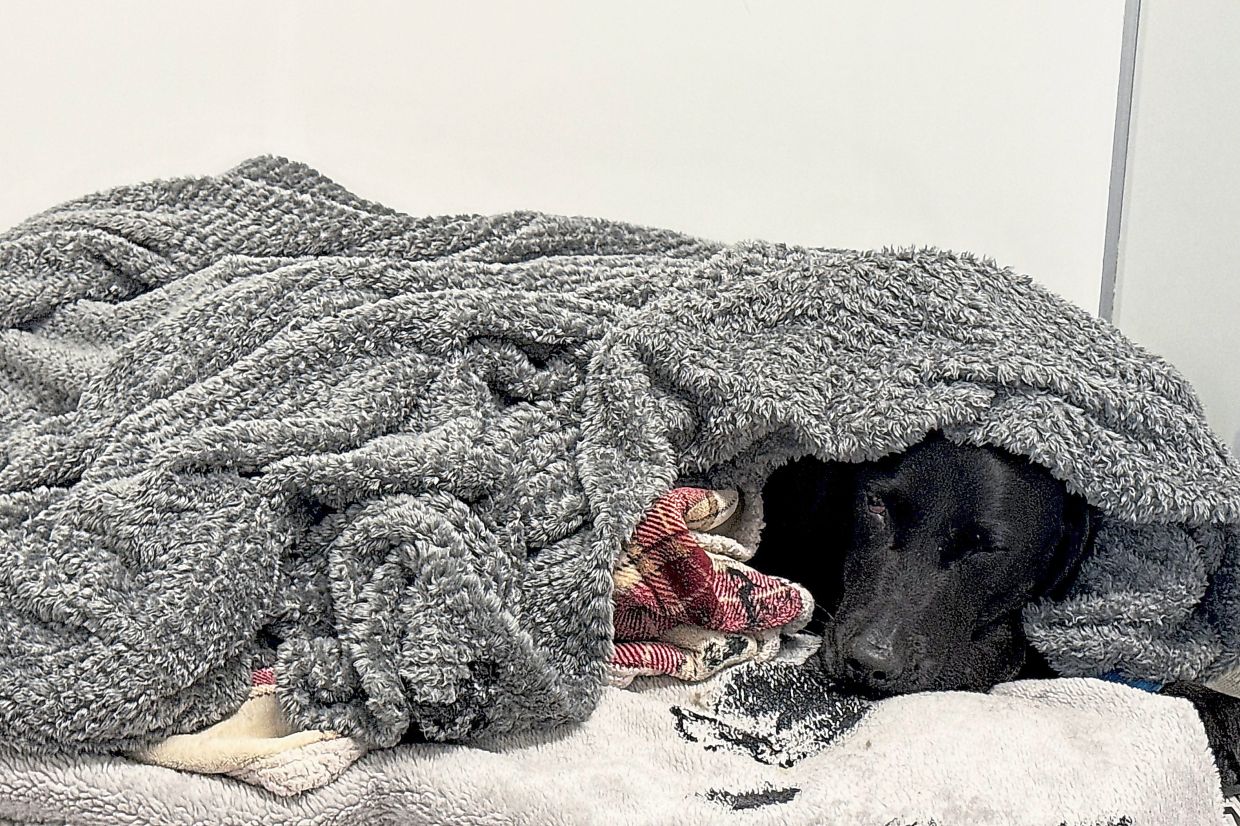
A dramatic mountain rescue unfolded on Ben Nevis when a black Labrador retriever collapsed during a family hiking expedition, the victim of what veterinarians would later determine was cannabis intoxication. Tokyo, the five-year-old dog, had apparently encountered and consumed the drug somewhere along the Scottish trail, an incident that turned a routine climb into a terrifying emergency for owner Christina Bluhme and her son Magnus.
Bluhme, who brings considerable expertise to dog care having spent 25 years as a professional canine trainer, initially had no idea what was afflicting her beloved pet. As Tokyo began to sway unsteadily and then lost the ability to walk altogether, Bluhme found herself facing a crisis at altitude with limited options for help. The pair had already committed more than three hours to scaling the 1,345-metre mountain when the emergency struck, positioning them dangerously high on the rocky terrain with deteriorating weather conditions. What had started as a clear day transformed rapidly into rain and cold, with temperatures plummeting to just 5°C as the situation spiralled.
The decision to abandon their summit attempt came swiftly once Bluhme recognised the severity of Tokyo's condition. She instructed Magnus to call for assistance, though initial police communication suggested that mobilising a rescue team might prove difficult given the circumstances and location. The family found themselves in genuine peril, faced with the prospect of descending a steep, slippery mountain with an incapacitated dog and no clear support system in place.
Fortune intervened when the Lochaber Mountain Rescue Team, an all-volunteer organisation, was already making their way down from the summit after completing a helicopter evacuation of an injured hiker. The team immediately pivoted to assist, securing Tokyo—a substantial 25-kilogramme animal—onto their specialist stretcher and executing a remarkably rapid descent. Bluhme described the rescue workers as almost running down the mountain, moving with impressive agility across the treacherous terrain. The entire evacuation from the crisis point to the trailhead took approximately one hour, a testament to the expertise and physical capability of the volunteer rescue personnel.
Crown Vets in nearby Fort William had been alerted by police, and a veterinary surgeon was waiting when Bluhme arrived with her distressed pet. Initial examination suggested a possible spinal injury, but a senior veterinarian's assessment pointed toward neurotoxin exposure after observing Tokyo drifting between consciousness and unconsciousness. Consultation with a poison control centre confirmed the diagnosis: the dog's symptoms aligned precisely with cannabis intoxication, making clear what had occurred on the mountain trail.
The incident reflects a concerning trend now documented across multiple countries. In the United States, cannabis toxicity emerged for the first time in the American Society for the Prevention of Cruelty to Animals' top 10 list of animal toxins in 2023, indicating the scale of the problem in regions where cannabis use has become more prevalent. Britain too has documented rising numbers of pets experiencing adverse effects from cannabis exposure, though the issue remains less publicised than in North America. The expansion of recreational and medicinal cannabis availability appears directly correlated with increased veterinary presentations of pet poisoning cases.
Tokyo received treatment consisting of activated charcoal and overnight observation, her body processing the toxin with the resilience typical of younger animals. By the following morning, any visible effects had completely resolved, and the dog appeared entirely normal, as though the previous day's ordeal had never occurred. For Bluhme, the recovery proved far less rapid—the psychological impact of nearly losing her companion lingered well beyond Tokyo's complete physical restoration.
While the veterinary bill totalled £1,000 (RM5,445), a substantial sum by any measure, Bluhme readily characterised the expense as justified given the alternative. She had genuinely feared, during those hours on the mountain and in the immediate aftermath, that Tokyo might not survive the incident. The financial cost paled against the relief of having her dog returned to full health and capability. The incident also serves as a cautionary reminder for pet owners across regions where cannabis use is legal or increasingly common: the substance poses genuine danger to animals, who cannot consent to consumption and whose physiology processes cannabinoids differently than human systems.
For mountaineers and outdoor enthusiasts in the UK and Malaysia's growing hiking community, the story carries practical implications. Pet owners undertaking wilderness activities in areas with known drug use must remain vigilant about what their animals might encounter on trails. The incident on Ben Nevis demonstrates how quickly a routine outdoor excursion can transform into a medical emergency, but also showcases the critical importance of accessible professional rescue infrastructure and veterinary expertise. Bluhme's experience, while exceptional in its dramatic setting, reflects a broader public health conversation now unfolding about cannabis safety in an era of expanding legal access and recreational use.

