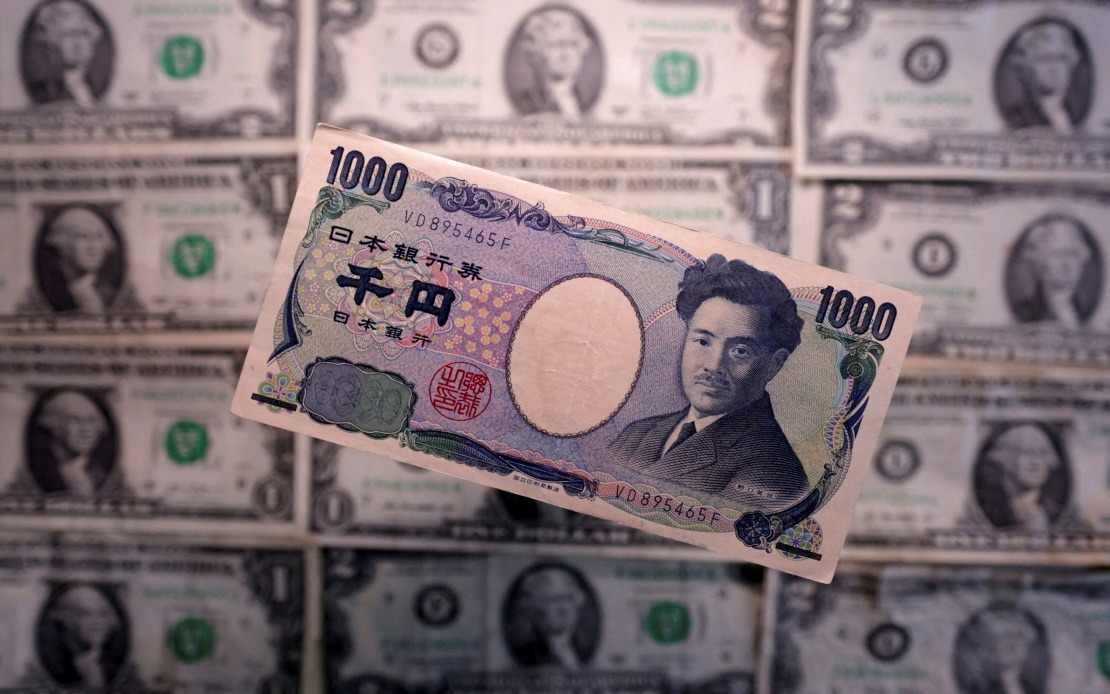
The United States dollar has climbed to its strongest level in nearly four decades against the Japanese yen, hovering near the psychologically significant 163 mark as investors flee to safer assets amid mounting tensions across the Middle East. The currency reached 163.24 yen overnight—its highest valuation since December 1986—underscoring a fundamental shift in market dynamics that has left Tokyo's monetary authorities watching nervously from the sidelines. Despite Japan's explicit warning that it stands prepared to take intervention measures if warranted, the dollar's upward momentum has proved largely unstoppable, reflecting the complex interplay between geopolitical anxiety and macroeconomic expectations that currently grips global financial markets.
The primary catalyst propelling the dollar higher remains the escalating conflict dynamics in West Asia, where Yemen-based Houthis aligned with Iran have declared a naval blockade targeting Saudi Arabia. This development has sent crude oil futures racing higher, with benchmark West Texas Intermediate contracts breaching the $84-per-barrel threshold. The spike in energy prices carries significant ramifications for inflation expectations globally, and traders are increasingly pricing in the possibility that the Federal Reserve will need to maintain a higher interest rate environment for longer than previously anticipated. This expectation has triggered a fresh wave of dollar-buying activity, particularly during trading hours in New York, as international investors seek exposure to higher-yielding US assets while simultaneously embracing the dollar's traditional role as a haven currency during periods of geopolitical uncertainty.
Maki Sawada, a strategist at Nomura Securities Co., offered insights into the likely trajectory of the yen in coming weeks, suggesting that the structural alignment of West Asian volatility and the Fed's monetary policy stance creates conditions for the dollar to maintain its position above the 160 yen level. This assessment reflects a growing consensus among market participants that the current environment—characterized by both external shocks to global energy supplies and a US central bank potentially responding with restrictive policy measures—will keep the dollar bid well-supported. The persistence of these cross-currents presents a formidable challenge for Bank of Japan officials seeking to stabilise their currency, as they must contend with forces that extend well beyond the boundaries of their domestic policy toolkit.
Tokyo's stated readiness to intervene in currency markets represents a significant policy signal, reflecting official concern about the yen's deterioration and its potential consequences for Japanese exporters and financial stability more broadly. The Bank of Japan has long viewed an excessively weak currency with ambivalence—it provides a boost to export competitiveness in the near term but generates imported inflation that complicates the inflation targeting framework. The current situation, where the yen has weakened dramatically against a backdrop of rising global energy costs, creates a particularly vexing policy dilemma. Any intervention the authorities undertake would need to be substantial and credible to shift market expectations, yet even such measures might prove insufficient against the powerful macroeconomic currents now favouring dollar appreciation.
For Malaysian and broader Southeast Asian investors and businesses, the strengthening dollar carries multifaceted implications that warrant careful attention. A stronger greenback typically increases the cost of dollar-denominated debt servicing for regional companies and sovereigns, while also complicating export competitiveness in markets where prices are set in dollars. Conversely, the surge in crude oil prices offers potential benefits to economies that export energy products, though for net energy importers like Malaysia, the inflationary pressures generated by higher petroleum costs represent a headwind for monetary policy and consumer purchasing power. The currency movements also affect capital flows across the region, as investors rebalance portfolios in response to changing interest rate differentials between major economies.
Japanese equity markets reflected the competing pressures at play on the day in question, with the Nikkei 225 index closing marginally lower by 0.18 per cent, slipping 116.59 points to finish at 66,115.60. The broader Topix index managed a fractional gain of 0.45 per cent, climbing 18.18 points to 4,033.13. The divergent performance between the two indices highlights the uneven impact of current market dynamics across different segments of the Japanese stock market. Early trading had shown promise, with semiconductor-related shares surging more than 2 per cent in the morning session, buoyed by gains in comparable US and South Korean chip stocks and underpinned by expectations of sustained demand expansion in the technology sector. This initial enthusiasm reflected the tendency of semiconductor equities to perform well when risk appetite remains healthy and expectations for technological investment remain elevated.
However, momentum dissipated as the trading day progressed, undermined by a combination of factors including profit-taking ahead of major earnings announcements and renewed concerns about elevated energy costs. Google parent Alphabet Inc. was among the companies set to report earnings, and the uncertainty surrounding the scale and trajectory of big-technology profit growth has weighed on sentiment. The simultaneous pressure from climbing crude oil prices created additional headwinds, as market participants recognised that rising input costs would likely compress margins across numerous sectors of the economy. Nonferrous metals and banking shares emerged as the session's principal gainers, with precious metals benefiting from flight-to-safety positioning and financial sector shares supported by expectations of sustained higher interest rates. By contrast, service sector and air transportation equities declined noticeably, reflecting sensitivity to both elevated energy costs and broader economic growth concerns.
The simultaneous weakness in the yen and equity market turbulence underscores a broader tension within Japan's current macroeconomic position. The Bank of Japan has been gradually normalising monetary policy after years of ultra-loose settings, yet the pace of adjustment has been constrained by persistent concerns about underlying inflation dynamics and growth momentum. A weaker yen, while traditionally supportive for export earnings, also imports inflation that complicates the inflation-fighting challenge. For Japanese households and businesses, the combined effect of currency depreciation and rising commodity prices has begun to erode real incomes and profit margins, creating pressure for wage and price adjustments that the central bank would prefer to avoid.
Looking forward, the sustainability of dollar strength at these levels will likely depend on whether the geopolitical tensions in West Asia prove transient or develop into a more protracted conflict scenario. If the current blockade situation escalates further, oil prices could climb significantly higher, potentially triggering a policy response from major central banks including the Federal Reserve and amplifying the macroeconomic pressures now evident in financial markets. Conversely, if diplomatic efforts succeed in de-escalating regional tensions, the demand for safe-haven assets could recede, potentially allowing the yen to regain some lost ground. Yet even in a scenario of improved geopolitical conditions, the structural interest rate differential between the United States and Japan would likely continue to support dollar appreciation, at least until the Bank of Japan accelerates its policy normalisation pace or the Federal Reserve begins reducing rates.

