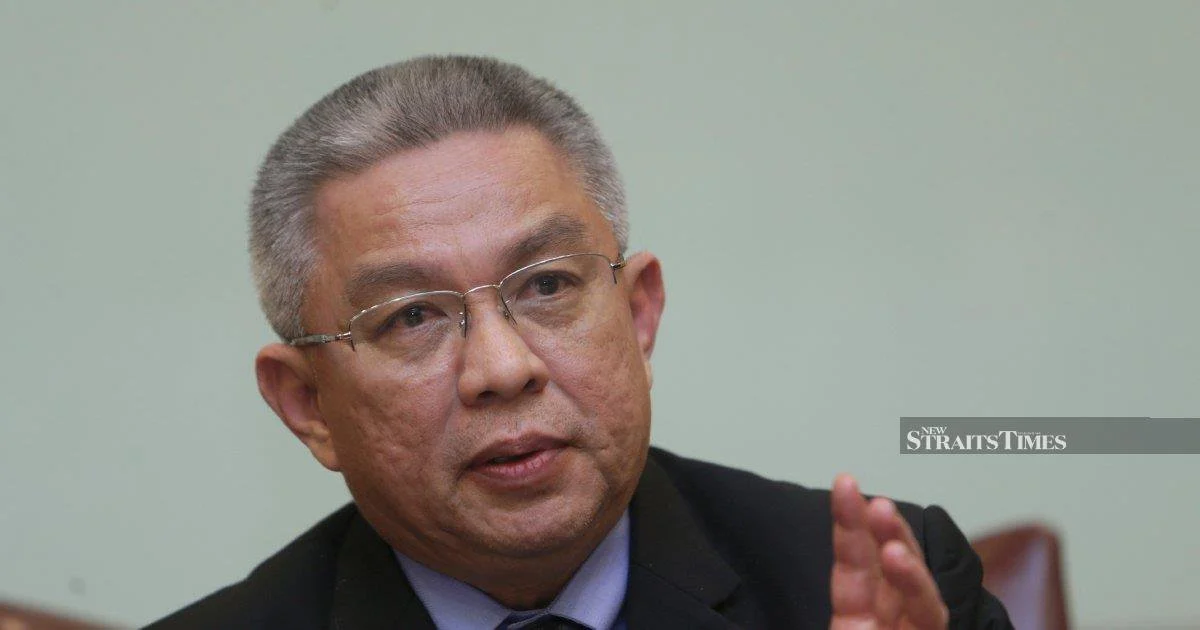
Barisan Nasional's strategy for the upcoming Johor state election has taken shape with the announcement of 56 candidates, a roster that includes several high-profile figures returning to the political arena. Among those fielded are former health minister Datuk Seri Dr Adham Baba and former Endau assemblyman Alwiyah Talib, representing a coalition effort to secure victories across the state's constituencies.
The inclusion of Dr Adham Baba signals BN's intention to leverage experience gained at the federal level, where he served as health minister during a critical period. His appointment to the candidate list represents an attempt to inject executive credibility into the campaign, particularly given the portfolio's prominence in public discourse. The decision to field him underscores BN's confidence in his ability to mobilise support despite his departure from Bersatu, the party he previously represented.
Alwiyah Talib's return to electoral politics follows her tenure as Endau assemblyman, marking a significant comeback for someone with ground-level legislative experience. Former assemblymen and women often retain strong local networks and constituent trust, assets that can prove decisive in closely contested races. Her presence on the slate reflects BN's effort to reconnect with voters who may recall her previous service record.
Johor remains strategically vital for Barisan Nasional's national political positioning. The state has historically been a BN stronghold, though recent electoral cycles have seen its dominance tested by rival coalitions. Fielding seasoned candidates alongside newcomers allows the coalition to balance continuity with fresh representation, a formula many established political machines employ when facing competitive pressure.
The participation of former Bersatu members on a BN ticket illustrates the fluid nature of Malaysian coalition politics. Party-hopping has become increasingly common as personalities navigate between Umno, Bersatu, and other BN component organisations in search of viable candidacy slots. Such movements reflect both personal ambition and tactical repositioning within the broader coalition framework. For voters, however, these shifts can generate questions about loyalty and consistency.
BN's 56-candidate deployment across Johor suggests comprehensive coverage of the state's electoral geography, with the coalition aiming to contest most if not all available seats. This approach differs from more selective strategies that concentrate resources on winnable constituencies. The breadth indicates party leadership's belief that momentum and momentum can be built across multiple fronts rather than ceding ground to opponents.
The timing of candidate announcements carries political weight in Malaysian elections. Early declaration allows campaigns to mobilise machinery, establish candidate visibility, and begin ground operations ahead of formal nomination periods. BN's release of its full slate demonstrates organisational readiness and telegraphs confidence to party members and supporters.
For Johor specifically, state-level elections determine the composition of the State Assembly and ultimately the formation of the state government. Unlike parliamentary contests, where federal issues dominate, state elections often hinge on local development priorities, infrastructure projects, and constituent service records. Candidates with prior assembly experience or ministerial track records can point to tangible achievements, a narrative advantage in campaigns focused on governance capability.
The political climate in Johor has shifted considerably since the last state election. Economic pressures, healthcare concerns highlighted during the pandemic, and infrastructure development remain prominent voter concerns. Candidates fielded on the BN ticket will need to address these issues convincingly while articulating the coalition's vision for the state's future trajectory.
Dr Adham Baba's candidacy particularly invites scrutiny regarding his health ministry tenure, which coincided with Malaysia's pandemic response. Public perception of that period—whether seen as competent management or problematic governance—could influence his electoral prospects. Similarly, voters may evaluate whether his previous affiliation with Bersatu affects perceptions of his commitment to BN.
The composition of BN's candidate list ultimately reflects party calculations about electability, demographic representation, and factional balance within the coalition. Umno's dominance in BN typically means it secures the largest share of candidacies, though component parties like MCA and MIC also field representatives. The presence of figures from different wings suggests efforts to maintain coalition cohesion heading into the campaign proper.
Johor's election outcomes will reverberate beyond state borders, offering indicators about voter sentiment toward BN's governance record and future direction. Whether the coalition can retain control or faces erosion of support will depend partly on how effectively candidates like Dr Adham Baba and Alwiyah Talib can mobilise voters and respond to opposition messaging. The coming weeks will test whether experience and recalibrated political positioning prove sufficient to secure BN's electoral objectives in this significant state.