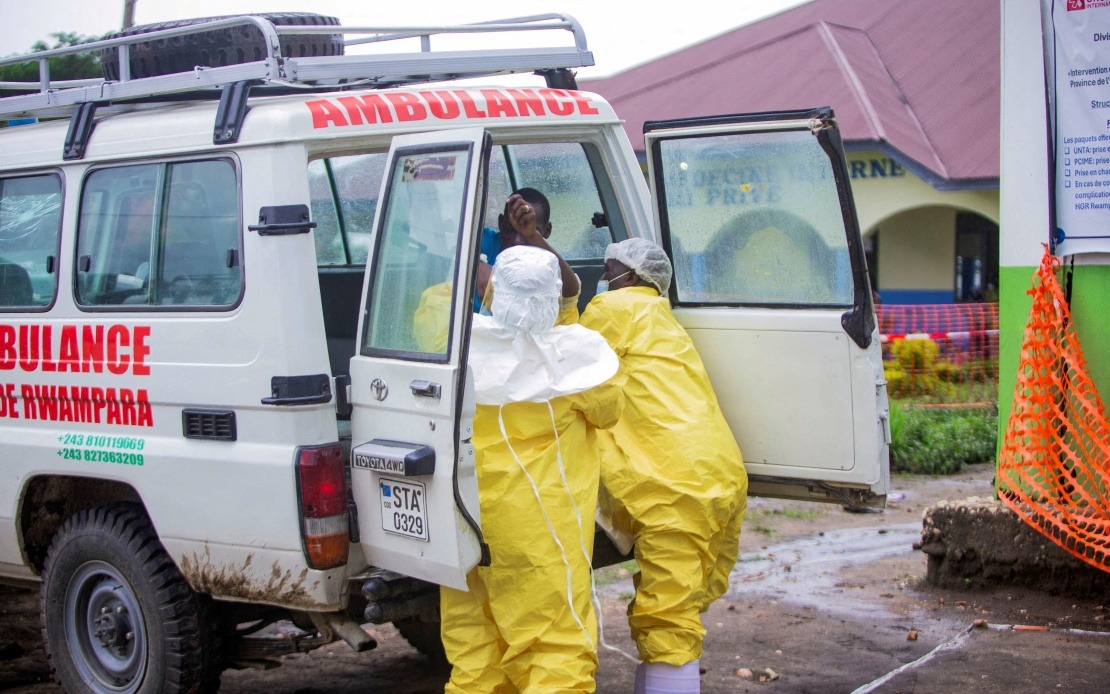
The Democratic Republic of the Congo is grappling with a rapidly expanding Ebola outbreak that has now penetrated five provinces, bringing the confirmed case count to 1,873 with 672 fatalities. According to health ministry data released on Sunday and covering information through Friday, the viral spread has intensified beyond the initial outbreak zones, prompting heightened concerns about containment and cross-border transmission risks that could affect the broader Central African region.
The five affected provinces—Ituri, North Kivu, South Kivu, Haut-Uele, and Tshopo—represent a geographical dispersal that highlights the challenge facing health authorities. Notably, Haut-Uele and Tshopo have been added to the official situation report for the first time, signalling the outbreak's continued geographical expansion into previously unaffected areas. This widening footprint underscores the difficulty of containing haemorrhagic fever outbreaks in regions with limited infrastructure and complex population dynamics.
Epidemidemiological investigations have established clear transmission chains between the newly affected provinces and Ituri, identified as the outbreak's epicentre. Health officials have traced the spread to population movements and direct contact between infected individuals and susceptible populations, a pattern consistent with how Ebola typically propagates through communities in Central Africa. The movement of people across provincial boundaries, whether for economic, social, or humanitarian reasons, has created corridors through which the virus has travelled, complicating efforts to establish effective isolation barriers.
The current state of healthcare infrastructure reveals the immense strain placed on DRC's medical system by the outbreak. Approximately 763 patients are currently isolated or hospitalised, whilst treatment facilities are operating at 95.1 percent bed occupancy. This near-maximum capacity presents a critical bottleneck: as new cases emerge, the healthcare system's ability to provide adequate isolation, monitoring, and supportive care diminishes. Such overcrowding not only reduces the quality of patient care but also increases the risk of nosocomial transmission—infection acquired within healthcare settings themselves.
Amidst the dire statistics, there is a modest silver lining. The health authorities have recorded 306 recoveries, a figure that provides some indication of successful treatment outcomes when patients receive appropriate medical intervention. Recovery rates, though limited in proportion to total cases, underscore the importance of early detection, rapid isolation, and supportive care in improving survival prospects. However, the 299 suspected cases currently under investigation, which have already resulted in 91 deaths, suggest that the true burden of the outbreak may be even larger than confirmed figures indicate.
The Bundibugyo ebolavirus, the pathogen responsible for this outbreak, is one of several known Ebola species. The outbreak's official declaration on May 15 means the crisis has already persisted for nearly two months by the time of this report. Unlike some previous Ebola outbreaks in DRC, which have been contained relatively swiftly, this spread across multiple provinces indicates either slower initial response capacity or greater intrinsic transmissibility—factors that demand examination and urgent adaptive responses from public health authorities.
For Southeast Asian observers, this outbreak carries important implications. The interconnected nature of modern travel and commerce means that outbreaks in Central Africa, whilst geographically distant, pose potential risks to the region through air travel hubs and international trade networks. Malaysia, as a major aviation hub with significant economic ties to Africa, must remain vigilant regarding surveillance at ports of entry and maintain coordination with international health bodies. The DRC outbreak serves as a reminder that infectious disease threats recognise no borders and that strengthening regional disease surveillance capacity remains essential.
The response to this outbreak will be closely monitored by the international health community. The World Health Organisation and various bilateral partners have supported DRC's health ministry, yet the continued spread suggests that coordination, resource availability, or implementation of interventions may require strengthening. The concentration of cases in provinces with challenging terrain and security concerns complicates contact tracing and vaccination campaigns, traditional pillars of Ebola response strategies.
Looking ahead, the trajectory of this outbreak will depend critically on the DRC government's ability to scale up isolation capacity, enhance surveillance networks, and reach at-risk populations with preventive messaging and vaccination. The near-full occupancy of treatment facilities indicates an urgent need for additional resources and infrastructure. International support mechanisms must be leveraged more effectively to prevent further geographical spread and to reduce the case fatality rate through improved access to supportive care. The coming weeks will be pivotal in determining whether containment measures can arrest the outbreak's expansion or whether further provincial spread becomes inevitable.

