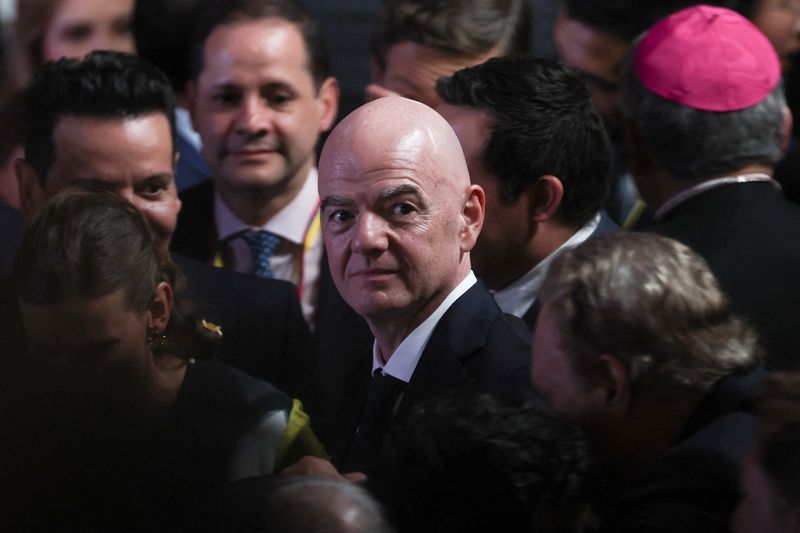
The Royal Dutch Football Association (KNVB), one of FIFA's 211 member associations and a founding member since 1904, has escalated its challenge to FIFA President Gianni Infantino by announcing plans for a comprehensive overhaul of the world's most powerful sports organization. In a significant move, the Dutch governing body announced it would host an International Summit on the Future of FIFA in Amsterdam, explicitly stating that Infantino should be replaced by 2027 and that structural reform must accompany any leadership change.
The KNVB's withdrawal of confidence represents a turning point for Infantino, who secured Dutch support in his most recent presidential election. The association's statement emphasized that such backing was never unconditional, signalling that performance and governance standards determine their ongoing allegiance. This shift reflects growing unease among major football nations regarding the concentration of power within FIFA's executive framework and the decision-making processes that have characterized Infantino's tenure since 2016.
The immediate catalyst for this challenge stems from Infantino's controversial proposal to sell stakes in FIFA events, particularly the World Cup, to private equity investors. The scheme was abandoned after encountering resistance from regional football confederations, but the episode crystallized concerns about unchecked presidential authority. With Infantino's scheduled re-election coming in March 2025, several regional powerhouses within world soccer have begun discussing whether to trigger a formal vote of no confidence, positioning the Dutch initiative within a broader groundswell of reform sentiment.
Crucially, the KNVB's proposal extends far beyond personnel change. The association identified three core reform priorities that would fundamentally reshape FIFA's operational landscape. First, it demands improved governance architecture featuring robust checks and balances on executive power, a direct response to what the KNVB describes as excessive presidential authority. Second, the Dutch federation insists that human rights protections and environmental sustainability must become central to FIFA's decision-making processes, not peripheral considerations. Third, it calls for stronger international cooperation mechanisms that genuinely incorporate input from all member associations rather than top-down directives emanating from Zurich.
The revenue redistribution agenda represents another significant dimension of the KNVB's reform platform. Currently, FIFA retains substantial revenues from global tournaments and commercial arrangements. The Dutch association wants FIFA to commit to reinvesting up to 90 percent of its distributable revenue back into soccer development worldwide. This proposal directly addresses the financial inequities that plague international football, where wealthy European and South American confederations enjoy vastly superior resources compared to developing nations' football programs. The gap between FIFA's rich and poor members has become increasingly untenable as global soccer's commercial value has soared.
Infantino has previously framed revenue redistribution as FIFA's moral obligation, arguing that the organization should actively close the financial disparities between its wealthy members and those with minimal resources. However, the KNVB's statement contains a pointed rebuke of what it characterizes as a "European plan for the rest of the world." This phrasing suggests that Dutch and European reformers must genuinely incorporate perspectives from African, Asian, and American confederations rather than imposing externally designed solutions. The framing acknowledges potential resistance from non-European members who might perceive reform initiatives as neocolonial impositions by wealthy football nations.
The proposed Amsterdam summit would function as a foundational forum for determining FIFA's future trajectory before identifying new leadership. Rather than selecting a replacement president and hoping structural improvements follow, the KNVB methodology reverses this sequence. It would establish first what kind of FIFA the global football community actually wants, then install leadership capable of implementing those predetermined reforms. This approach represents a deliberate rejection of the personality-driven governance model that has characterized FIFA for decades, where individual leaders shape the institution according to their vision.
The KNVB's initiative arrives as UEFA, the European confederation to which the Dutch association belongs, has taken parallel action. UEFA has petitioned a U.S. federal court for permission to obtain testimony and documents from FIFA entities operating in Florida. These materials would support a planned criminal complaint being prepared by Swiss authorities targeting Infantino personally. This dual-track approach—combining internal FIFA reform advocacy with external legal pressure—significantly amplifies the challenge to Infantino's position and signals that reform advocates are willing to pursue multiple avenues simultaneously.
For Southeast Asian football stakeholders, this European-led reform movement carries substantial implications. Nations within ASEAN, particularly those represented through the Asian Football Confederation (AFC), have historically lacked decisive influence over FIFA's major decisions. A restructured FIFA with genuine international cooperation mechanisms and broader power distribution could theoretically enhance Asian football's voice in global governance. Conversely, if Amsterdam reforms are perceived as European-driven initiatives, Asian confederations might resist them as threats to their autonomy or as efforts to dilute their already limited influence. The KNVB's explicit commitment to develop reform directions "together with FIFA's 211 Member Associations and confederations from all parts of the world" will be tested by whether genuine consultation actually materializes.
The timing of this initiative creates complexity for FIFA's March 2025 presidential election. Infantino's re-election campaign had been presumed secure based on his demonstrated ability to navigate FIFA politics and build alliances among developing nations. The Dutch challenge, combined with growing discontent elsewhere, potentially fragments this coalition. However, Infantino maintains substantial support among African confederation members and others who have benefited from FIFA's financial distribution initiatives under his leadership. The presidential contest could become genuinely contested for the first time in years, with reform-minded confederations backing alternative candidates if suitable challengers emerge.
Beyond personalities, the Amsterdam summit concept addresses a legitimate governance crisis within world soccer. FIFA's president exercises enormous unilateral authority over an organization whose decisions affect over a billion people globally. The structure lacks the checks and balances present in many national football associations or international sporting bodies. By proposing systematic institutional reform rather than merely replacing individuals, the KNVB has elevated the discussion to substantive governance architecture. Whether this initiative succeeds depends on whether other confederations, particularly those in Africa, Asia, and the Americas, view these reforms as genuinely inclusive or as European efforts to reclaim influence over a FIFA that has grown increasingly responsive to non-European interests.

