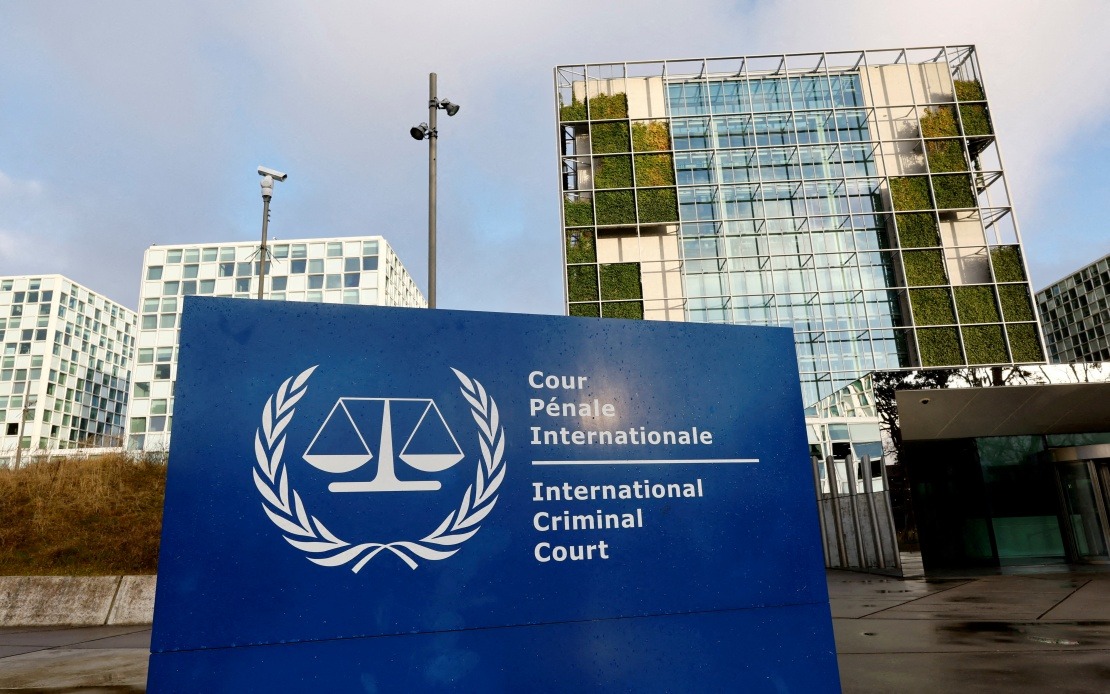
Legal academics in the Netherlands have voiced serious concerns about Washington's escalating confrontation with the International Criminal Court, describing the American strategy as a threat to the fundamental architecture of global justice. The US Department of State launched a comprehensive initiative in mid-July designed to counter what officials characterise as the ICC's encroachment on American sovereignty, particularly regarding investigations into the actions of US military personnel and government officials. The campaign represents the latest phase in deteriorating relations between the United States and the Hague-based institution, which has emerged as a flashpoint in debates over international law and national interests.
Alette Smeulers, professor of international crimes at the University of Groningen, articulated the core anxiety among European legal experts when she warned that dismantling such institutions would fundamentally reshape global governance. According to Smeulers, abandoning these multilateral frameworks in favour of unilateral American action would effectively replace international law with a system where the most powerful nations dictate outcomes to weaker states. This transformation would mark a profound regression from the post-World War II consensus that established binding rules to govern interstate conduct and protect populations from mass atrocities. The implications for smaller nations, including Malaysia and other developing countries without the military or economic clout of major powers, would be particularly severe under such a system.
The American government's objections centre on the ICC's claimed authority to investigate and prosecute US nationals, which Washington regards as an unacceptable violation of sovereign immunity. The State Department contends that American service members and officials should remain subject exclusively to domestic legal procedures rather than international scrutiny. This position reflects longstanding American exceptionalism regarding international institutions, a doctrine that has shaped US policy toward the court since its establishment under the Rome Statute in 1998.
Smeulers provided crucial context about the ICC's actual operational constraints, noting that the court's prosecutorial powers are considerably more circumscribed than American rhetoric suggests. The institution can investigate only the gravest crimes—genocide, war crimes, and crimes against humanity—and only when these offences occur on the territory of a state that has ratified the Rome Statute or involve nationals of such states. This legal framework significantly limits the court's reach and prevents the kind of expansive jurisdiction that Washington claims to fear. The ICC cannot simply pursue any individual or any allegation; it operates within clearly defined jurisdictional parameters established by international treaty.
The US campaign has already produced concrete consequences beyond diplomatic statements. Last December, Washington imposed economic sanctions against two ICC judges, accusing them of conducting politically motivated investigations centred on Israel. These sanctions represented an unprecedented American response to international judicial proceedings, effectively weaponising economic pressure against individuals serving in institutional roles. Kyra Wigard, an assistant professor of law at Utrecht University, characterised the sanctions as fundamentally inappropriate and absurd, noting that such measures are conventionally reserved for alleged terrorists or hostile nations engaged in military conflict.
Wigard's assessment highlights how the American approach violates established norms governing international relations and dispute resolution. Sanctioning judges for their official judicial decisions represents a dangerous inversion of the principle that courts should operate free from political pressure or economic coercion. This action could establish a troubling precedent whereby powerful nations attempt to influence or intimidate international judicial bodies through financial penalties targeting individual judges. For countries like Malaysia that rely on predictable international rules and institutions to protect their interests within the global system, such precedent-setting actions undermine the stability and legitimacy of multilateral frameworks.
Smeulers emphasised that the potential impact of the American campaign extends well beyond the ICC itself to the broader architecture of international law and cooperation. She noted that American officials have signalled intentions to pressure nations into withdrawing from the Rome Statute entirely, a development that would fundamentally weaken the institution. Such pressure represents a form of coercive diplomacy aimed at undermining support for the ICC by reducing its membership base and thereby limiting its operational capacity and financial resources. Countries that withdraw would remove their citizens from the court's jurisdiction while also signalling reduced commitment to international criminal justice mechanisms.
The timing and scope of the US campaign raise questions about the relationship between American foreign policy and international legal institutions. The confrontation with the ICC appears connected to investigations and proceedings involving Israeli conduct in Palestinian territories, suggesting that geopolitical alignments rather than principled concerns about sovereignty are driving American policy. If major powers can unilaterally attack international institutions whenever those institutions pursue cases involving their allies, the entire legitimacy of international law would collapse into a system where power determines outcomes.
For Southeast Asian nations, the American challenge to the ICC carries significant implications. Many regional countries have limited capacity to enforce international law independently and rely on multilateral institutions to establish and maintain standards of conduct. If the world's most powerful nation successfully undermines these institutions, smaller and developing nations would lose crucial tools for addressing atrocities and securing justice for victimised populations. Malaysia and its neighbours would face a more lawless international environment where might genuinely makes right, and where victims of state violence have no recourse beyond their own governments or regional arrangements.
The Dutch scholars' warnings reflect a broader European perspective that international institutions, despite imperfections, represent humanity's best mechanism for transcending national interest and establishing rules that apply universally. This philosophical commitment to law-based order rather than might-based hierarchy distinguishes the European approach from American exceptionalism. For regional stakeholders in Asia-Pacific, these competing visions of international order have practical significance when considering how disputes are resolved and accountability is enforced within their own strategic environment.
Smeulers and her colleagues are not arguing that the ICC is beyond criticism or that the institution functions perfectly. Rather, they contend that the appropriate response to institutional problems lies within established reform channels rather than through campaigns to dismantle the framework entirely. Constructive engagement with the court's governing bodies, reform of its procedures, and dialogue with state parties offer pathways for addressing concerns while preserving the institution's core purpose. The American approach, by contrast, aims for systemic destruction rather than improvement, a strategy with consequences extending far beyond the ICC itself.

