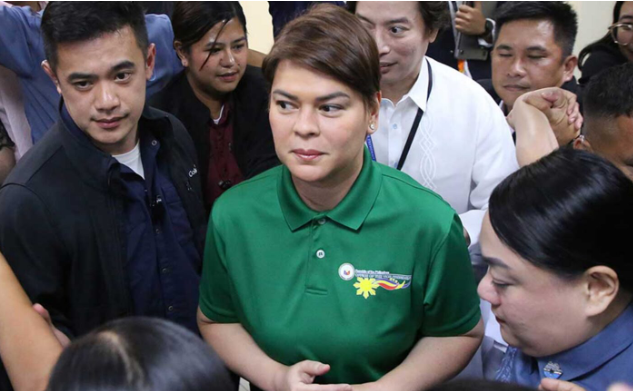
The impeachment trial of Vice President Sara Duterte has become increasingly contentious as her legal team continues to challenge the foundational evidence supporting charges that she conspired to assassinate President Ferdinand R. Marcos Jr, First Lady Liza Marcos and former Speaker Martin Romualdez. On the fourth day of proceedings in the Senate impeachment court, Duterte released a statement asserting that the entire complaint rests on a foundation of speculation and manufactured claims rather than substantive factual support. Her pronouncement came as the trial moved into deliberation of Article IV, the specific article addressing the alleged kill plot that Duterte herself initially disclosed to the public.
The trial mechanics shifted notably when Duterte's defence counsel, led by lawyer Mark Vinluan, subjected the prosecution's second witness, National Bureau of Investigation Regional Director Jeremy Lotoc from the Bangsamoro Autonomous Region in Muslim Mindanao, to rigorous cross-examination. During this questioning, Vinluan highlighted what the defence characterised as critical inconsistencies within the prosecution's own documentation—specifically discrepancies between affidavit dates and corresponding docket numbers from NBI files. These procedural irregularities, Duterte's team contended, cast serious doubt on the reliability and integrity of the evidence being presented to the court. The emergence of such documentation problems early in the trial suggests that the prosecution's case may face significant structural challenges as the proceedings advance.
Duterte's statement reflected a broader strategic argument: that the impeachment process has been weaponised through the invention of threats that never materialised and the fabrication of evidence to support a predetermined narrative. She characterised the prosecution's approach as fundamentally at odds with rule of law principles, arguing that transforming speculation into fact through repetition and institutional pressure corrodes public confidence in the justice system itself. The Vice President's language was notably sharp, describing the prosecution's method as creating fiction rather than establishing fact—a rhetorical positioning designed to frame the trial not merely as a legal dispute but as a test of institutional integrity. Her emphasis on the distinction between speculation and evidence reflects a central tension in the case: whether subjective assessments of threat constitute valid grounds for impeachment or whether only concrete, independently verified actions should suffice.
Central to understanding this impeachment's trajectory is the sheer logistical scope of the proceedings. The Senate impeachment court has allocated 11 days specifically for Article IV testimony and argument, yet the prosecution has utilised portions of this time to call only two witnesses. With the case still in its early phases and barely halfway through the allocated Article IV period, projections suggest the entire 92-day impeachment trial could extend into early 2027. This extended timeline introduces significant variables: public attention may wane, political circumstances may shift, and the proceedings' salience in national discourse may diminish. For Malaysian observers of Philippine politics, this protracted process reflects institutional complexities that distinguish presidential systems from Westminster parliamentary models more familiar in the region.
Notably, Duterte has maintained an absent physical presence throughout the trial proceedings, choosing instead to communicate through written statements and her legal representation. This decision carries strategic implications: it allows her to appear above the fray whilst her lawyers execute detailed courtroom tactics, yet it also limits her ability to directly address the court and potentially humanise her defence. The absence strategy suggests confidence in her legal team's capabilities whilst simultaneously avoiding the unpredictability of live testimony. Her chief of staff, Zuleika Lopez, was scheduled to appear as the prosecution's third witness, potentially offering insights into the Vice President's state of mind and decision-making during the relevant period.
The substance of Duterte's legal position rests on a foundational claim: that the assassination plot narrative, as presented by the prosecution, represents a constructed story lacking independent verification. By emphasising the prosecution's reliance on claimed threats rather than documented actions, Duterte's defence positions the case as one where intent has been inferred from statements rather than demonstrated through concrete evidence. This distinction matters considerably in impeachment jurisprudence, where the high bar of proof required in criminal trials arguably should apply. Whether the Senate will accept this evidentiary standard or adopt a lower threshold specifically suited to impeachment proceedings remains a crucial unresolved question that will likely shape the trial's outcome.
For the broader Southeast Asian context, this trial carries implications beyond Philippine constitutional law. Impeachment as a mechanism for removing sitting executives remains relatively uncommon in the region, and the procedural approaches adopted by the Philippine Senate may influence how other nations structure such accountability processes. Malaysia's experience with parliamentary challenges to executive authority operates through different mechanisms, yet observers in Kuala Lumpur and elsewhere might find instructive lessons in how the Philippines balances the grave power of impeachment against the fundamental protections owed to accused public officials. The trial's emphasis on evidentiary standards speaks to universal tensions in accountability systems: how to ensure serious constitutional violations are addressed whilst preventing impeachment from becoming a tool of political revenge.
Duterte's consistent refrain—that the complaint lacks supporting evidence—will likely remain her primary defence strategy throughout the trial's remaining phases. By making this argument repeatedly and prominently, she establishes a narrative frame for senators to utilise in rationalising a vote against conviction. Should the prosecution fail to introduce substantially stronger evidence in subsequent witness testimony, momentum could build toward acquittal. Conversely, if Lopez's testimony or subsequent witnesses provide new details that the prosecution can credibly connect to the alleged conspiracy, the trial's direction could shift markedly. The prosecution's decision to begin with lower-ranking officials rather than higher-level participants creates an information hierarchy that may constrain the impact of early testimony.
The institutional stakes extend beyond Duterte's political survival. The impeachment process itself faces scrutiny: if the conviction is pursued based on what the defence characterises as insufficient evidence, it establishes a precedent that impeachment can succeed on speculative grounds. Conversely, if the Senate acquits despite extensive accusation, it may establish that impeachment represents an ineffective tool even for the most serious allegations. Philippine constitutional development in the post-Marcos era has involved ongoing refinement of power-checking mechanisms, and this trial may substantially clarify the practical meaning of the Constitution's impeachment provisions. The outcome will likely influence how future administrations navigate conflicts with their own vice presidents and how ambitious officials assess the realistic risks of impeachment prosecution.

