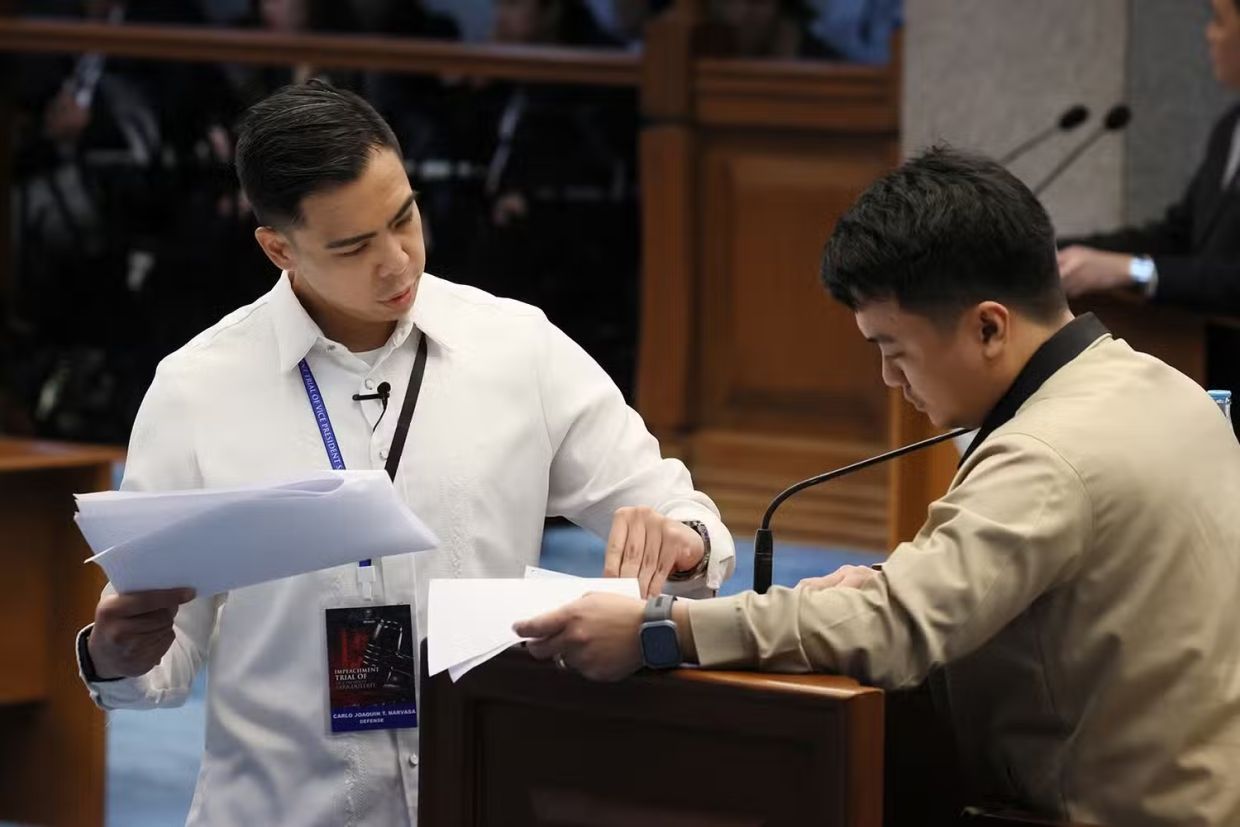
The impeachment trial of Philippine Vice President Sara Duterte entered a critical phase on Wednesday as her defence counsel mounted a comprehensive challenge to the legal foundation of the charges against her. Rather than disputing what the Vice President said, her lawyers argued that even if her statements were proven, they would not qualify as "other high crimes" under the 1987 Constitution—the legal threshold required for removing a sitting vice president through impeachment. This constitutional argument represents a deliberate strategic shift that could determine whether the case reaches a conviction or collapses on technical grounds.
The defence centred its cross-examination of National Bureau of Investigation senior agent John Mark Calilung on the prosecution's alleged failure to establish a direct link between Duterte's statements and any concrete criminal conspiracy. Mark Vinluan, leading Duterte's legal team, emphasised that the prosecution had presented no evidence of the Vice President hiring an assassin, despite this being the gravest implication of the charges. The defence highlighted contradictions in the prosecution's own position, noting that prosecutors had conceded the video recordings of Duterte's November 23, 2024 remarks did not conclusively demonstrate she had actually contracted anyone to carry out violence. This acknowledgment, the defence argued, undermined the entire foundation of the impeachment complaint.
Contextualising Duterte's statements has emerged as the defence's primary tactical approach. Rather than defending every word, her lawyers positioned the remarks within what they characterised as a pattern of persecution against the Vice President and her office. They presented evidence that on the day of Duterte's controversial press briefing, her chief of staff Zuleika Lopez was cited in contempt by the House committee investigating confidential funds and faced an impending transfer to a correctional facility. The defence team used video footage showing Lopez's emotional distress to argue that Duterte's response, though unconventional, was a protective reaction to what her camp describes as systematic oppression rather than a premeditated assassination plot.
The question of whether constitutional protections exist for statements made under duress or extreme stress emerged as a secondary line of defence. When Senator Risa Hontiveros probed whether the defence was suggesting that grave threats could be justified if motivated by legitimate grievances, defence lawyer Carlo Narvasa carefully walked back such a position, recognising the dangerous precedent such an argument might establish. However, the defence team maintained that Duterte's actions must be evaluated within the broader context of alleged unauthorised surveillance operations, the profiling of her residences in Davao and Manila, and the removal of trusted security personnel—allegations they claim created genuine security fears for her family that she felt obligated to address.
The procedural vulnerabilities in the National Bureau of Investigation's investigation became another focus of the defence strategy. Narvasa systematically challenged whether a proper investigation had actually occurred, noting the conspicuous absence of sworn statements from the three alleged targets of Duterte's threats. Calilung, the NBI investigator, acknowledged that President Marcos, First Lady Liza Araneta-Marcos, and former Speaker Martin Romualdez had never personally appeared before the bureau to file complaints or provide formal testimony about any threats they had received. The investigation proceeded motu proprio, or by the NBI's own initiative, without a formal complainant—an unusual procedural foundation for charges as serious as these.
The constitutional definition of impeachable offences became the intellectual battleground of the proceedings. Article XI, Section 2 of the Philippine Constitution lists culpable violation of the Constitution, treason, bribery, graft and corruption, betrayal of public trust, and "other high crimes" as grounds for removal. The defence contended that making provocative statements, however inappropriate or alarming, does not naturally fit within this enumeration. They argued that if the prosecution's theory prevailed, any vice president's intemperate remarks could become grounds for removal, a dangerous expansion of impeachment powers that the framers of the Constitution could not have intended.
Senator Francis Escudero intervened at several points to guide the proceedings, at one stage noting that the discussion had already crystallised the central legal question: whether Duterte's actions constituted impeachable offences under the Constitution. When Hontiveros asked defence counsel to draw explicit legal conclusions about whether threats could be justified under certain circumstances, Escudero reminded senator-judges that such conclusions should be reserved for the closing arguments phase of the trial. This intervention highlighted tensions between conducting a thorough examination and maintaining proper judicial procedure—a distinction Hontiveros herself noted had been handled differently in previous Philippine impeachment trials.
The absence of direct evidence linking Duterte to any assassination conspiracy became increasingly apparent through the defence's questioning. Despite the dramatic language of the impeachment complaint and the sensational nature of the allegations, the prosecution had not produced evidence of Duterte meeting with potential assassins, transferring funds to carry out violence, or making specific operational plans. The defence emphasised that the term "assassin" itself had been imported into the narrative by observers interpreting Duterte's remarks, rather than appearing explicitly in her own statements. This distinction, while perhaps semantic, underscores a fundamental gap between what was said and the criminal intent the prosecution seeks to prove.
The broader political and institutional context cannot be separated from the legal proceedings. The impeachment action represents an extraordinary escalation of tensions between President Ferdinand "Bongbong" Marcos and his own Vice President, a constitutional officer he did not choose and with whom he shares no political coalition. For Southeast Asian observers, the case illustrates the volatility of the Philippine constitutional system, where executive disputes can rapidly escalate into impeachment crises. The Vice President's defence strategy, focusing on constitutional threshold arguments rather than disputing the underlying facts, suggests her legal team believes conviction on the evidence is unlikely and that the better path to survival lies in persuading enough senator-judges that the acts charged simply do not meet the constitutional standard.
The NBI's investigative methodology came under sustained scrutiny, with defence counsel questioning whether the bureau had genuinely investigated or merely compiled available statements and video evidence. The admission that the revised affidavit from February 10, 2025 contained no statements from the purported victims or from journalists present at the briefing suggested a thin factual foundation for such serious charges. Calilung explained that the NBI had instead executed affidavits attesting to minutes of investigators' interviews and had secured Department of Justice certification of the sufficiency of its preliminary investigation, but the defence raised the essential question: whether paperwork compliance substitutes for genuine investigative rigour.
As the impeachment trial progresses, the constitutional and procedural arguments mounted by Duterte's defence team may prove decisive regardless of the rhetorical impact of her original statements. Philippine impeachment law requires not merely that a president or vice president say something offensive or alarming, but that they commit one of the specifically enumerated constitutional offences. The defence's strategy of placing this constitutional requirement at the centre of the trial—rather than attempting to defend every word—reflects a calculation that Senate conviction faces significant legal obstacles. Whether the senator-judges will prioritise constitutional fidelity or political pressure from the administration remains the essential question in what has become the most serious constitutional crisis facing the Marcos presidency to date.

