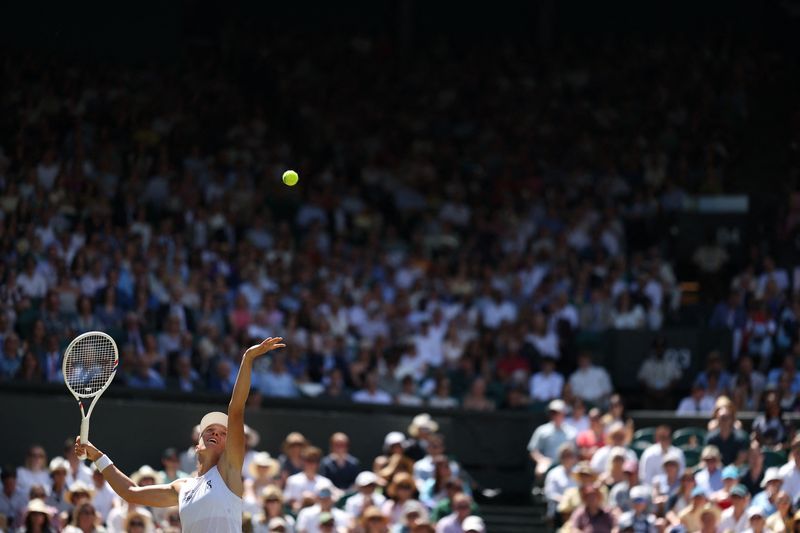
Alexandra Eala's breakthrough moment arrived under the summer sun at the All England Club on Saturday, when the rising Filipina toppled third-seeded Iga Swiatek with a commanding 7-6(9) 6-2 victory in the third round of Wimbledon. The result delivered a crushing blow to the Polish defending champion's quest to retain her title and propelled the 20-year-old from Manila into the tournament's last 16, where she will face runner-up Jasmine Paolini in a tantalising matchup that has already captured attention across the tennis world and beyond.
Swiatek's defence had begun under considerable pressure. The 25-year-old arrived at the All England Club searching for answers after an underwhelming showing at the Bad Homburg warm-up tournament, where an unexpected early exit left her momentum fractured heading into the grass-court season. Last year's championship triumph had finally silenced lingering doubts about her ability to master grass, tennis's quickest and most unforgiving surface, yet that confidence appeared fragile when she stepped onto Centre Court against Eala's dangerous baseline power.
The opening set epitomised the intensity that characterised their entire encounter. Both players traded aggressive shots with neither offering the other respite, creating a tense back-and-forth battle that showcased why grass tennis demands precision, nerve, and technical excellence under pressure. When Swiatek secured the set in a tiebreak at 9-7, she allowed herself a brief smile to acknowledge the quality on display. Yet the momentary satisfaction masked deeper frustrations that would soon boil over, as she directed visible frustration towards her coaching team in the stands and vented her anger by striking her racket against a chair—a telling sign that the defending champion sensed her dominance slipping away.
Eala's response proved decisive and unrelenting. The Filipino left-hander, armed with powerful baseline shot-making that repeatedly caught Swiatek off-balance, seized momentum at the start of the second set with devastating effectiveness. A double break that established a commanding 3-0 lead appeared to signal a rout in the making, with the Centre Court crowd—traditionally partisan but increasingly captivated by Eala's fearless tennis—providing roaring encouragement to the rising star. Their enthusiasm was not misplaced, as Eala's aggression and consistency appeared to shake Swiatek's confidence fundamentally.
Although Swiatek mounted a brief comeback attempt by retrieving one break of serve, the reprieve proved short-lived. Eala, demonstrating the mental fortitude required to close out major matches, staved off any threat of momentum swinging back towards her opponent and delivered the final blow with an emphatic forehand winner that sealed the championship and sent her into the last 16. The performance showcased not merely technical proficiency but also the psychological resilience that separates talented players from genuine title contenders.
This outcome carries particular significance within the context of their recent history. Swiatek had previously suffered a shock defeat to Eala at Miami last year, a result that stung the Polish champion sufficiently that she gained revenge when they reconvened on Madrid's clay courts. Yet grass-court tennis operates under fundamentally different parameters than clay, where Swiatek has traditionally dominated. Eala's aggressive baseline game and comfortable movement on the faster surface proved ideally suited to nullifying Swiatek's usual strengths, turning grass into a levelling factor rather than the disadvantage that many observers had anticipated.
For Malaysian and Southeast Asian followers of professional tennis, Eala's victory represents a watershed moment for regional representation at sport's highest levels. The Filipina's progression into the Wimbledon last 16 places her among a select group of Asian players competing at the tournament's latter stages, while her composed, aggressive approach—free from the defensive mindset that has historically characterised players from developing tennis nations—signals a genuine shift in competitive dynamics. Her next opponent, Jasmine Paolini, reached last year's final and brings formidable credentials, yet Eala has now demonstrated capability against the world's highest-ranked players.
Swiatek's early elimination also raises broader questions about the challenges defending champions face navigating Wimbledon's unique demands. The grass-court surface requires extensive preparation and acclimation that many top players struggle to achieve, particularly those who have dominated on slower surfaces. Swiatek's preparation was interrupted by early defeats, and her apparent struggle to regain rhythm proved fatal against an opponent hungry for a breakthrough victory and unencumbered by the psychological weight that defending champions often carry.
Eala's performance in this match reveals a player hitting stride at precisely the right moment in her career trajectory. The twenty-year-old has long possessed talent that suggested major tournament potential, yet belief, consistency, and the ability to execute under extreme pressure against elite opposition had remained question marks. Saturday's comprehensive victory against the defending champion answers those questions definitively, positioning her not as a prospect but as a genuine threat in any tournament she enters.
The implications extend beyond individual results. Eala's run at Wimbledon, combined with her previous Miami upset over Swiatek, establishes the Filipino as a player capable of defeating the world's best on multiple surfaces. This flexibility and adaptability distinguish truly elite players from those who excel within narrow parameters. As she advances deeper into Wimbledon and faces further tests against top seeding, her trajectory will continue capturing attention from observers across Asia and globally who recognise the significance of seeing regional players compete and win at tennis's most prestigious venues.

