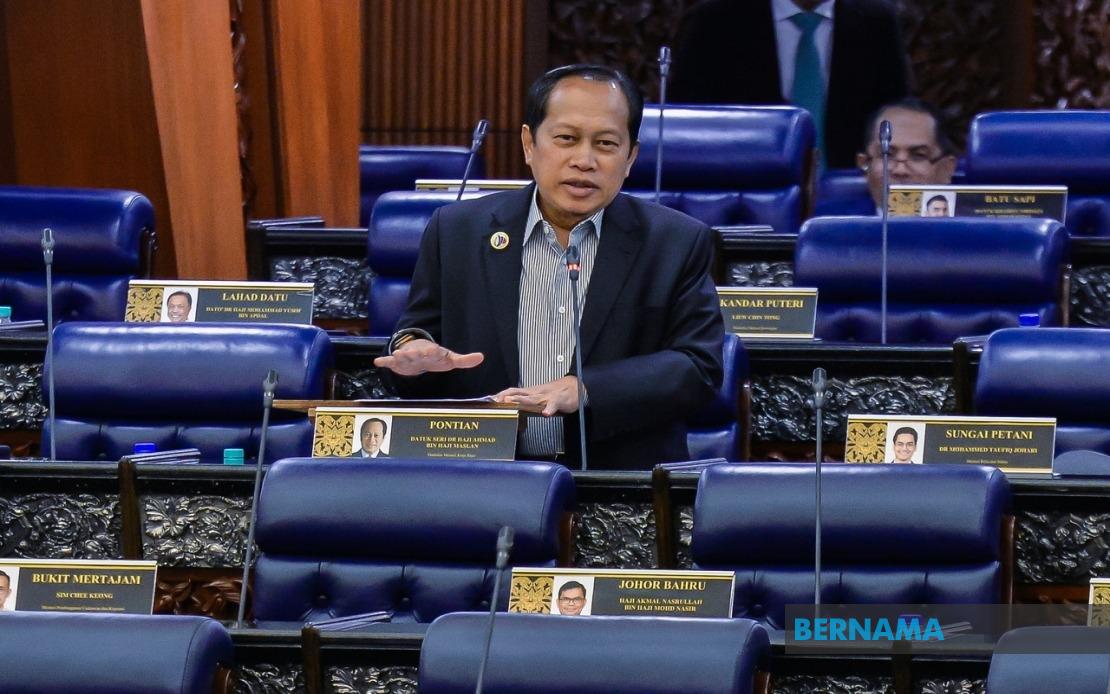
The government has opted for a public-private partnership to develop the East Coast Expressway Phase 3, shifting the financial burden from an already stretched federal budget to private sector investors willing to shoulder development costs. Deputy Works Minister Datuk Seri Dr Ahmad Maslan disclosed this approach during parliamentary proceedings, acknowledging that direct government funding for the ambitious transport infrastructure project was simply not viable under current economic circumstances.
The decision to pursue a Request for Proposal process means the successful bidder will assume complete financial responsibility for constructing and developing the expressway. This model has become increasingly common in Malaysia's infrastructure planning as policymakers balance the pressing need for new roads and transport links against diminishing fiscal space. By transferring the capital investment burden to the private sector, the government can still deliver critical infrastructure while preserving limited budget allocation for other pressing needs.
The proposed expressway will span 122 kilometres with dual two-lane carriageways, linking Kampung Gemuruh in Kuala Terengganu to Tunjung in Kota Bharu. Five interchanges are planned along the corridor. A 2022 feasibility study pegged the development cost at RM9.8 billion, though this figure may require updating given prevailing construction inflation and supply chain dynamics. For perspective, this represents a substantial commitment comparable to several years of transport ministry capital allocation, underscoring why private financing became attractive to government planners.
The timing of this expressway deserves careful consideration within Malaysia's broader transport infrastructure evolution. Currently, congestion on existing East Coast routes primarily occurs during predictable peak periods such as Hari Raya festivals and school holidays rather than representing chronic daily bottlenecks. Ahmad Maslan highlighted that several competing transport alternatives will soon reach completion, fundamentally altering travel patterns and demand projections for the region. The East Coast Rail Link is nearing completion and will provide an alternative for residents travelling to the Klang Valley. Additionally, the Kota Bharu-Kuala Krai Expressway and the Lingkaran Tengah Utama Expressway will create further options.
This proliferation of competing transport corridors creates complexity for PPP project viability. Private investors evaluating toll collection potential must factor in that East Coast residents will increasingly have multiple alternatives. The expressway would essentially become a third option rather than the primary choice, potentially constraining revenue projections that underpin loan repayment capacity. This competitive transport landscape raises legitimate questions about whether toll rates will remain affordable for ordinary users or whether private operators will need to set rates high enough to ensure financial returns, which could inadvertently push travellers toward competing government-subsidised alternatives.
Toll pricing mechanisms remain entirely unresolved at this stage, with Ahmad Maslan confirming that final rates depend on multiple variables including actual construction expenses, financing arrangements, operational and maintenance budgets, anticipated traffic volumes, and the length of the concession period. Each of these factors remains fluid. Construction costs in Malaysia have proven volatile, influenced by currency fluctuations, commodity prices, and labour availability. Financing terms will depend on prevailing interest rates and investor appetite for long-term toll revenue bets. Traffic projections carry substantial uncertainty given the emergence of competing alternatives and evolving regional development patterns.
The concession period—how many years the private operator will retain toll collection rights—has not been determined. This parameter critically affects project economics. Longer concession periods improve investor returns but extend the period during which users pay tolls. Shorter periods limit investor profitability, potentially deterring bidders or pushing them toward higher toll rates to meet return targets. Malaysian experience with PPP toll roads has sometimes generated public friction when concession terms appeared excessively generous to private operators relative to public benefit.
For Malaysian readers, this project reflects broader infrastructure financing challenges facing the country. Traditional government-funded development pathways have contracted due to fiscal pressures, compelling greater reliance on private sector capital and entrepreneurship. This transition creates both opportunities and tensions. Private operators bring efficiency incentives and capital where government budgets cannot stretch. However, the profit motive sometimes conflicts with accessibility and affordability principles that public infrastructure should embody. Citizens in East Coast states may ultimately face higher toll charges than comparable government-funded expressways elsewhere, reflecting the cost of private finance.
Regional implications extend beyond Peninsular Malaysia. This PPP approach to infrastructure funding sets precedent within ASEAN, where multiple nations grapple with similar budget constraints. Singapore, Thailand, and Indonesia watch Malaysian infrastructure decisions closely. If the LPT3 project succeeds financially and operationally, other regional governments may accelerate PPP models. Conversely, if toll rates prove prohibitively expensive or service quality disappoints, regional skepticism toward private infrastructure development could strengthen.
The government has indicated that crucial project parameters including toll system architecture, toll gantry locations, and specific concession terms remain under deliberation. This extended timeline provides opportunity for stakeholder consultation and refinement before RFP issuance. Policymakers would be wise to conduct rigorous traffic demand studies that account for competing corridors and realistic user elasticity. Toll rate sensitivity analysis should inform concession period selection. Public consultation could identify legitimate community concerns before bidding commences rather than after private operators have locked in expectations.
For East Coast residents and business operators, the eventual expressway promises improved connectivity and reduced travel time to the Klang Valley. However, the PPP financing model means this benefit comes with user charges that may exceed equivalent government-funded alternatives. The competitive transport environment provides some consumer protection—users dissatisfied with toll levels retain alternative corridor options. Nonetheless, those specifically requiring expressway services will have limited choice. Careful toll rate calibration will determine whether LPT3 achieves its intended objective of facilitating East Coast mobility or becomes an underutilised facility where private operators struggle to collect sufficient tolls for debt servicing.
The pathway forward requires transparent bidding procedures, realistic traffic projections, sustainable toll structures, and regular performance monitoring post-opening. Success will ultimately depend on whether private operators can deliver reliable expressway services at rates ordinary users find acceptable while simultaneously meeting investor return expectations. This balancing act represents the essential challenge of infrastructure PPPs in developing economies like Malaysia.

