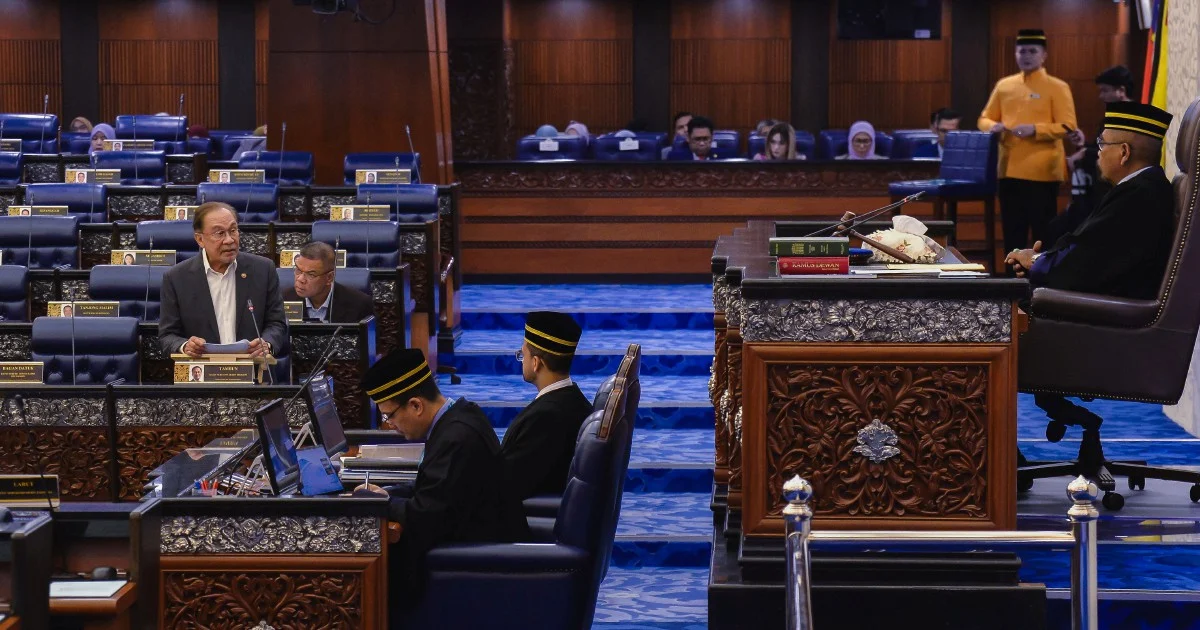
The Election Commission has been explicitly tasked with monitoring and acting against caretaker governments that breach established protocols by announcing policies or making decisions with financial consequences, according to Prime Minister Datuk Seri Anwar Ibrahim. This enforcement mechanism represents a significant step toward maintaining electoral integrity and preventing outgoing administrations from leveraging their remaining authority to influence electoral outcomes through financial commitments or policy initiatives.
The issue of caretaker government conduct during election campaigns has long remained contentious in Malaysia's political landscape, with instances of substantial spending announcements, project approvals, or policy rollouts frequently occurring in the period between the dissolution of Parliament and polling day. Such actions potentially disadvantage competing candidates and parties by favouring the ruling administration's visibility and perceived performance record while voters are forming their electoral preferences. The Election Commission's newly reinforced mandate addresses this structural vulnerability in the electoral process.
Under Malaysia's election framework, a caretaker government operates with constrained powers during campaign periods, theoretically limited to routine administrative functions and matters requiring urgent attention. However, the line between necessary governance and improper electioneering has historically proven ambiguous, creating opportunities for outgoing administrations to make announcements or approve projects that generate positive media coverage and reinforce voter perception of governmental effectiveness. Such actions, while technically permissible under narrow interpretations of caretaker conventions, fundamentally undermine the level playing field that democratic elections require.
The emphasis on decisions with financial implications is particularly important within the Malaysian context, where electoral competition often hinges on tangible benefits and developmental promises to constituencies. Caretaker governments retain access to budgeted funds and approval mechanisms that incoming administrations lack, allowing them to accelerate spending, approve infrastructural projects, or announce benefit packages during the campaign period. These financial instruments become particularly influential in persuading voters in marginal constituencies, where electoral margins are typically narrow and targeted announcements can shift outcomes.
This enforcement approach also reflects growing recognition that electoral integrity extends beyond voting procedures themselves to encompass the conditions under which voter decision-making occurs. International best practices increasingly recognize that fair elections require not only transparent balloting but also restrictions on incumbent advantage during campaign periods. The Election Commission's clarification signals Malaysia's alignment with these standards and demonstrates commitment to creating environments where electoral competition occurs on reasonably equivalent footing for all participants.
The practical implementation of this policy will necessarily involve establishing clearer definitions of prohibited conduct and developing monitoring mechanisms to identify breaches. Election officials will require access to government announcements, budget approvals, and policy decisions during caretaker periods to assess compliance with guidelines. This could involve coordination with relevant government agencies and the finance ministry to track commitments made during campaign periods, distinguishing between legitimate administrative continuity and improper electioneering.
For political parties and candidates, this enforcement commitment provides meaningful assurance that caretaker governments cannot systematically advantage themselves through financial announcements or policy initiatives during campaigns. Smaller and opposition parties, which typically lack the incumbent's institutional resources and media access, particularly benefit from restrictions limiting the ruling administration's capacity to dominate electoral discourse through government spending announcements or project approvals. This potential levelling effect could influence campaign dynamics, forcing ruling parties to compete more substantially on policy platforms rather than administrative visibility.
The regional dimension of this development deserves consideration as well. Southeast Asian democracies increasingly grapple with questions about incumbent advantage and the fairness of electoral competition. Malaysia's emphasis on enforcing caretaker guidelines potentially influences regional standards and peer discussions about electoral integrity. Other nations experiencing similar challenges may reference Malaysia's approach when establishing or reinforcing their own caretaker government protocols, contributing to regional strengthening of democratic practices.
Institutionally, this initiative represents expanded authority and responsibility for the Election Commission, positioning the body as an active guardian of electoral fairness rather than a passive administrator of voting procedures. The commission's willingness to investigate caretaker government conduct and recommend or implement sanctions reflects confidence in its capacity to operate independently and enforce guidelines without political interference. Such institutional confidence remains foundational to effective electoral governance in any democracy.
Moving forward, clarity will prove essential regarding specific thresholds for prohibited financial decisions and the procedures through which the Election Commission will investigate and address breaches. Defining the boundary between routine governance and improper campaign conduct requires nuance, as caretaker governments must necessarily continue certain operational functions while campaign restrictions take effect. Developing transparent criteria and communicated guidelines will help both administrators and political competitors understand exactly what constitutes prohibited conduct and what enforcement mechanisms the commission will deploy.
The practical impact of this policy will ultimately depend on consistent, visible enforcement. If the Election Commission demonstrates willingness to investigate significant breaches and impose meaningful consequences, the deterrent effect on caretaker governments will be substantial. Conversely, selective enforcement or toothless sanctions would undermine the policy's credibility and fail to address the underlying inequality of campaign conditions. Public reporting of investigations and outcomes will prove essential for demonstrating that all administrations face equivalent scrutiny and accountability.
This development also invites reflection on broader questions about incumbent advantage in Malaysian politics and the systemic factors that influence electoral competitiveness. While caretaker government restrictions address one dimension of fairness, media access, campaign financing, and administrative machinery deployment during elections present additional challenges to genuinely level electoral competition. The Election Commission's expanded focus on caretaker conduct suggests growing institutional recognition that comprehensive electoral integrity requires addressing multiple vulnerability points throughout the campaign period and governance transition.

