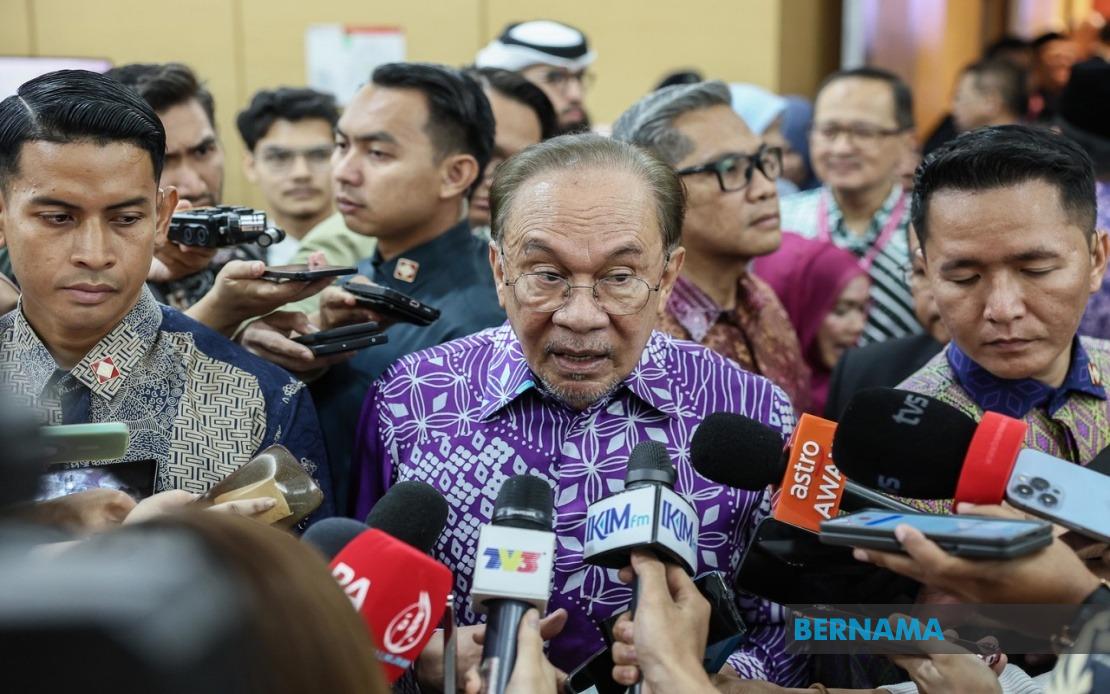
Prime Minister Datuk Seri Anwar Ibrahim has drawn a clear line between economic success measured by statistics and economic success measured by human flourishing, urging Malaysians to recognise that prosperity divorced from ethical considerations ultimately fails society. Speaking at the Humane Economy Global Discourse in Kuala Lumpur, Anwar articulated a vision of development that treats economic expansion as a vehicle for improving people's lives rather than an end goal in itself—a distinction that carries significant implications for how the nation approaches its policy-making and investment strategies over the coming years.
The Prime Minister's address comes at a pivotal moment for Malaysia and the broader Southeast Asian region, as nations grapple with the simultaneous opportunities and challenges posed by rapid technological disruption. He identified artificial intelligence, renewable energy systems, advanced manufacturing capabilities, and biotechnological innovation as defining features of the emerging global economy, acknowledging that Malaysia cannot afford to fall behind in these critical sectors. Yet his emphasis on embedding moral considerations within this technological transition suggests a deliberate attempt to chart a different course from purely market-driven development models that may exacerbate inequality or undermine social cohesion.
The concept of a "humane economy" that Anwar championed at the discourse represents a growing counterweight to the conventional wisdom that has dominated economic policy-making for decades. Throughout the developing world, policymakers have often operated under the assumption that maximising GDP growth and attracting foreign investment are paramount objectives, with the assumption that prosperity will eventually distribute itself through society. Anwar's framing questions this assumption directly, suggesting instead that the quality of economic growth matters as much as its quantity, and that policies should be explicitly designed to protect and enhance human dignity alongside material advancement.
For Malaysia specifically, this philosophical reorientation carries practical consequences across multiple policy domains. It implies scrutiny of investment proposals based not merely on their contribution to headline growth figures but on their social and environmental impacts, labour practices, and alignment with national values. It suggests prioritising sectors and technologies that genuinely improve living standards and economic opportunity for ordinary Malaysians rather than concentrating wealth and opportunity among a narrow segment of the population. It also underscores the importance of ensuring that technological transitions do not leave behind vulnerable segments of society—a concern that resonates across Southeast Asia as automation and AI reshape labour markets.
The participation of Minister in the Prime Minister's Department (Religious Affairs) Dr Zulkifli Hasan at the discourse highlights the explicitly moral and spiritual dimensions that Malaysia is seeking to incorporate into its economic framework. This reflects recognition that purely secular or technocratic approaches to development may overlook important sources of social cohesion and ethical guidance. In the Malaysian context, where Islam plays a central role in national identity and governance for a Muslim-majority population, integrating religious and moral perspectives into economic policy represents a natural extension of the nation's constitutional and cultural framework.
Chairman of Forum Ekonomi Manusiawi Prof Datuk Dr Saadiah Mohamad's presence as HEGD 2026 director suggests that the discourse reflects serious institutional commitment to translating philosophical principles into concrete policy frameworks. The establishment of platforms for ongoing dialogue about how economic policy can serve humanitarian ends indicates recognition that shifting from extractive to humanistic models of development requires sustained intellectual engagement and stakeholder coordination. For Malaysia, this positioning as a convener and thought leader in debates about morally-grounded economics could enhance its soft power and appeal within the region.
The challenge ahead lies in operationalising Anwar's vision without sacrificing competitiveness or economic dynamism. Balancing the imperative to remain attractive to foreign investors and competitive in global markets with commitments to protect human dignity and environmental sustainability demands sophisticated policy design and implementation. It requires developing metrics and accountability mechanisms that measure progress not only in conventional economic terms but in indicators reflecting social well-being, income distribution, environmental health, and quality of life. Many developed economies have begun grappling with similar challenges through frameworks like wellbeing economics, though translating these concepts into developing country contexts presents distinct difficulties.
For Malaysia's neighbours across Southeast Asia, Anwar's emphasis on marrying economic ambition with moral purpose may serve as a model or provocation. The region faces similar pressures to compete technologically and attract investment while contending with concerns about inequality, environmental degradation, and social disruption. Vietnam, Thailand, Indonesia, and the Philippines all face questions about whether rapid development genuinely improves conditions for their populations or primarily benefits elites. Malaysia's articulation of an alternative paradigm could stimulate broader regional conversation about what successful development actually looks like.
The timing of this discourse also reflects Malaysia's positioning in global debates about the future of capitalism and globalisation. As questions mount about whether current economic systems adequately address climate change, inequality, and social fragmentation, alternative frameworks like stakeholder capitalism and the humane economy gain traction among policymakers seeking legitimacy and effectiveness. By aligning itself with these emerging perspectives, Malaysia signals its engagement with contemporary global thinking while asserting its own cultural and religious foundations for economic ethics.
Implementing a development model genuinely centred on human dignity will require more than rhetorical commitment. It demands concrete investments in education and skills training that prepare Malaysians for emerging industries while protecting workers transitioning away from disrupted sectors. It necessitates fiscal policies that ensure wealth generated by economic growth reaches broader populations rather than concentrating among capital owners. It requires environmental protections that preserve natural capital for future generations rather than depleting it for short-term gains. Whether Malaysia's policymaking institutions can translate Anwar's moral vision into substantive programmes remains to be tested in coming years.

