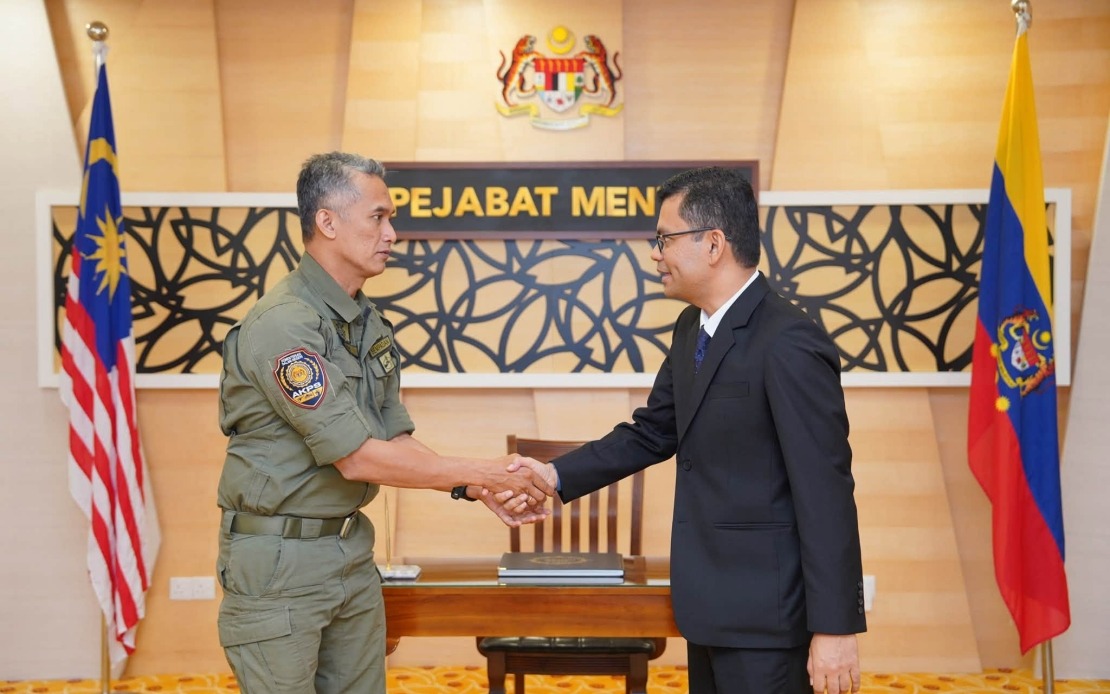
The Malaysian Economy Ministry held substantive discussions with the Border Control and Protection Agency (AKPS) in Putrajaya on strengthening the nation's border infrastructure and control mechanisms. During a courtesy visit by AKPS director-general Datuk Seri Mohd Shuhaily Mohd Zain to Economy Minister Akmal Nasrullah Mohd Nasir, both parties examined budget allocations and developmental priorities essential to fortify Malaysia's entry point operations across its maritime and terrestrial borders.
The conversation centred on four interconnected pillars: capital investment in physical infrastructure, technological modernisation, strategic asset creation, and workforce capability development. By addressing these dimensions simultaneously, the ministry and AKPS aim to construct a border management ecosystem that simultaneously safeguards national security while reducing friction for legitimate cross-border commerce—a delicate balance that significantly affects Malaysia's competitive position within the region's supply chains.
AKPS itself represents a structural innovation in Malaysian governance, having consolidated border enforcement responsibilities that were previously fragmented across multiple agencies. Since commencing full operations on January 1, 2025, the agency has inherited functions from six established departments: Immigration, Royal Malaysian Customs, Quarantine and Inspection Services, the Health Ministry's border divisions, Wildlife and National Parks, and the Road Transport Department. This integration theoretically eliminates bureaucratic redundancies and creates unified command authority at entry points, though realising this potential requires sustained investment and coordination.
The ministry's acknowledgement that capability-building through systematic development planning will generate tangible economic benefits reflects understanding that border efficiency directly influences Malaysia's attractiveness to investors and trading partners. Delays, unpredictability, or security vulnerabilities at ports and land crossings impose hidden costs throughout the logistics sector, ultimately affecting consumer prices and manufacturing competitiveness. For Southeast Asian manufacturers dependent on just-in-time supply networks, Malaysia's border reliability has outsized importance.
Technology adoption emerges as the cornerstone of AKPS's modernisation strategy. The agency is prioritising integrated biometric systems that can rapidly process travellers and verify identities against international watchlists. Automated cargo scanning equipment reduces manual inspection times while enhancing detection accuracy for contraband, dangerous goods, and intellectual property violations. Real-time data integration powered by artificial intelligence creates predictive capabilities, enabling officers to concentrate resources on higher-risk shipments and individuals rather than processing every crossing uniformly.
These technological investments carry implications beyond operational efficiency. Enhanced biometric capabilities strengthen Malaysia's participation in regional identity and security arrangements, including ASEAN frameworks that increasingly rely on interoperable biometric data. Automated scanning and AI integration position Malaysia as a technologically sophisticated trading hub, potentially attracting logistics companies and distribution centres that demand modern border infrastructure. Conversely, underinvestment in these systems risks Malaysia losing market share to neighbours with more advanced facilities.
Human resource capacity represents an equally critical yet often-overlooked dimension. Border officers require training not only in operating sophisticated equipment but in interpreting intelligence, exercising judgment under pressure, and maintaining professional standards in high-volume environments. The consolidation of six agencies into AKPS necessitated integrating staff with different training backgrounds, protocols, and organisational cultures. Mohd Shuhaily's emphasis on enhancing human resource capacity acknowledges that technology amplifies human capability but does not replace it; poorly trained operators can misuse advanced systems or overlook contextual warning signs that automated processes cannot detect.
The integrity priority mentioned by the AKPS director-general touches on a persistent vulnerability in border management globally and within Southeast Asia specifically. Corruption at entry points undermines security (allowing dangerous individuals or goods to transit), distorts trade (creating unfair competitive advantages for shipments willing to pay unofficial fees), and erodes public trust in government institutions. By emphasising integrity alongside operational efficiency, AKPS signals that it recognises border security and border corruption are interconnected challenges requiring simultaneous attention.
For Malaysian businesses, improved border efficiency translates into lower logistics costs and faster market access for exports. The automotive, electronics, and petrochemical sectors—all significant components of Malaysia's manufacturing base—depend heavily on rapid cross-border movement of components and finished goods. Enhanced border processes reduce dwelling times and related warehousing expenses. For the food and agricultural sectors, faster processing of perishable goods reduces spoilage and loss, improving market competitiveness for Malaysian producers in Singapore, Indonesia, and Thailand.
The regional context adds further dimension to these investments. Southeast Asian economies are increasingly competing for foreign direct investment and regional supply chain positioning. Singapore's port and airport facilities set high benchmarks for efficiency and security integration. Thailand and Vietnam have undertaken significant modernisation initiatives. Malaysia's border capabilities therefore represent not merely domestic infrastructure but competitive assets in a regional marketplace where companies choose locations partly on the basis of logistical predictability and speed.
Budget allocation discussions between the Economy Ministry and AKPS will determine whether these aspirations translate into reality. Infrastructure upgrades, technology procurement, and personnel training all carry substantial costs. The discussions suggest high-level political commitment, evidenced by the minister-level engagement and the creation of AKPS as a dedicated agency. However, budgetary constraints and competing spending priorities mean sustained funding cannot be guaranteed across the multi-year development horizons that infrastructure and organisational transformation typically require.
The success of AKPS will ultimately be measured not by the sophistication of its systems but by their practical outcomes: faster clearance times, higher detection rates for contraband and security threats, improved trader satisfaction, and maintained integrity standards. The Economy Ministry's involvement in development planning signals integration of border policy with broader economic strategy—an approach that recognises borders are not merely security barriers but critical infrastructure for national economic performance. Over coming months, the specific budget allocations and investment timelines will reveal the actual depth of this commitment.

