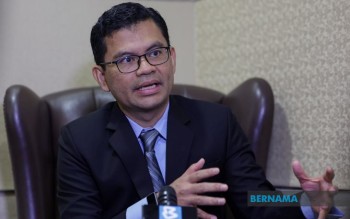
The Economy Ministry has charted an ambitious development spending plan for 2027, projecting approximately RM58 billion in total allocation to sustain the country's infrastructure expansion and economic momentum. Economy Minister Akmal Nasrullah Mohd Nasir disclosed the preliminary findings at a press conference in Putrajaya, emphasising that the figure represents the ministry's strategic approach to maintaining continuity in development initiatives across the nation. The proposal, however, remains subject to finalisation by the ministry's senior leadership before being forwarded to the Finance Ministry for formal consideration and integration into the broader fiscal framework.
The allocation strategy adheres to the government's established distribution formula, with 70 per cent of the total development budget earmarked specifically for basic development projects. This classification encompasses fundamental infrastructure such as roads, water systems, energy facilities, and other essential public amenities that form the backbone of economic activity. By maintaining this proportional commitment, the government aims to ensure that foundational infrastructure receives consistent investment despite competing budgetary demands, thereby supporting both current service delivery and long-term national development objectives.
Akmal Nasrullah underscored that the ministry's investment focus serves multiple strategic purposes: ensuring ongoing development projects reach completion without disruption, maintaining the positive economic growth trajectory the country has achieved, and accelerating Malaysia's physical infrastructure development to enhance competitiveness. These objectives align with broader national transformation initiatives aimed at modernising the economy and improving living standards across different regions. The emphasis on continuity reflects recognition that infrastructure gaps, if not addressed systematically, can constrain economic expansion and limit opportunities for productivity gains.
The proposed RM58 billion figure sits marginally above the 2026 allocation, signalling measured growth in development expenditure. During 2026, the government allocated RM57.6 billion to basic development projects, representing 71 per cent of total development spending. This represents an increase from 2025, when RM55.67 billion was designated for basic development, comprising 65 per cent of that year's allocation. The trajectory demonstrates an increasing fiscal commitment to foundational projects, though the year-on-year increments remain modest, suggesting careful management of overall government spending amid competing fiscal pressures and economic uncertainties.
The minister clarified that while the Economy Ministry concentrates on projecting and planning development expenditure levels, broader fiscal decisions fall within the purview of the Finance Ministry. Queries regarding potential incorporation of a global oil price benchmark into Budget 2027 were deferred to Finance Ministry jurisdiction, as petroleum revenue assumptions significantly influence Malaysia's fiscal planning. Akmal Nasrullah acknowledged that commodity price movements constitute one variable among many requiring consideration, but emphasised that comprehensive fiscal assessment—balancing development needs against revenue projections and macroeconomic forecasts—remains a Finance Ministry responsibility.
Economic performance in 2026 has exceeded initial expectations, providing important context for budget planning discussions. The Malaysian economy expanded by 5.8 per cent during the second quarter of 2026, resulting in first-half growth of 5.6 per cent. This performance surpassed Bank Negara Malaysia's official 2026 forecast range of 4 to 5 per cent, indicating stronger-than-anticipated economic activity. The robust expansion reflects resilience across multiple sectors and suggests that policy measures implemented in recent years have yielded tangible results. However, economists and policymakers acknowledge that maintaining such momentum presents genuine challenges as the year progresses.
Despite positive recent performance, policymakers remain alert to emerging risks and constraints that could moderate growth in subsequent quarters. The exceptionally strong growth recorded in the first half of 2027 will establish a comparatively elevated baseline, making identical percentage growth rates mathematically more difficult to achieve in the third and fourth quarters. Additionally, global economic uncertainties continue to present headwinds; external geopolitical tensions, supply chain vulnerabilities, and financial market volatility could dampen regional and domestic demand. Climate factors, including potential El Niño effects, could disrupt agricultural output and energy consumption patterns, creating additional complications for economic management.
The government's vigilance regarding global economic conditions reflects lessons learned from previous cycles of external shocks. Southeast Asia's open economies remain vulnerable to international trade fluctuations, currency movements, and capital flow reversals. Malaysia's substantial trade exposure and reliance on manufacturing and commodities amplify this susceptibility. Consequently, development spending decisions must account for scenarios where external demand weakens or financial conditions tighten unexpectedly, necessitating fiscal flexibility and careful project sequencing to mitigate disruption risks.
Budget 2027 will be formally presented to Parliament on October 9, 2026, with Prime Minister Datuk Seri Anwar Ibrahim, who also holds the Finance Minister portfolio, delivering the presentation to the Dewan Rakyat. This timeline provides the Economy Ministry and Finance Ministry approximately three months to complete comprehensive budget negotiations and finalisation. The development expenditure proposal from the Economy Ministry represents merely one component of a substantially larger budgetary exercise encompassing operating expenditure, debt servicing, subsidies, and other fiscal commitments. Integration of the RM58 billion development figure into the complete fiscal framework will require careful trade-offs and prioritisation to ensure macroeconomic stability and adherence to fiscal consolidation targets.
For Malaysian stakeholders and regional observers, the 2027 budget signals continued government commitment to infrastructure investment despite economic uncertainties and competing demands. Construction firms, project contractors, and related industries will scrutinise the final allocation to assess pipeline visibility and planning certainty. State governments and local authorities will evaluate how development allocations are distributed geographically and sectorally. The RM58 billion figure, if approved substantially unchanged, would represent continuation of steady infrastructure investment as a policy priority, supporting employment creation and productive capacity expansion across the economy.

