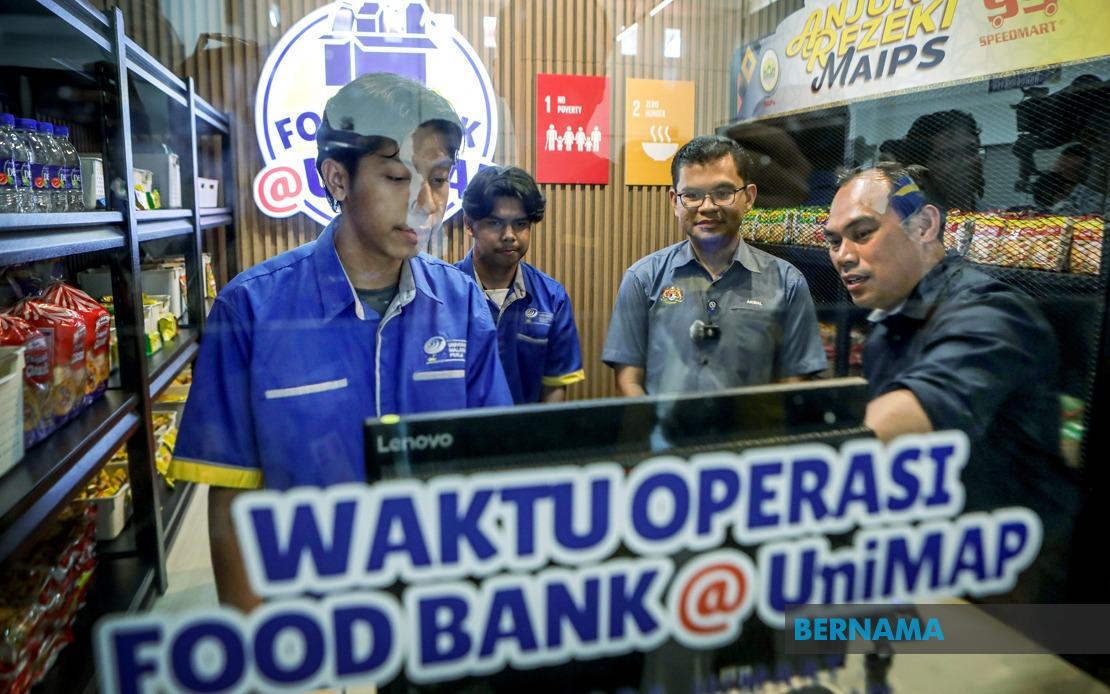
Economy Minister Akmal Nasrullah Mohd Nasir announced the ministry's intention to seek a funding extension for the People's Income Initiative – Food Entrepreneur Initiative (IPR-INSAN) during a visit to Universiti Malaysia Perlis on July 10, underscoring the government's commitment to supporting B40 entrepreneurs in the food sector. The decision reflects mounting evidence that the initiative delivers tangible benefits across multiple stakeholder groups, from struggling business owners to cost-conscious students navigating rising living expenses.
The IPR-INSAN programme represents an innovative approach to economic inclusivity by positioning vending machines as modern business outlets within university campuses. This model addresses two persistent challenges in Malaysia's social economy: creating sustainable income pathways for low-income entrepreneurs while simultaneously ensuring university students—particularly those from disadvantaged backgrounds—have access to nutritious meals at prices they can afford. The initiative thus embodies a form of integrated social policy that tackles economic inequality from both supply and demand perspectives.
During his campus visit, Akmal Nasrullah examined the programme's real-world implementation through operational vending machines at Universiti Malaysia Perlis's residential colleges, observing how the initiative creates direct connections between B40 entrepreneurs and a reliable consumer base. He also inspected complementary welfare initiatives including the Food Bank and MADANI Dapur Siswa, recognizing how these interconnected programmes form a comprehensive support ecosystem for vulnerable student populations. This hands-on oversight signals the ministry's serious engagement with programme monitoring and evaluation rather than bureaucratic detachment.
Financial data from participating vendors demonstrates the programme's income-generation capacity, providing concrete justification for the extension request to the Ministry of Finance. At Tuanku Abdul Rahman Residential College, entrepreneur Norleyana Nordin achieved average monthly revenues of RM2,178.80, with a peak of RM4,905 in January 2025, suggesting sustainable business viability. At the neighbouring Tuanku Tengku Fauziah Residential College, vendor Noor Hasfalela Mohd Noor recorded substantially higher figures, averaging RM4,595 monthly with peak earnings reaching RM10,012 in January 2026, then declining slightly to RM5,049 in February and RM4,868 in April. These variations across vendors and seasons highlight the programme's capacity to generate variable but meaningful income for participants.
The income figures carry particular significance within Malaysia's economic context, where B40 households earn below RM4,360 monthly. Monthly revenues ranging from RM2,000 to RM10,000 represent potential contributions to household incomes that could substantially improve living standards, reduce poverty-related stress, and enable entrepreneurial reinvestment in business expansion. For university-based vendors specifically, the accessible location and guaranteed customer flow through the vending model remove traditional startup barriers related to securing prime retail space or managing irregular customer traffic.
The programme's technology-enabled approach deserves analytical attention, as it modernizes informal food entrepreneurship rather than displacing it. By integrating vending machines with university infrastructure, IPR-INSAN offers vendors a professional business platform while maintaining the authenticity of homemade food production that many B40 entrepreneurs depend upon as their competitive advantage. This hybrid model contrasts with approaches that either ignore informal enterprise or attempt to formalize it through rigid regulatory frameworks that often exclude poor vendors.
From a consumer perspective, the initiative addresses the growing affordability crisis in Malaysian tertiary education. Student welfare increasingly depends on access to reasonably priced meals, particularly as accommodation and tuition costs continue rising. The vending machine model provides 24-hour food access within secure campus environments, reducing time spent off-campus seeking cheaper alternatives and allowing students to allocate limited budgets more efficiently. This directly supports academic outcomes by reducing food insecurity's documented negative impacts on concentration and completion rates.
The ministry's decision to pursue a Finance Ministry extension rather than allow the programme to expire demonstrates recognition that one-off or pilot initiatives often fail to achieve lasting impact. B40 entrepreneurs require consistent policy support to build reliable business operations, and discontinuing such programmes creates uncertainty that discourages participants from making inventory investments or skill development. A sustained commitment signals government intention to maintain this avenue for income generation and poverty reduction.
Universiti Malaysia Perlis's partnership role illustrates how tertiary institutions can function as platforms for social policy implementation beyond their teaching missions. By providing physical infrastructure, customer access, and administrative support, the university demonstrates institutional commitment to graduate employment, student welfare, and community economic development simultaneously. Replicating this model across Malaysia's university network could substantially expand the programme's reach and create hundreds of additional income opportunities for B40 entrepreneurs.
The extension request arrives amid broader government policy focus on equitable growth and dual-track social support, aligning with MADANI framework objectives of ensuring no community member is left behind economically. However, the programme's future depends on Finance Ministry approval and budget allocation, raising questions about competing priorities within government spending. Success in securing extension funding will signal whether economic inclusivity remains a genuine policy priority or remains largely aspirational rhetoric.
Looking forward, the IPR-INSAN programme offers lessons for scaling social entrepreneurship support across Southeast Asia, where informal food sectors employ millions of workers earning minimal incomes. The technology-mediated platform approach reduces operational costs while improving vendor professionalization and customer accessibility compared to traditional informal market structures. As other nations grapple with similar affordability and employment challenges, Malaysia's documented experience with this initiative could inform regional policymaking and development strategy.

