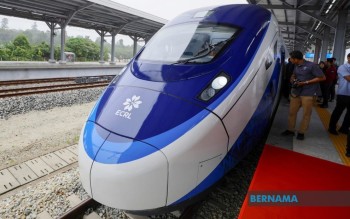
The East Coast Rail Link represents far more than a transportation infrastructure project—it embodies a comprehensive economic strategy designed to reshape the commercial landscape of Malaysia's East Coast and reshape inter-regional commerce. Datuk Mohd Shahar Abdullah, Deputy Minister of Economy and Member of Parliament for Paya Besar, has outlined an ambitious vision for how the ECRL will catalyse entrepreneurial expansion and regional prosperity, particularly by dismantling geographical barriers that have historically constrained business growth in Peninsular Malaysia's eastern states.
At its core, the ECRL development philosophy extends beyond delivering modern rail connectivity to constructing an integrated economic ecosystem that encompasses the complete supply chain architecture necessary for modern commerce. This encompasses not merely the physical transportation of goods, but the creation of complementary industries spanning construction services, operational management, and long-term maintenance contracts. By conceptualising the project holistically, policymakers acknowledge that infrastructure value is multiplied when accompanied by deliberate institutional development that attracts ancillary industries.
The logistics sector stands to experience particularly transformative opportunities as the ECRL network becomes operational. Warehousing facilities, distribution centres, and industrial parks will proliferate along the corridor, fundamentally altering how businesses in the East Coast manage inventory and fulfil orders. For entrepreneurs currently constrained by poor connectivity to West Coast markets, this infrastructure shift represents a genuine competitive advantage. The reduction in transportation time and associated costs could reshape pricing structures and profit margins across sectors ranging from manufacturing to agricultural processing.
The concept of transit-oriented development, cargo-oriented development, and strategic industrial park placement represents sophisticated urban and economic planning. By intentionally clustering commercial facilities near ECRL access points across Pahang, Terengganu, Kelantan, and Selangor, planners can create natural hubs where businesses benefit from proximity advantages, shared logistics infrastructure, and concentrated consumer markets. This clustering effect produces economies of agglomeration that individual businesses cannot achieve in isolation.
For existing entrepreneurs, the ECRL opens pathways to market expansion previously constrained by logistical friction. A batik manufacturer based in Terengganu, for instance, could now economically serve Selangor and Kuala Lumpur markets without the cost penalties that previously made such distribution unviable. This market access expansion has multiplicative effects on production efficiency—as Datuk Mohd Shahar noted, the capacity to scale from producing 10,000 to 20,000 units fundamentally improves unit economics and price competitiveness. Larger production volumes allow businesses to negotiate better terms with suppliers, invest in productivity-enhancing technology, and achieve margins necessary for reinvestment and growth.
The tourism dimension of ECRL development deserves particular attention for Southeast Asian observers. Enhanced rail connectivity typically catalyses visitor arrivals to secondary cities and rural destinations that previously suffered from accessibility challenges. As tourist flows increase through the East Coast corridor, associated economic activities cascade through local economies—small traders gain customer bases, food entrepreneurs find expanded markets, and handicraft producers encounter buyers who might never have ventured to remote production areas via conventional transportation. Batik artisans, palm-based craft producers, and other heritage industries gain access to domestic and regional tourism markets that previously required costly intermediaries.
However, Datuk Mohd Shahar's counsel regarding technological adaptation represents a crucial counterpoint to infrastructural optimism. Infrastructure alone does not guarantee prosperity; entrepreneurs must simultaneously modernise their operations and embrace digital commerce platforms, supply chain management systems, and customer engagement technologies. Businesses that fail to adapt their models risk squandering ECRL advantages by clinging to outdated operational structures. The most successful East Coast entrepreneurs will be those who combine improved logistics access with digital transformation, enabling them to compete effectively in integrated regional markets.
The project's construction timeline underscores its advancing reality rather than speculative potential. As of April, the overall mega project recorded 93.66 per cent completion, with the Pahang segment reaching 97.33 per cent progress, positioning December as a realistic operational commencement window. This timeline means entrepreneurs and logistics operators should already be strategising how to position themselves for commercial opportunities the moment rail operations commence. First-mover advantages in establishing ECRL-adjacent logistics facilities or distribution networks will accrue to businesses demonstrating foresight and capital availability.
From a regional Southeast Asian perspective, the ECRL development offers instructive implications about infrastructure's economic multiplier effects. Countries throughout the region are investing heavily in rail and logistics infrastructure, yet success depends upon deliberate policy coordination that extends beyond engineering excellence to encompassing supply chain ecosystem development, industrial park planning, and regulatory environments encouraging private sector participation. Malaysia's integrated approach—combining transportation infrastructure with logistics facilities, warehousing, and industrial development—provides a model for how infrastructure investment generates sustainable economic transformation rather than merely moving goods from point A to point B.
The East Coast trajectory over the next 24 months will provide valuable data about whether well-designed infrastructure can durably alter regional economic development patterns. If ECRL successfully catalyses the business expansion, market access improvements, and inter-regional integration that policymakers envision, it will validate the infrastructure-as-economic-policy approach. Conversely, underutilisation or slower-than-anticipated adoption would suggest that infrastructure alone insufficient without accompanying policy frameworks, business support services, or market conditions favouring utilisation. Either outcome will shape how other Southeast Asian nations approach their own connectivity megaprojects.

