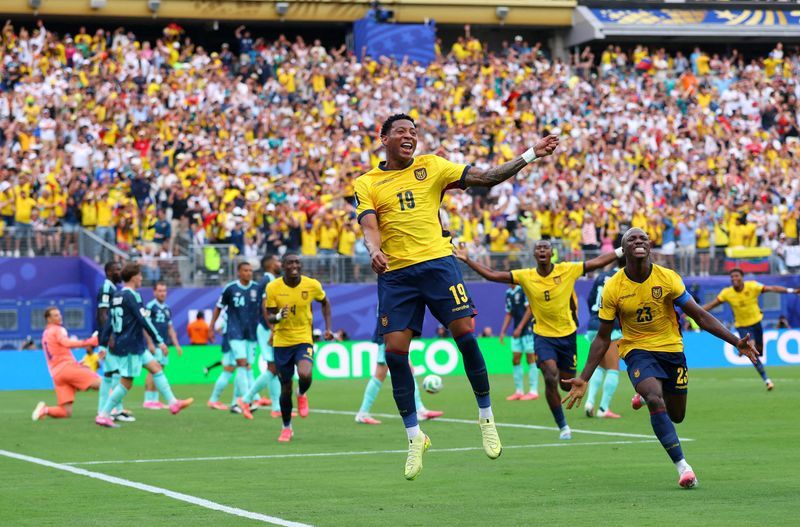
Ecuador's World Cup campaign was on life support when they took the field against Germany on Thursday at the sold-out MetLife Stadium in East Rutherford, New Jersey. Having failed to find the back of the net across their opening two matches despite 39 attempts, the South American side faced elimination unless they could conjure an unlikely triumph. What followed was one of the tournament's most memorable turnarounds, as Ecuador dispatched the already-qualified Germans 2-1 to claim a spot in the last 32 as one of the eight best third-placed finishers.
The omens appeared bleak from the outset. Germany, seeking a third consecutive victory and a 12th straight win across all competitions, struck with devastating speed. Leroy Sane needed just two minutes to open his account at a major international tournament in his 15th appearance, finishing left-footed from inside the box after Florian Wirtz picked him out with a clever pass following a quick throw-in. The goal seemed to validate Germany's standing as group favourites and suggested Ecuador's campaign was effectively over.
Ecuador's protestations about a raised foot from Aleksandar Pavlovic on Pedro Vite in the build-up fell on deaf ears as referee Tori Penso allowed the goal to stand. Rather than capitulate, however, the South Americans responded with remarkable composure. Just seven minutes later, Nilson Angulo produced an expertly curled finish from the edge of the penalty box that left goalkeeper Manuel Neuer slow to react. The goal sparked volcanic celebrations among Ecuador's travelling supporters and represented a watershed moment—their first goal of the tournament after 40 attempts.
The match remained tightly contested through the opening stages of the second half, though controversy again intervened. When Kai Havertz tumbled in the box following a pass from Felix Nmecha, Penso pointed to the spot. The decision appeared straightforward, but after a Video Assistant Referee review, the official reversed his call, determining that Germany had committed a foul during the build-up rather than Joel Ordonez fouling inside the area. The overturned penalty proved pivotal, maintaining Ecuador's hopes as clear-cut opportunities became scarce for both teams.
The decisive moment arrived in the 78th minute when substitute Kevin Rodriguez flicked a corner to the near post. Gonzalo Plata, demonstrating sharp instincts and positioning, reacted quickest and stabbed the ball past Neuer into the net. The stadium erupted in jubilation as Ecuador's players and supporters realized they had pulled off an improbable escape. What had seemed impossible two hours earlier—advancing from a group containing the tournament's established powerhouse—had become reality through sheer determination and clinical finishing when it mattered most.
Germany's defeat offered a cautionary lesson about complacency and exposed defensive frailties that had manifested throughout the group stage. The Germans conceded in all three matches despite securing top spot on six points, finishing ahead of Ivory Coast on goal difference after the Ivorians defeated Curaçao 2-0 elsewhere. Such vulnerabilities raise questions about their prospects in the knockout rounds, where precision defending becomes increasingly critical. Their offensive prowess remained evident, but the inability to keep clean sheets against varying levels of opposition suggested defensive reconstruction was necessary.
For Ecuador, the victory represented more than mere qualification. The team had arrived in New Jersey under intense pressure following a defeat to Ivory Coast and a goalless draw with Curaçao, situations that left them needing a win or facing elimination. Their previous tournament record had been bleak, with that 0-39 shooting drought creating psychological pressure that might have broken a less resilient squad. By finally breaking through in the ninth minute and then producing the crucial second goal when the Germans appeared to be regaining control, Ecuador demonstrated the character and tactical intelligence that can sustain teams through tournaments.
The clash also highlighted the razor-thin margins that determine World Cup outcomes. Ecuador could easily have been buried by Sane's early strike and Germany's early dominance. Instead, the South Americans' swift response and subsequent resilience—including their ability to maintain composure when the penalty decision fell in Germany's favour—showcased qualities that extend beyond mere technical ability. Nilson Angulo's curled finish and Plata's poaching instinct provided the clinical edge needed against elite opposition.
The result carries implications for Southeast Asian football observers, particularly given the region's own struggles at major tournaments. Ecuador's success demonstrates that determination, tactical discipline, and seizing moments of vulnerability can overcome apparent disadvantages. Their journey from tournament-opening futility to knockout-stage qualification offers a template—however modest—for developing nations seeking to compete effectively against established powers. The victory equally underscores that defensive organisation and efficient conversion of limited chances matter more than maintaining possession or manufacturing numerous opportunities.

