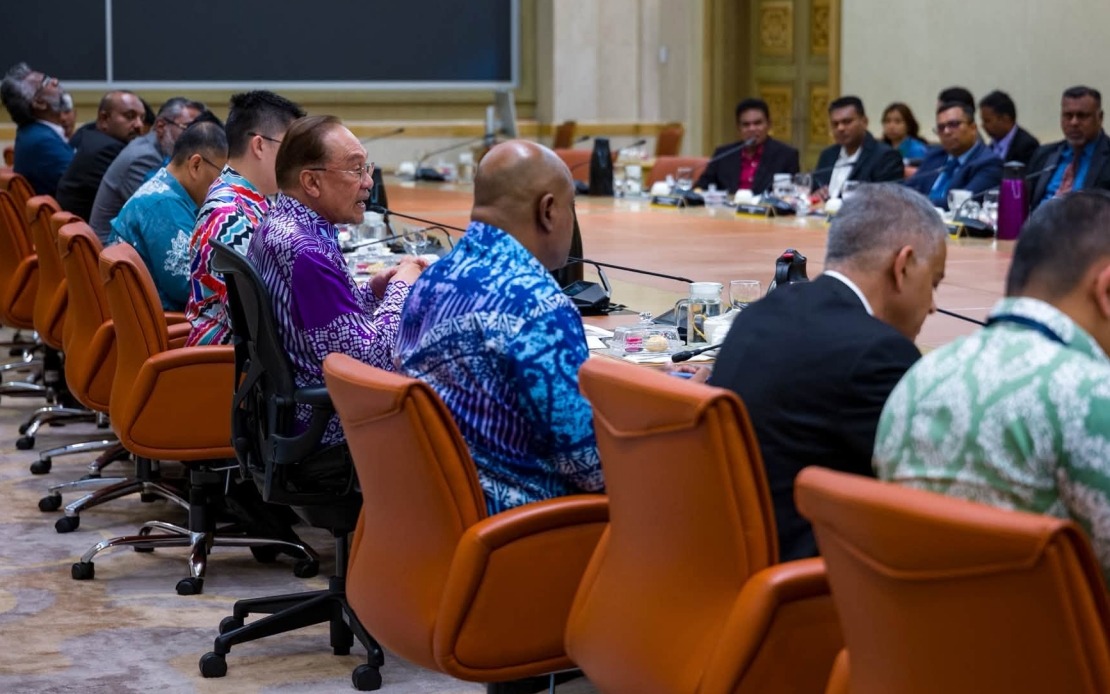
Prime Minister Datuk Seri Anwar Ibrahim has identified education and comprehensive social welfare as foundational elements for advancing the interests of Malaysia's Indian community, signalling a broader commitment to inclusive development across different ethnic groups in the country. Speaking through a Facebook post following consultations with Indian community leaders, Anwar articulated a multifaceted approach that extends beyond traditional assistance programmes to encompass skills training and viable pathways into the employment market.
The Premier's emphasis on education reflects an understanding that long-term community empowerment requires investing in human capital. Quality schooling serves as a gateway for individuals from economically disadvantaged backgrounds to access better-paying professions and positions of influence within society. This resonates particularly in Malaysia, where educational disparities have historically contributed to wealth gaps between different demographic groups. By prioritising access to quality learning environments, the government aims to dismantle structural barriers that have historically limited upward mobility for certain segments of the population.
Anwar's comments carry particular significance given his dual role as Finance Minister, suggesting that resource allocation and budgetary considerations have been factored into these policy priorities. The emphasis on welfare provision indicates recognition that immediate social safety nets remain necessary even as longer-term educational interventions take root. Comprehensive welfare systems—encompassing healthcare, assistance during unemployment, and support for vulnerable families—address acute hardship while creating stability that allows individuals to pursue educational and occupational advancement.
The Malaysian Indian Transformation Unit, or MITRA, emerges as a key institutional vehicle for implementing these objectives. Anwar's directive to this agency and other related departments underscores the need for proactive rather than reactive engagement with Indian communities throughout Malaysia. Rather than waiting for community members to navigate bureaucratic channels, government bodies must actively identify where assistance is most needed and design interventions that directly reach intended beneficiaries.
A critical element in Anwar's message concerns accountability and targeting. He explicitly urged agencies to verify that government initiatives genuinely reach those experiencing the greatest hardship, rather than becoming diluted through inefficient distribution mechanisms. This reflects persistent concerns about whether well-intentioned programmes actually benefit their intended recipients or whether resources leak into administrative overhead or reach those with stronger connections to decision-makers. Rigorous monitoring and honest assessment of programme outcomes would help maximise impact per ringgit spent.
The Prime Minister's invocation of compassion alongside accountability and governance principles establishes an ethical framework for policy implementation. This combination suggests that technical efficiency alone is insufficient—government must couple administrative competence with genuine concern for citizen welfare. For Malaysia's Indian community, many of whom have experienced periods of marginalisation and uneven resource distribution, such assurances matter considerably in building confidence in government initiatives.
Skills development constitutes the third pillar of Anwar's framework, bridging the gap between education and employment. Vocational training, apprenticeships, and technical certification programmes allow individuals to acquire marketable competencies aligned with actual labour market demands. In an economy increasingly shaped by technological change, ensuring that Indian Malaysians gain access to modern skills training—whether in digital technologies, renewable energy, healthcare, or other growth sectors—becomes essential for preventing community members from being left behind as the economy evolves.
The broader framing around leaving no segment of society behind speaks to Malaysia's persistent challenge of ensuring that development benefits reach all Malaysians equitably. Regional disparities, class divisions, and ethnic considerations have sometimes meant that certain groups experience economic growth differently than others. Anwar's language suggests that the government recognises these gaps and intends to address them through deliberate policy choices rather than assuming that aggregate economic growth automatically distributes fairly across all populations.
For the Indian community specifically, these commitments arrive at a moment when several demographic and economic trends converge. Younger generations seek better educational opportunities and professional prospects. Globalisation creates both opportunities and competitive pressures. Meanwhile, some traditional occupations and industries that historically employed Indian Malaysians have transformed or declined. Government support for education and employment access helps communities navigate these transitions without experiencing lasting disadvantage.
The emphasis on grassroots engagement and community consultation also reflects evolving expectations about governance. Rather than government agencies making unilateral decisions about community needs, genuine consultation and collaboration build programmes grounded in actual requirements rather than assumptions. This approach requires humility from officials and sustained dialogue with community representatives.
Implementing these priorities will require sustained commitment and adequate resource allocation across multiple government departments. Education improvements demand investment in schools, teacher training, and access programmes for disadvantaged students. Welfare expansion requires expanding social security coverage and benefits. Skills development necessitates partnerships with employers and educational institutions. Anwar's public commitment signals political will, but translating rhetoric into effective programmes remains the continuing challenge for Malaysian policymakers navigating diverse community needs across the nation.

