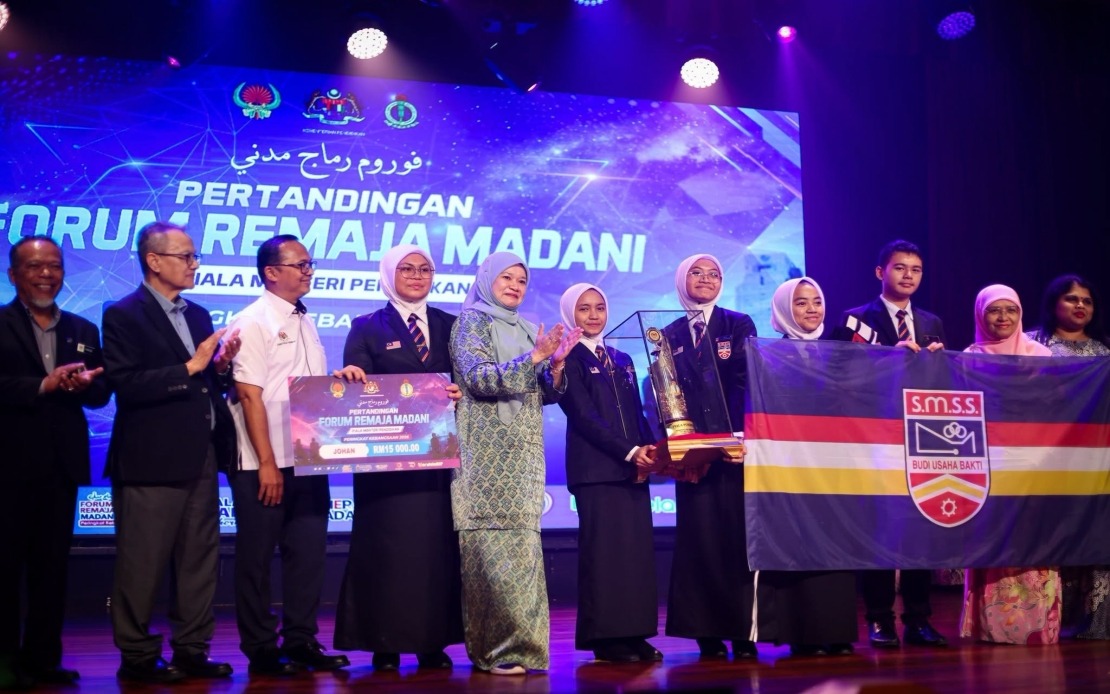
Education Minister Fadhlina Sidek has outlined a vision for Malaysian character education that places emphasis on developing young people's ability to express themselves thoughtfully while remaining respectful of divergent perspectives. Speaking after observing discussions at the National MADANI Youth Forum, Fadhlina articulated what she sees as the core purpose of contemporary character development in schools and youth spaces.
The minister's remarks signal a departure from traditional approaches that prioritised compliance and uniformity among students. Instead, Fadhlina advocates for an educational model where articulating one's position, examining alternative viewpoints, and defending arguments form the backbone of character formation. This framework reflects broader global trends in pedagogy that recognise critical thinking and civic engagement as essential skills for young citizens navigating increasingly complex societies.
Fadhlina emphasised that the goal extends beyond instilling conventional notions of good behaviour in students. Rather, educators should create environments where young people develop the confidence to communicate their perspectives while simultaneously cultivating the intellectual discipline to evaluate ideas rigorously. The ability to listen with openness when encountering disagreement stands alongside these capacities as equally important.
Language plays a crucial role in this educational philosophy, according to Fadhlina. She stressed that efforts to strengthen the Malay language should proceed hand-in-hand with broader character education initiatives. The minister argued that when younger generations perceive Malay as a vehicle capable of expressing their authentic thoughts and sophisticated arguments, they naturally become more invested in developing their language skills.
This perspective carries significant implications for Malaysia's educational policy. As the nation continues balancing globalisation with cultural preservation, Fadhlina's framework suggests that linguistic and moral development need not conflict. Instead, they can reinforce one another when students see the national language as a dynamic tool for meaningful expression rather than merely an academic subject.
The minister's statement also touches on broader questions of national maturity and democratic culture. Fadhlina asserted that a genuinely developed nation does not derive strength from universal agreement among its citizens. Rather, genuine national progress emerges when successive generations understand how to navigate disagreement productively—expressing their positions clearly while acknowledging the legitimacy of competing views.
This conception challenges zero-sum approaches to national discourse that sometimes characterise Malaysian political debate, where differing opinions are occasionally framed as threats rather than healthy expressions of democratic participation. By positioning respectful disagreement as a marker of national sophistication, Fadhlina implicitly encourages young people to engage more actively in civic life.
The practical implementation of such character education requires educators willing to facilitate open dialogue rather than control outcomes. Fadhlina highlighted this responsibility, noting that educators should not prescribe what young people should say. Instead, the focus shifts to ensuring that when students do speak, they possess adequate knowledge to substantiate their positions and sufficient courtesy to engage with others meaningfully.
This distinction matters considerably in the Malaysian context, where concerns about youth disengagement from civic processes have periodically surfaced. By creating spaces where young voices receive genuine attention and where rigorous thinking is encouraged rather than discouraged, educational institutions can foster more informed and participatory citizens.
The National MADANI Youth Forum, which prompted these reflections, appears to have functioned as a testing ground for such approaches. Fadhlina's observations of young people learning to think through complex issues and articulate positions suggest that spaces for youth dialogue remain valuable even as digital communication reshapes how different generations connect.
For educators and policymakers across Malaysia and Southeast Asia, Fadhlina's remarks offer a coherent framework: character development and critical thinking are not opposing forces but complementary elements of robust education. Schools can simultaneously teach students to conduct themselves with integrity and to question received wisdom—provided institutions commit to creating environments where both capacities are genuinely valued.
Looking forward, this philosophy may reshape how Malaysian schools balance discipline with intellectual freedom, tradition with innovation, and cultural pride with openness to alternative perspectives. The success of such an approach ultimately depends on whether the education system truly allocates resources and institutional support to realising it.

