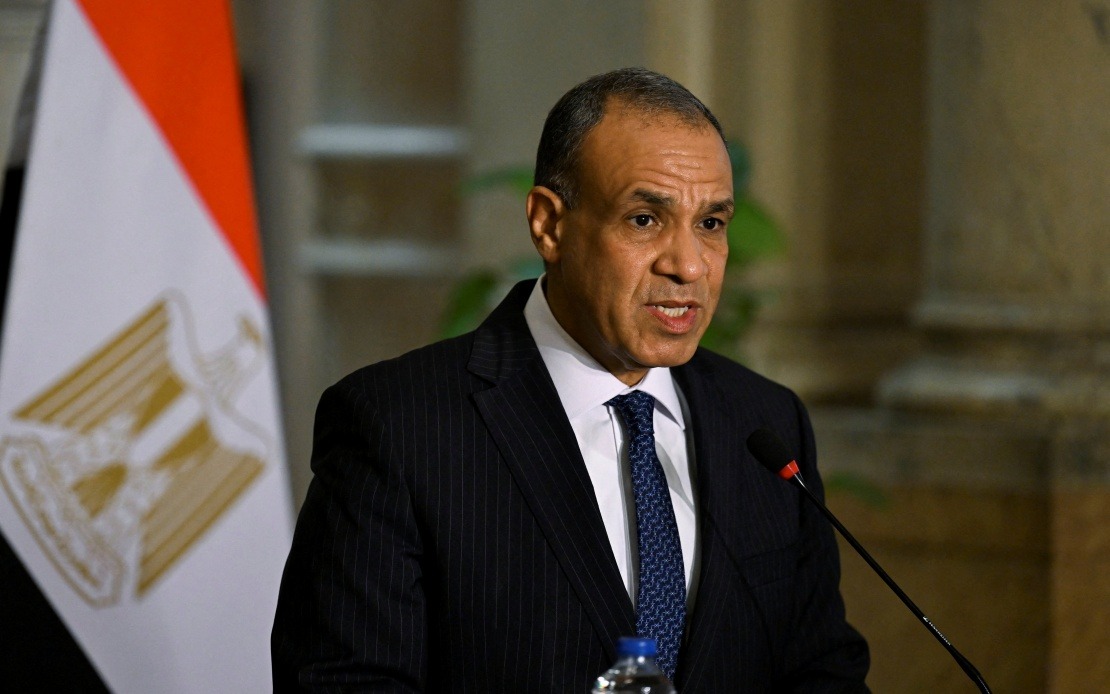
Egypt has signalled its deepest opposition to what it views as a persistent threat of forcibly displacing Palestinians from the Gaza Strip, with Foreign Minister Badr Abdelatty using language that underscores the issue's centrality to Cairo's regional diplomacy. Speaking on Saturday evening, Abdelatty framed Palestinian displacement as a threshold issue for Egypt and the broader Arab and Islamic world, signalling that Cairo will not compromise on this position regardless of political or economic pressure.
The Egyptian foreign minister's intervention centres on a conceptual challenge that has gained prominence in Middle East policy debates: the distinction between voluntary and coerced displacement. Abdelatty argued that describing relocation as "voluntary" becomes meaningless when conditions are deliberately engineered to render life unsustainable. This framing matters significantly because international humanitarian law and conventions recognise the right to remain in place, and characterising forced exodus as a matter of choice serves as a legal and political sleight of hand that obscures the underlying coercion.
From Egypt's perspective, creating unbearable circumstances that push populations toward leaving constitutes forced displacement regardless of the formal language used. This argument resonates throughout the Arab world and among Islamic governments, which view such tactics as a systematic erasure of Palestinian presence and historical claims to land. Abdelatty's insistence that Cairo will neither accept nor allow such displacement represents a formal commitment that Egypt will use its diplomatic weight and regional standing to resist what it perceives as Palestinian dispossession.
The broader context of Abdelatty's remarks extends beyond the immediate crisis in Gaza to encompass a deteriorating situation in the occupied West Bank. The Egyptian foreign minister expressed alarm at what he characterised as escalating Israeli actions against Palestinians, employing the term "silent annexation" and "de facto annexation" to describe developments that fall short of formal territorial claims but function similarly in practical terms. These actions include settlement expansion, administrative restrictions, and security measures that collectively reduce Palestinian autonomy and territorial contiguity.
Egypt's concern about West Bank developments reflects a deeper strategic anxiety that incremental changes could render the two-state solution—long considered the framework for resolving the Israeli-Palestinian conflict—mathematically and politically impossible. If Palestinian territory becomes fragmented through settlements, bypass roads, and security barriers, the viability of establishing a contiguous, independent Palestinian state diminishes. From Cairo's perspective, this represents a slow-motion dismantling of Palestinian statehood prospects, one that international law and the international community have repeatedly affirmed Palestinians possess the right to pursue.
Abdelatty linked these concerns explicitly to the broader peace process, arguing that continued policies undermining Palestinian territorial integrity jeopardise any prospects for achieving sustainable stability in the region. His assertion that force cannot deliver lasting security for Israel resonates with a long-standing Arab diplomatic position: that regional stability requires addressing legitimate Palestinian grievances and rights. This reasoning suggests that attempting to maintain control through military and administrative means, while ignoring Palestinian aspirations for self-determination, ultimately creates instability that harms all parties.
The Egyptian position reflects Cairo's dual role as a regional power with significant security interests and as an Arab nation with deep historical and cultural ties to the Palestinian cause. As the Arab state that borders Gaza and maintains a peace treaty with Israel, Egypt occupies a unique diplomatic position where it must balance multiple constituencies and interests. However, Abdelatty's emphatic language about displacement suggests that Cairo views this particular issue as non-negotiable, implying that some red lines transcend the normal cost-benefit calculations of diplomacy.
For Southeast Asian observers and policymakers, Egypt's stance carries implications for understanding how major regional powers approach humanitarian crises and territorial disputes. Malaysia, Indonesia, and other countries with significant Muslim populations and historical commitments to Palestinian causes typically align themselves with Arab and Islamic consensus positions. Egypt's framing of displacement as a violation of international law and the rights of occupied populations provides diplomatic language that non-Arab Muslim-majority countries can adopt and amplify in multilateral forums.
The deeper issue underlying Abdelatty's warnings concerns the relationship between military occupation, civilian rights, and international legal obligations. He emphasised that Palestinian rights to self-determination and statehood form the bedrock of the Arab position, and that these rights remain valid regardless of security arguments advanced by other parties. This assertion that occupied peoples retain inalienable rights even under occupation anchors Egypt's opposition to displacement in international legal doctrine rather than purely political or emotional grounds.
Abdelatty's statement also implies that Egypt views displacement plans as an ongoing threat rather than a hypothetical one, suggesting intelligence or policy documents that Egyptian leadership interprets as demonstrating genuine intent to pursue such schemes. This assessment carries weight given Egypt's proximity to Gaza, its access to Israeli strategic thinking through bilateral channels, and its role in mediation efforts. If Cairo genuinely believes displacement remains under active consideration, this assessment likely influences how other Arab and Islamic governments evaluate the threat level.
The foreign minister's argument that recognition of Palestinian rights remains essential for regional stability reflects a strategic calculation that stability cannot be imposed through security measures alone. This perspective suggests Egypt believes that long-term peace requires addressing the fundamental justice concerns that fuel conflict, rather than managing symptoms through military containment. Such reasoning carries implications for how the international community might eventually approach conflict resolution in the region.
Egypt's red line on displacement also signals limits to how far Cairo will cooperate with policies or scenarios it views as fundamentally unjust. While Egypt maintains diplomatic and security relationships with multiple parties, Abdelatty's language suggests that displacement crosses a threshold beyond which Egyptian tolerance ends. This boundary-setting reflects Cairo's assessment of its own political sustainability domestically and its standing within the Arab world.

