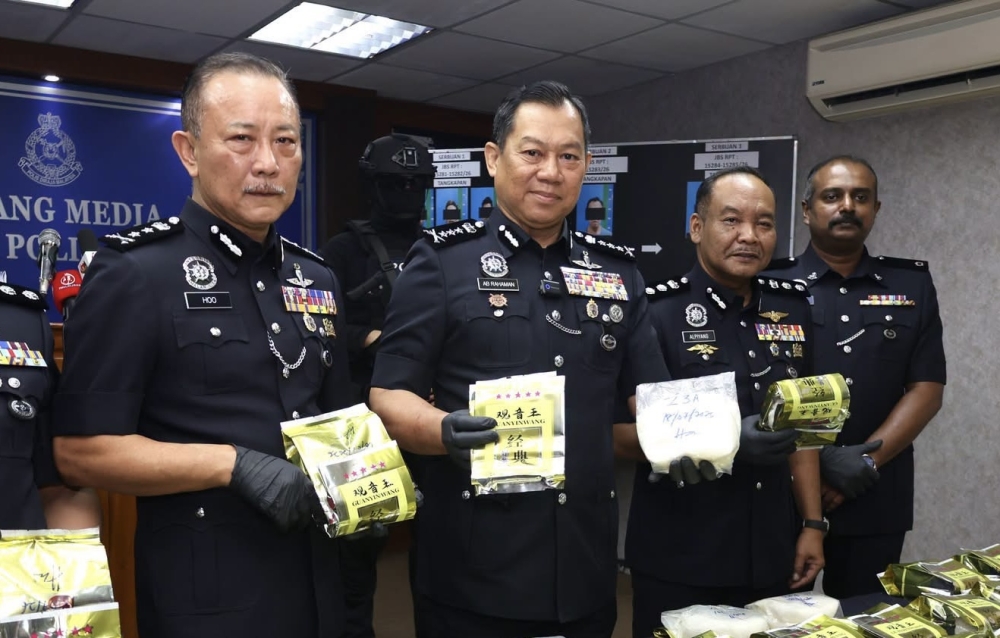
Law enforcement authorities in Johor Bahru have successfully dismantled what they describe as an organised drug trafficking network following a series of coordinated raids that resulted in eight arrests. Among those taken into custody is a teenager aged just 16 years old, whose alleged involvement in the operation has raised serious questions about youth recruitment into drug distribution schemes. The investigation, which culminated in multiple simultaneous operations across the jurisdiction, represents a significant enforcement victory against substance abuse networks operating within the southern state.
The teenage suspect's role in the conspiracy reveals an alarming trend in how trafficking organisations exploit young people for street-level distribution work. According to investigating officers, the teenager allegedly commandeered his grandfather's personal vehicle and converted it into a functioning drug distribution point. Using a family member's car as cover for illegal operations demonstrates both the brazen nature of the network's activities and the vulnerability of elderly citizens whose assets can be appropriated without their knowledge or consent. This particular modus operandi highlights how criminals deliberately target family vehicles to evade standard law enforcement detection measures that typically focus on known drug-related transportation assets.
The decision to weaponise a pensioner's automobile for synthetic drug distribution exposes gaps in community awareness around how organised crime adapts to operational pressures. Families across Malaysia should recognise that vehicles registered to elderly relatives or other family members can become targets for illicit use if proper safeguards and communication protocols are not maintained. Many seniors may not immediately recognise signs that their vehicles are being misused, particularly if they do not drive regularly or if access to their keys becomes compromised through theft or manipulation by younger household members.
Synthetic drug production and distribution networks have grown increasingly sophisticated across Southeast Asia in recent years, with Malaysia serving as both a significant consumption market and a transit point for substances destined for regional neighbours. The Johor Bahru discovery suggests that even medium-sized metropolitan areas within the country are sustaining substantial trafficking infrastructure capable of sustaining multiple distribution cells. The involvement of a minor in active trafficking operations indicates that supply chains extend deep into communities and across generational boundaries, recruiting young people who may lack the maturity to recognise the legal and health consequences of participation.
The Johor Bahru police operation reflects broader enforcement priorities that emphasise identifying and disrupting supply chains rather than merely apprehending isolated street dealers. By targeting what appears to be an organised network structure, authorities have concentrated resources on dismantling infrastructure that would have continued supplying synthetic drugs to consumers across the state. This intelligence-driven approach to narcotics enforcement represents a shift toward addressing root causes of supply rather than engaging in perpetual cycles of arresting individual users or low-level dealers who quickly become replaceable within larger organisational structures.
Synthetic substances present particular challenges for Malaysian law enforcement given their constantly evolving chemical formulations and the difficulty in maintaining legal regulatory frameworks that can keep pace with modifications designed to circumvent existing controlled substance legislation. Networks distributing these compounds often operate with limited hierarchical structure and distributed decision-making that makes them resilient to conventional enforcement approaches. The involvement of a 16-year-old suspect suggests that operational cells have become increasingly decentralised, with younger members handling visible distribution activities while remaining insulated from higher-level organisational decision-makers.
The use of an elderly person's vehicle without apparent consent raises important questions about elder safeguarding and family communication. Grandparents constitute a vulnerable demographic who may hesitate to report suspicious activities involving their children or grandchildren, either due to shame, family loyalty, or genuine confusion about whether activities constitute criminal conduct. Strengthening reporting mechanisms and removing stigma from families affected by substance abuse within their ranks could improve intelligence gathering and allow early intervention before young people become deeply implicated in trafficking networks.
Johor Bahru's geographic proximity to Singapore and the prevalence of trafficking corridors between Malaysia and the wealthy city-state make the region particularly significant for narcotics enforcement. Synthetic drugs command premium prices in Singapore's highly controlled market, creating powerful economic incentives for Malaysian networks to supply these substances across the causeway. Police operations targeting trafficking infrastructure in Johor therefore carry regional significance beyond state borders, potentially disrupting supply flows that feed consumption patterns throughout Southeast Asia's most developed economies.
The arrest of eight individuals across multiple locations suggests that investigating officers had developed substantial intelligence about network operations before executing the raids. Modern drug trafficking investigations increasingly rely on financial surveillance, telecommunications analysis, and informant networks to map organisational structures before enforcement action. The coordination required to execute simultaneous operations across multiple sites indicates that Johor Bahru police had systematically identified key distribution points, storage locations, and personnel within the network structure.
Youth involvement in synthetic drug distribution reflects broader patterns of economic desperation and limited legitimate employment opportunities that characterise some Malaysian communities. Teenagers with limited educational prospects or family financial stress may find the immediate cash incentives offered by trafficking networks difficult to resist, particularly when peer groups or older neighbourhood figures normalise participation in drug commerce. Addressing the root causes of youth recruitment into trafficking networks requires sustained investment in educational initiatives, vocational training programmes, and economic development strategies that create genuine employment alternatives to illegal activities.

