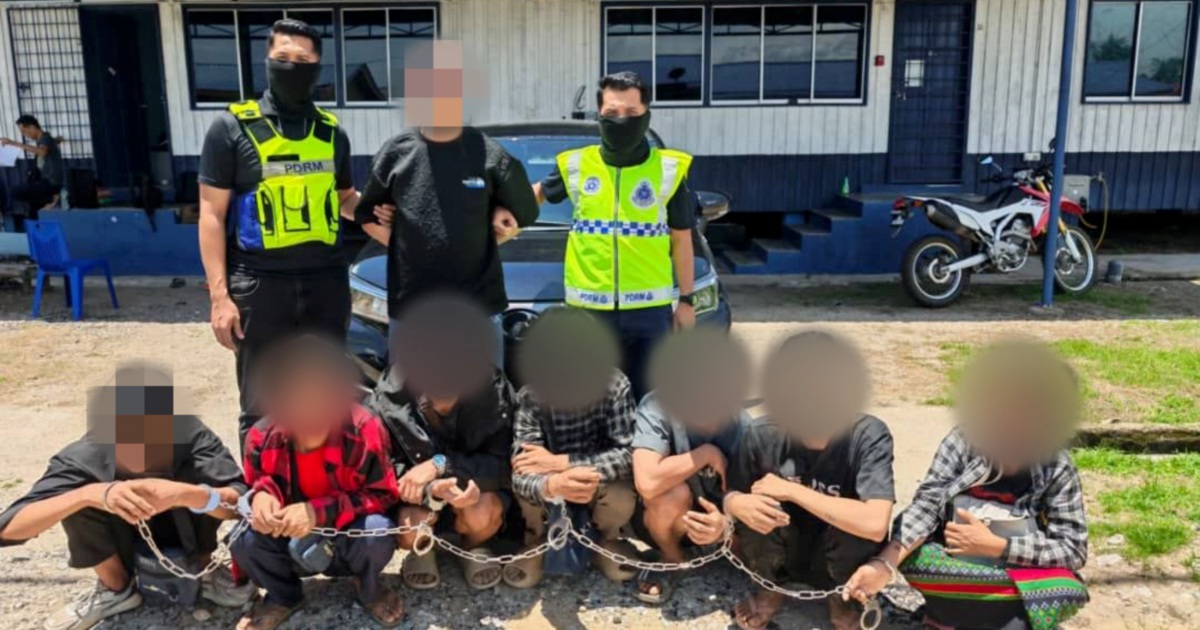
Police in Kelantan have intensified their crackdown on human trafficking networks with the arrest of eight people, including a Malaysian national, in connection with the suspected transportation of seven undocumented migrants from Myanmar. The operation, conducted in Kota Baru during the early hours of the morning, represents the latest in a series of enforcement actions targeting the organised movement of irregular migrants across the northern border region.
The primary suspect, a Malaysian man, has been identified as the key figure allegedly coordinating the movement of the seven undocumented Myanmar nationals. His arrest alongside seven others suggests a more complex smuggling operation than simple point-to-point transportation, potentially implicating a broader network of facilitators, safe house operators, and document brokers who frequently collaborate to move migrants from Myanmar through Malaysia's northern states toward southern destinations or international transit points.
Kelantan's location as Malaysia's gateway to Myanmar makes it a critical junction for smuggling networks. The state's porous borders and extensive coastline have long attracted criminal syndicates seeking to profit from the desperation of migrants fleeing conflict, persecution, and economic hardship. The discovery of seven undocumented individuals in a single vehicle underscores the scale at which these operations function, with organisers typically packing multiple people into confined spaces with minimal concern for safety or dignity.
The arrest operation highlights ongoing police efforts to dismantle supply chains that enable human trafficking. These networks typically operate with distinct roles: recruiters work in origin countries to identify vulnerable migrants; transporters move them across borders using vehicles, boats, or rural routes; handlers manage transit points within Malaysia; and document specialists provide forged papers or arrange for illegal border crossings. The involvement of eight arrested individuals suggests the police may have successfully disrupted multiple layers of this supply chain.
Myanmar nationals represent one of the largest populations of undocumented migrants in Malaysia, driven northward by Myanmar's political turmoil, military repression, and limited economic opportunities. Following the 2021 military coup and subsequent years of civil conflict, migration pressures have intensified significantly. Many who attempt to reach Malaysia do so through informal channels, relying on smugglers who provide routes but offer minimal protection against exploitation, abuse, or abandonment along the way.
The timing of enforcement operations in border regions reflects shifting patterns in smuggling activity. Criminal networks have become increasingly adaptive, using nighttime movements and secondary roads to avoid detection. However, police intelligence operations appear to have yielded specific actionable information in this case, resulting in a coordinated early morning raid that caught the operation at an operational phase. Such successes depend heavily on community tip-offs, informant networks, and systematic vehicle checkpoint monitoring.
For Malaysian authorities, the arrest presents both a tactical success and a persistent strategic challenge. Individual enforcement operations can temporarily disrupt smuggling corridors, but the underlying drivers—limited legal pathways for migration, high demand for low-cost labour in Malaysian industries, and the profitability of smuggling operations—ensure continued pressure. Smugglers routinely accept loss of vehicles and occasional arrests as routine operational costs absorbed into their pricing structures.
The treatment of the seven undocumented Myanmar nationals following their detention raises important humanitarian considerations. Under Malaysian immigration law, undocumented migrants typically face detention and deportation proceedings. However, individuals fleeing persecution may have grounds to seek asylum or complementary protection. International organisations have repeatedly flagged concerns about Malaysian enforcement practices toward vulnerable migrant populations, particularly children and trafficking victims who require specialised handling rather than standard immigration processing.
The operation also signals Malaysia's commitment to meeting international obligations under transnational crime agreements and trafficking protocols. Regional cooperation through mechanisms like the ASEAN-coordinated information-sharing frameworks has gradually improved intelligence-gathering capacity. Neighbouring Thailand has similarly intensified its own enforcement against smuggling syndicates, creating modest pressure on transnational criminal organisations, though truly effective intervention requires coordinated action at origin, transit, and destination points.
For Malaysian employers and industries reliant on migrant labour, cases like this underscore the risks of engaging undocumented workers. The construction, agriculture, and domestic service sectors historically depend on informal migrant employment, creating built-in demand that sustains smuggling networks. Legal formalisation of migrant employment remains incompletely implemented despite regulatory improvements, leaving structural incentives for black-market labour recruitment intact.
The Kelantan operation reflects broader regional dynamics as Southeast Asian countries grapple with migration pressures. With Myanmar's internal situation remaining volatile and economic disparities between Myanmar and Malaysia substantial, downward migration flows are unlikely to diminish significantly. Police will continue conducting enforcement operations, but sustainable solutions require complementary approaches: safer legal migration pathways, enforcement against employers hiring undocumented workers, international cooperation on root causes, and better protection mechanisms for vulnerable migrants who become trafficking victims.

