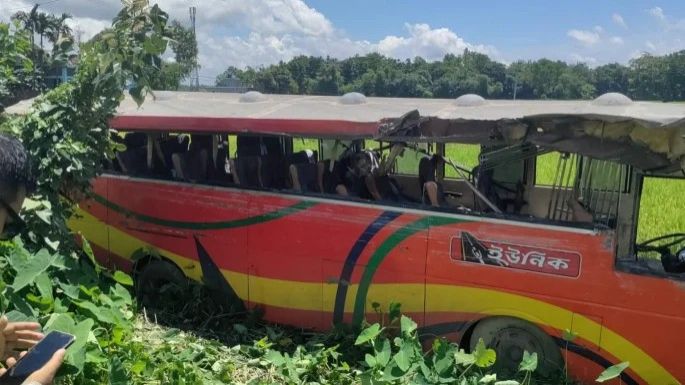
A devastating collision between two passenger buses in Bangladesh's Sylhet region claimed eight lives on Friday morning, with a further 25 passengers and crew sustaining injuries. The accident occurred around 7:30 a.m. local time on a stretch of highway roughly 240 kilometres northeast of Dhaka, the nation's capital. Golam Mostafa, the officer-in-charge at Sylhet's Osmani Nagar police station, confirmed the casualty figures to local media, while authorities initiated an investigation into the precise circumstances surrounding the crash.
The collision represents the latest in a relentless series of fatal traffic incidents across Bangladesh, a country struggling with some of South Asia's most alarming road safety statistics. The nature of the accident—a direct head-on impact between two substantial vehicles—suggests the kind of catastrophic event that tends to overwhelm local emergency medical services and produces significant mortality rates. The sizeable number of injured persons requiring treatment will place considerable strain on healthcare facilities in the Sylhet region, which lacks the advanced trauma centres available in major urban centres.
Bangladesh's transportation infrastructure and regulatory environment have long been identified as critical factors contributing to the nation's persistently high road fatality rates. The highways connecting major cities, while essential to the economy, frequently suffer from inadequate maintenance, insufficient lane markings, and deteriorating road surfaces that increase accident risk during adverse weather or at higher speeds. These physical shortcomings are compounded by the technical condition of vehicles operating across the country's routes, with many buses and trucks remaining on the roads despite failing to meet basic safety standards.
Driver behaviour and competency represent another significant dimension of Bangladesh's road safety crisis. Traffic violations—ranging from excessive speeding and reckless overtaking to driving under the influence—occur with apparent regularity, often without meaningful consequences. Many drivers lack proper training, holding licenses obtained through informal channels rather than rigorous testing procedures. The casual attitude toward traffic laws reflects broader governance challenges and a culture in which road rules are frequently treated as optional guidelines rather than mandatory safety measures.
Government oversight of the transportation sector remains notably weak, with the traffic department and related agencies operating with insufficient resources and enforcement capacity. Checkpoints, where they exist, are often unable to conduct thorough vehicle inspections or impose substantial penalties on violators. Corruption within enforcement mechanisms further undermines accountability, allowing substandard operators to continue functioning and dangerous drivers to escape sanctions. This enforcement vacuum creates an environment where individual incentives favour cost-cutting and rule-breaking over safety investment.
For Malaysia and other Southeast Asian nations, the Sylhet disaster illustrates the regional dimensions of transport safety challenges. Bangladesh's situation reflects problems common across the wider region—rapid urbanisation and motorisation outpacing regulatory modernisation, mixed fleets of vehicles with varying maintenance standards, and driver populations that grew up under different safety cultures. Malaysian authorities, having made substantial progress in reducing road fatalities through multi-faceted approaches including stricter licensing, vehicle standards enforcement, and public education campaigns, can draw lessons from Bangladesh's ongoing struggles about the necessity of sustained, comprehensive intervention.
The economic consequences of Bangladesh's road safety crisis extend beyond immediate human tragedy. Accidents generate enormous costs through medical treatment, lost productivity, vehicle damage, and the broader drag on economic efficiency when supply chains are disrupted and transportation becomes unpredictable. International investors and trading partners factor such risks into their calculations, potentially affecting Bangladesh's competitive position as a logistics and manufacturing hub. The crisis also creates secondary effects on public finances, as government resources must be diverted to emergency response rather than preventive infrastructure improvement.
Addressing Bangladesh's road safety emergency would require coordinated action across multiple domains simultaneously. Highway infrastructure must be upgraded to international standards, with particular attention to road geometry, surface condition, and safety features like guardrails and markings. Vehicle standards enforcement must be strengthened, making it economically unviable for operators to maintain poorly maintained fleets. Driver licensing systems require complete overhaul, potentially incorporating periodic re-testing and mandatory training programmes that go beyond basic competency to address attitude and risk awareness.
Enforcement capacity must expand significantly, with the traffic department receiving adequate funding, equipment, and personnel to conduct regular operations rather than symbolic patrols. Technology solutions—from automatic speed enforcement systems to vehicle monitoring equipment—can supplement human oversight. Public awareness campaigns must cultivate social pressure against dangerous driving, making safety violations socially unacceptable rather than merely illegal. Such comprehensive approaches have demonstrated effectiveness in other developing countries that have successfully reduced road fatalities.
The immediate investigation into Friday's collision will likely document the specific factors—mechanical failure, driver error, visibility issues, or some combination—that led to the head-on impact. However, understanding those specific causes matters less for Bangladesh's broader policy challenge than recognising that such disasters will continue occurring until the systemic weaknesses in roads, vehicles, drivers, and enforcement receive sustained, serious attention. Each incident represents not merely a tragedy for affected families but an indictment of policy failures and missed opportunities for prevention.

