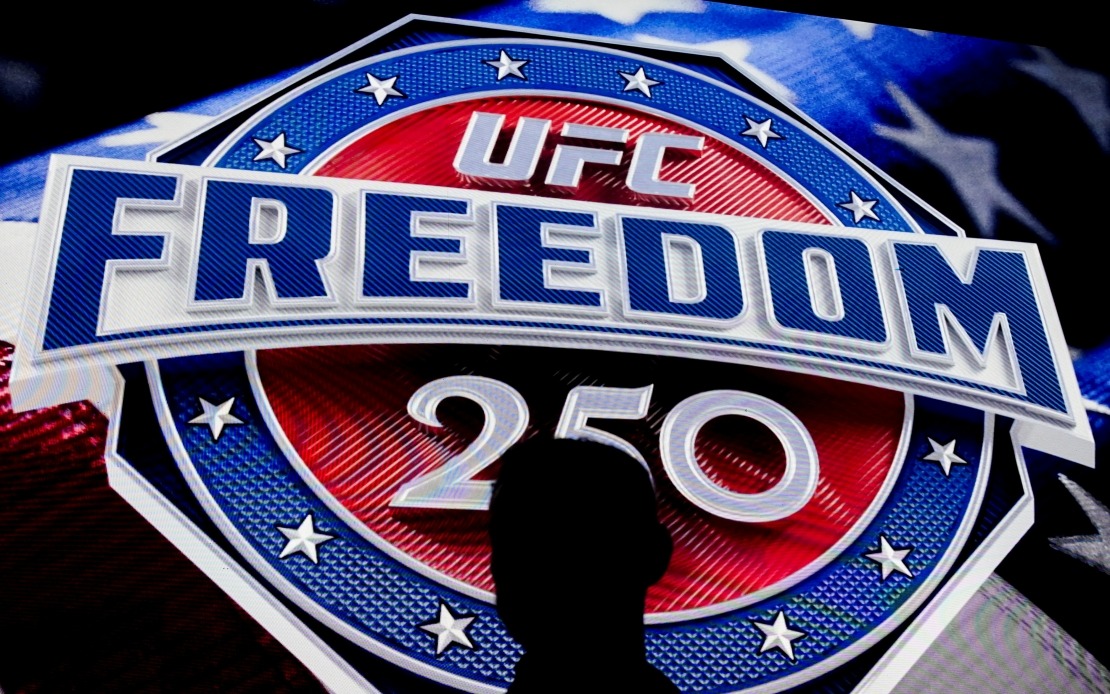
Eight individuals now face serious federal charges stemming from an alleged conspiracy to stage a violent attack on a mixed martial arts event held at the White House, the Department of Justice announced on Thursday. The charges relate to a UFC Freedom 250 event that took place on June 14 at a specially constructed venue outside the South Lawn, which coincided with President Donald Trump's 80th birthday celebration and the commemoration of America's 250th independence anniversary.
The suspects stand accused of multiple federal crimes, including conspiracy to provide material support to terrorists, conspiracy to commit murder on federal government property, and conspiracy to murder a federal government official. If convicted on these charges, each defendant could face a potential life sentence, underscoring the severity with which authorities are treating the alleged plot. A federal grand jury in Columbus brought the initial charges against the group.
According to prosecutors, the conspirators developed an elaborate attack plan that would have unfolded in two coordinated phases designed to maximize casualties among attendees. The scheme called for deploying explosive-laden drones around the event venue to trigger widespread panic and force an evacuation of the gathered crowd. Once civilians and officials began fleeing the stadium, a sniper team stationed at strategic locations would have opened fire on what prosecutors described as "high-value targets" attempting to escape the area.
The investigation culminated in the arrest of seven suspects, whose names and charges were previously made public. A breakthrough came this week when authorities in West Virginia apprehended an eighth suspect, a 21-year-old man who prosecutors contend was specifically recruited to serve as one of the snipers in the planned attack. His detention represents the latest development in what federal agencies have characterized as an extensive and methodical conspiracy.
The UFC Freedom 250 event itself drew considerable attention and high-profile attendance. The Ultimate Fighting Championship hosted the premier mixed martial arts competition outside the presidential residence, attracting President Trump, members of his immediate family, and several sitting cabinet officials. The gathering represented a rare instance of a major sporting spectacle being held at such proximity to the seat of American executive power, making the alleged plot's targeting of this particular event especially significant from a security perspective.
While the June 14 date aligned with Trump's 80th birthday, officials emphasized that the event was formally designated as part of the nation's 250th independence anniversary celebrations. This framing becomes relevant for understanding the event's prominence and security profile, as it carried both personal and national significance. The Independence Day holiday itself falls on July 4, making the June event an advance commemoration of American independence.
The arrest and charging of the eighth suspect this week suggests that investigators continue pursuing additional leads and examining potential connections within alleged extremist networks. The coordinated nature of the alleged plot, requiring expertise in drone operations, weapons handling, and tactical coordination, indicates a sophistication that would have demanded significant planning and preparation. The involvement of multiple participants across different states, including West Virginia, suggests a wider organizational structure than might initially appear.
From a security standpoint, this case raises important questions about the vulnerability of high-profile gatherings and the challenge federal agencies face in identifying and neutralizing threats before attacks materialize. The specificity of the alleged plan, including drone usage and sniper positioning, demonstrates evolving tactics that domestic security services must monitor and counter. The fact that authorities successfully disrupted the alleged plot before any attack occurred represents a significant intelligence and law enforcement success.
For the Southeast Asian region, this development carries broader implications regarding transnational security threats and extremist networks. Malaysia and neighboring countries have experienced their own encounters with coordinated violent plots and terrorist conspiracies. The case illustrates how international security agencies increasingly confront sophisticated, multi-phase attack planning that combines various tactical elements. Understanding the investigation's methodology and the investigative techniques employed by US authorities offers valuable lessons for regional security services developing their own counter-terrorism capabilities.
The charges also underscore the severity with which American courts treat plots targeting senior government officials and federal installations. The conspiracy charges carry particularly heavy potential sentences, reflecting the gravity of alleged attempts on the lives of government leaders and the disruption of official functions. These legal frameworks, while specific to the US system, influence how allied nations, including Malaysia, calibrate their own responses to similar threats.
As the cases proceed through the federal court system, investigators will likely reveal additional details about how the conspiracy was uncovered, what surveillance or intelligence gathering methods proved decisive, and whether any international connections or inspiration existed. The involvement of an 80-year-old president and the coordinated nature of the alleged attack suggest that threat assessment protocols at the highest levels of government have become increasingly sophisticated in identifying emerging dangers. The successful prevention of this attack, should the allegations be proven in court, will demonstrate the effectiveness of contemporary counter-terrorism operations despite the evolving nature of potential threats.

