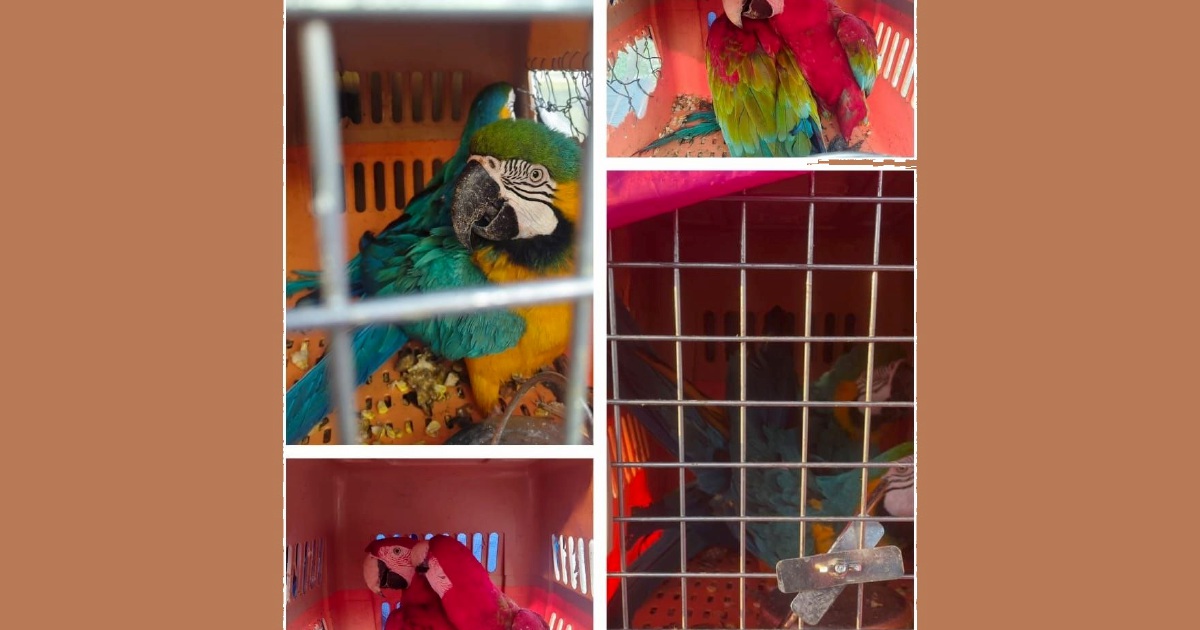
Two men have been arrested in Kelantan after wildlife authorities discovered they were transporting eight illegally smuggled macaws during an operation conducted along Jalan Bandar Tumpat in Tumpat. The seized birds, valued at approximately RM400,000, represent a significant haul in what appears to be an organised smuggling operation targeting Malaysia's wildlife regulations.
The circumstances surrounding the arrest point to a coordinated enforcement effort by the relevant authorities in the state. Operating in Tumpat, a district that serves as a gateway to Thailand and sits within an active smuggling corridor along Malaysia's northern border, the two apprehended individuals were caught red-handed with the macaws in their possession. The timing of the operation suggests surveillance and intelligence gathering had likely preceded the intercept, reflecting increasing vigilance against wildlife trafficking networks operating in the region.
Macaws are highly protected species under Malaysian wildlife legislation, and their illegal trade remains a persistent challenge for conservation authorities across Southeast Asia. These large, colourful parrots command premium prices in black markets globally, driven by demand from collectors and illegal pet traders willing to pay substantial sums for rare specimens. The RM400,000 valuation underscores the financial incentives driving such smuggling operations, with individual birds potentially worth tens of thousands of ringgit on illicit markets.
The arrest takes on particular significance given Malaysia's geographical position within major wildlife trafficking routes. The country's porous borders, especially in the northeastern states, have long been exploited by syndicates moving prohibited animals between Southeast Asian nations and international markets. Kelantan's proximity to Thailand means the state frequently serves as either a transit point or source location for smuggled wildlife heading toward wealthier markets in East Asia and beyond.
The conservation implications of such trafficking operations extend beyond the immediate loss of protected species. The capture and transport of wild macaws typically involves methods that cause significant mortality and suffering among birds not selected for trafficking. Additionally, the drain of protected species from wild populations threatens ecosystem balance, particularly in countries where these birds naturally occur. Each intercept therefore represents not just the recovery of valuable animals, but also a prevention of cascading environmental damage.
Authorities have intensified enforcement operations targeting wildlife smuggling networks in recent years, reflecting growing international pressure and domestic commitment to conservation protocols. Malaysia is signatory to the Convention on International Trade in Endangered Species (CITES), which regulates trade in protected animals. The arrest demonstrates the country's serious approach to fulfilling these international obligations, though enforcement remains resource-intensive and challenging given the profit motives involved.
The apprehension of two individuals described as close associates raises questions about whether this represents a small operation or the tip of a larger smuggling network. Investigations typically proceed to determine the source of the macaws, their intended destination, and whether connections exist to broader smuggling syndicates. Intelligence gathered from interrogation could reveal links to suppliers and buyers, potentially leading to further arrests and disruption of smuggling chains.
For Malaysian readers, such seizures highlight the ongoing battle against wildlife crime occurring within national borders. The scale of this operation—eight birds worth RM400,000—illustrates that wildlife trafficking is not a minor infraction but a serious crime generating substantial illicit profits. Public awareness about the environmental and legal consequences of purchasing illegally traded animals remains crucial in reducing demand and supporting enforcement efforts.
The incident also underscores the importance of regional cooperation in combating transnational wildlife trafficking. Since smuggling operations often span multiple countries, coordination between Malaysian authorities and neighbouring enforcement agencies is essential. Information sharing, joint operations, and aligned penalties across ASEAN nations would significantly improve the effectiveness of anti-trafficking efforts.
Authorities have not released extensive details regarding the investigation's direction or whether charges have been formally filed against the arrested individuals. Wildlife trafficking cases typically proceed under the Wildlife Conservation Act 2010, which provides for substantial penalties including imprisonment and fines. The outcome of this case may influence sentencing precedents and deter others considering similar operations.
Longer term, addressing wildlife smuggling requires tackling root causes including poverty in source communities, corruption within enforcement agencies, and demand reduction in consumer markets. International cooperation on CITES enforcement, investment in ranger training and equipment, and public education campaigns represent essential complementary strategies to enforcement operations alone. The Kelantan seizure, while significant, represents but one arrest in an ongoing struggle to protect Malaysia's wildlife heritage and fulfil international conservation commitments.

