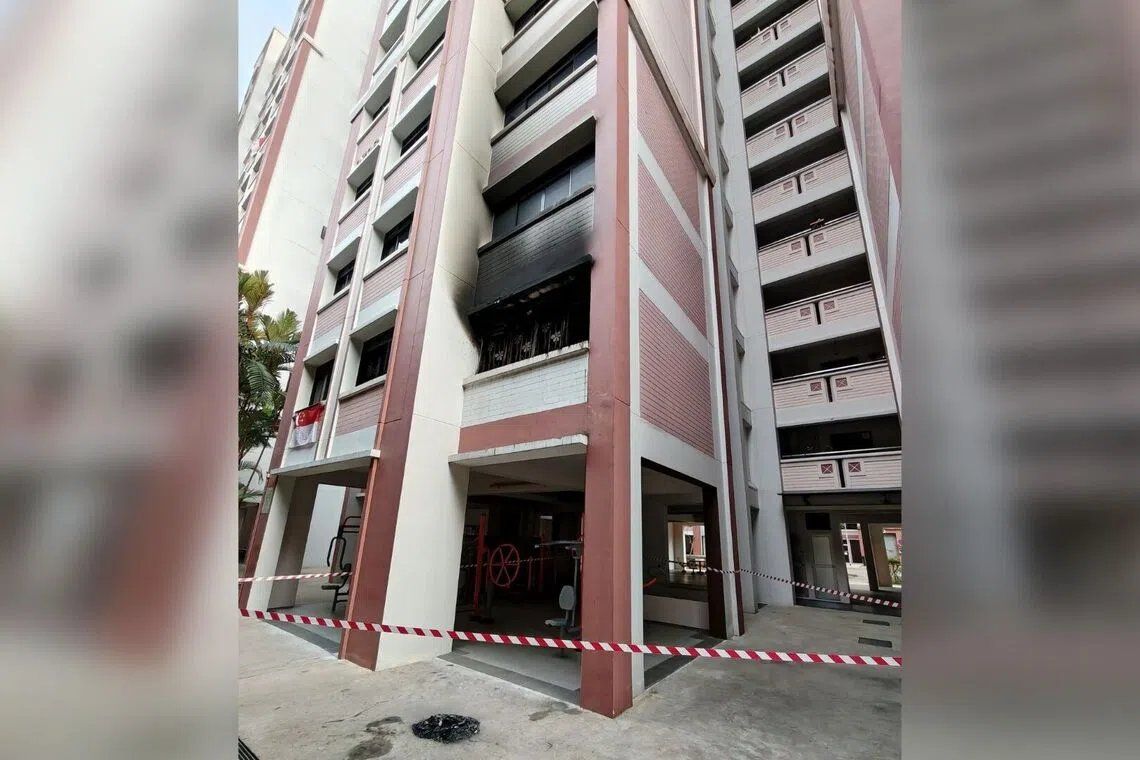
An elderly resident was hospitalised following a bedroom fire at Block 979B Buangkok Crescent in Singapore's Ang Mo Kio district in the early hours of Thursday, though he was later released from care after receiving treatment for minor injuries sustained during the incident.
The Singapore Civil Defence Force (SCDF) received emergency reports at approximately 12.25am, dispatching crews to the second-floor unit where flames had engulfed the contents of a bedroom. Firefighters quickly brought the blaze under control using pressurised water jets, preventing the spread of fire to adjacent units or common areas of the residential block.
The elderly occupant was transported to Sengkang General Hospital for evaluation and treatment. According to a Facebook statement posted by Victor Lye, the Member of Parliament representing Ang Mo Kio GRC, the man had sustained cuts on his feet but was discharged by midday Thursday following medical assessment, suggesting his injuries were not severe.
A notable factor in the swift response to the fire's spread was the quick-thinking intervention of a neighbouring resident—an ITE student living in an adjacent unit. Acting decisively when the fire broke out, the student deployed a fire extinguisher to combat the initial flames before assisting three people in evacuating from the affected flat. This prompt civilian action, combined with the SCDF's rapid response, likely prevented a more serious outcome for those inside the burning unit.
Victor Lye publicly acknowledged the student's heroic actions in his Thursday afternoon post, recognising their willingness to help during an emergency and their presence of mind in using safety equipment to protect their neighbours. The MP's public commendation reflects the community's appreciation for swift action during the crisis and highlights the importance of fire safety awareness among HDB residents across Singapore.
Beyond the immediate emergency response, authorities ensured comprehensive support for those affected. The Ang Mo Kio GRC mobilised its Residents' Network centre, offering temporary accommodation and assistance services to the displaced family as they dealt with the aftermath of the fire. However, the residents declined this formal support, preferring instead to remain with their helpful neighbour—a decision that underscores both the close bonds within Singapore's HDB communities and the practical nature of relying on immediate support networks during crises.
Victor Lye personally visited the affected flat to assess the situation firsthand and offer official support to the family members impacted by the incident. Such visits by elected representatives serve to demonstrate governmental responsiveness to emergencies within their constituencies and provide residents with direct access to assistance programmes they may need during recovery and rebuilding phases.
The incident once again highlights fire safety considerations in high-density residential environments like HDB blocks, where bedroom fires can pose significant risks to occupants and neighbouring units if not contained quickly. While the exact cause of Thursday's fire remains under investigation by authorities, the swift response from both civilians and emergency services prevented potential escalation into a more catastrophic event affecting multiple households.
For Malaysian readers, the Buangkok incident provides instructive lessons about residential fire preparedness. HDB flats and similar Malaysian residential buildings house millions of families in close proximity, creating comparable risks of rapid fire spread if initial responses prove inadequate. The example of an alert neighbour using a fire extinguisher effectively demonstrates why community fire safety training and readily accessible equipment throughout residential blocks can prove decisive in protecting lives and property.

