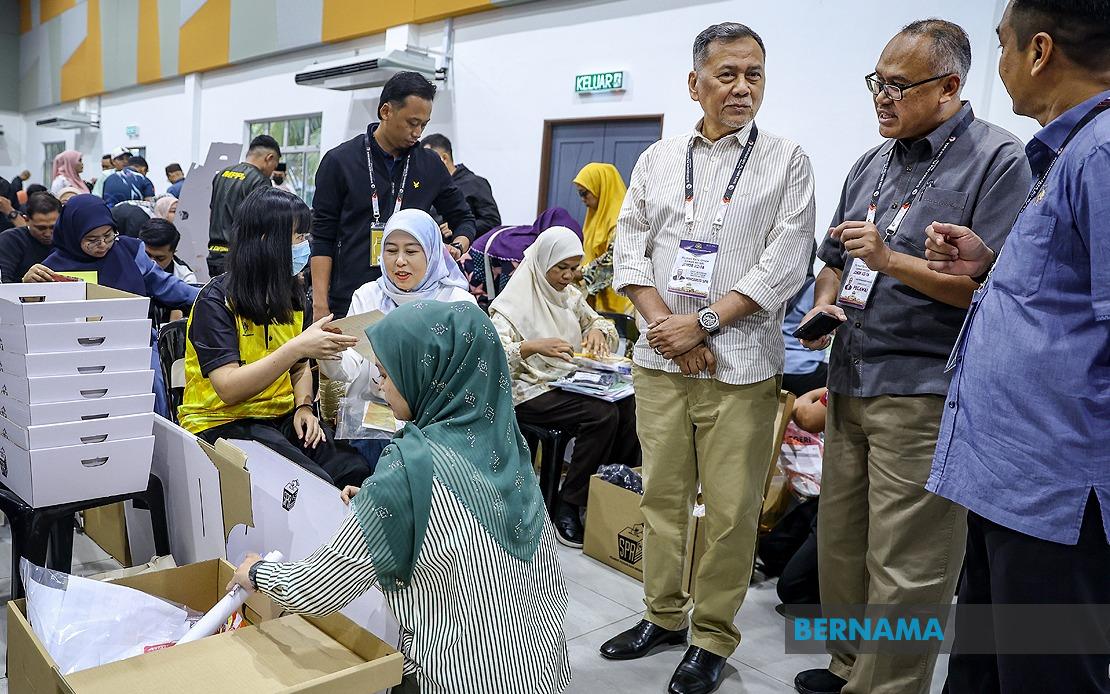
The Election Commission has concluded intensive preparations at polling and vote-counting centres throughout Johor, signalling readiness for the 16th state election scheduled to commence tomorrow. Teams working across the southern state have spent the day verifying ballot boxes, testing election equipment, and arranging physical infrastructure at all 56 state constituencies to guarantee an orderly and efficient polling process.
Election Commission Chairman Datuk Seri Ramlan Harun underscored the criticality of these final verification procedures, emphasising that rigorous inspections represent one of the most essential safeguards for electoral integrity. He reported that comprehensive checks of ballot boxes and election equipment designated for all 56 state seats had been finalised, confirming that materials were complete and prepared for deployment. The chairman's assessment came after he personally visited the ballot box verification process at the Sultan Ibrahim Jubilee Hall in Pontian and the Permas Multipurpose Hall in Kukup.
With approximately 2.7 million registered voters across Johor expected to cast ballots tomorrow, the scale of logistical coordination required is considerable. Datuk Seri Ramlan noted that the overwhelming majority of Returning Officers stationed at the 56 election management centres had completed their assigned responsibilities, indicating the election machinery was substantially operational. The chairman used the occasion to remind voters to utilise their allocated time slots, a measure intended to prevent overcrowding and maintain orderly queuing at polling stations throughout the day.
On-the-ground inspections revealed substantial progress in converting venues into functional polling locations. At Sekolah Kebangsaan Bukit Mutiara, Election Commission staff were engaged in labelling materials, arranging furniture, and installing signage to guide voters through the polling process. The Puteri Wangsa constituency's polling centre supervisor, Mohd Rasib Ngadiman, disclosed that preparations to establish 12 separate polling streams were advancing without complications, supported by 74 Commission personnel and a security contingent of 12 police officers. Accessibility considerations featured prominently in the planning, with wheelchair facilities arranged for elderly voters and persons with disabilities.
Similar infrastructure work progressed across diverse constituencies in the state. In Kluang, the Sekolah Kebangsaan Kampong Melayu polling centre supervisor, Kamarul Zaman Ahmad, detailed arrangements for five polling streams designed to process approximately 3,000 voters in the Mahkota constituency. This required coordination among 30 Election Commission personnel working in meticulous fashion to ensure procedural consistency. Meanwhile, preparations at Sekolah Menengah Kebangsaan Dato' Seth in Yong Peng, situated in Batu Pahat, prioritised facility comfort for elderly citizens, younger voters, and individuals with disabilities, reflecting broader accessibility commitments.
Particularly challenging logistics emerged in Mersing, where isolated island communities presented distinctive operational hurdles. Four islands within the Tenggaroh constituency—Pulau Aur, Pulau Pemanggil, Pulau Sibu, and Pulau Tinggi—required ballot box transportation via the Mersing Jetty. The Tenggaroh Returning Officer, Jamil Hasni Abdullah, explained that this operation mobilised approximately 50 personnel accompanied by security escorts provided jointly by the Marine Police Force and the Mersing district police headquarters, reflecting the heightened precautions necessary for safeguarding election materials in geographically dispersed areas.
The competitive landscape encompasses 172 candidates contesting 56 state seats, reflecting diverse political representation across Johor. The major coalitions—Pakatan Harapan and Barisan Nasional—have fielded candidates in all constituencies, demonstrating their commitment to comprehensive electoral participation. Perikatan Nasional has nominated 33 candidates across the state, while Parti Bersama Malaysia is contesting 15 seats. Smaller entities including MUDA have put forward four candidates, whilst Malaysian Orang Asli Party and the Socialist Party of Malaysia each fielded single representatives. Additionally, six independent candidates are competing for voter support across various constituencies.
The Election Commission chairman's reminders to voters addressed practical considerations that directly influence polling efficiency and voter experience. He explicitly encouraged citizens to arrive during their designated time slots, a strategy that distributes voter traffic and minimises waiting periods. Voters are required to bring valid identity documentation to the polling stations and must adhere strictly to election officials' instructions to maintain orderly procedures. These guidelines, whilst routine, carry particular importance in large-scale elections involving millions of participants across dispersed geographical areas.
The electoral exercise represents a significant democratic engagement for Johor, with the state's 2.7 million registered voters wielding substantial collective influence over the constituency composition and resulting government formation. The scale of this electorate necessitates meticulous operational planning by the Election Commission to prevent logistical failures that could undermine voter confidence or frustrate participation. The Commission's visible commitment to accessibility provisions—including wheelchair facilities and specially arranged voting streams—signals commitment to inclusive democratic participation.
These preparations occur within the broader context of Malaysia's ongoing electoral cycle and regional political dynamics. Johor's elections carry implications extending beyond the state itself, as political outcomes influence coalition mathematics at the federal level and shape governance trajectories in one of Malaysia's most economically significant states. The comprehensive preparations completed by the Election Commission position the state to conduct a professional, orderly poll that upholds democratic standards whilst enabling millions of voters to exercise their constitutional prerogative.

