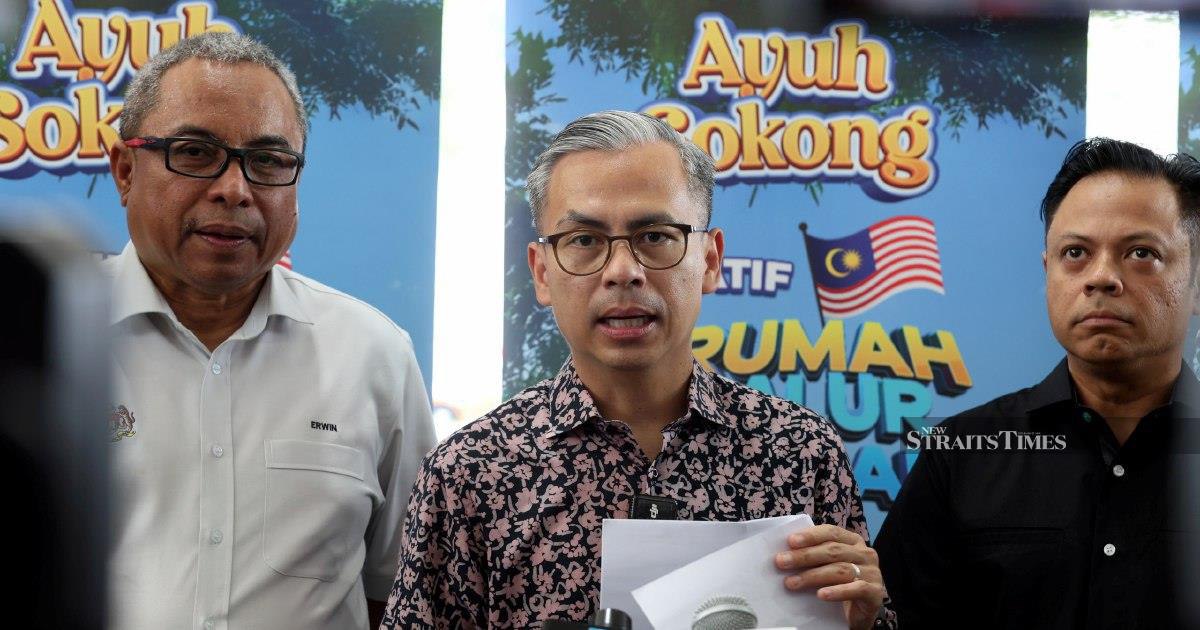
Prime Minister Datuk Seri Anwar Ibrahim has directed the Election Commission to prepare an updated report evaluating Sarawak's proposal to expand its state assembly by creating 17 additional seats, government spokesman Datuk Seri Fahmi Fadzil announced. The directive marks a significant development in the long-running debate over electoral redistribution in Malaysia's largest state by land area, which has persistently sought enhanced parliamentary representation to reflect its growing population and economic importance within the federation.
Sarawak's push for additional assembly seats represents a strategic effort to strengthen its legislative capacity and political influence at both state and federal levels. The state has historically argued that its vast geography, expanding population, and substantial contributions to national development warrant proportionally greater representation in parliament. With over 2.8 million residents spread across a territory larger than Peninsular Malaysia, Sarawak contends that current seat allocations do not adequately reflect either demographic realities or the state's significance as a key economic driver in East Malaysia.
The Election Commission's fresh examination of the proposal comes at a time when Malaysia continues wrestling with fundamental questions about electoral boundaries and representation. Electoral redistribution remains inherently sensitive in Malaysian politics, intertwining technical considerations about population distribution with broader questions of regional equity and political advantage. The commission's updated analysis will need to assess whether the proposed 17 additional seats can be justified on demographic grounds and whether the redistribution would maintain principles of fairness across all state constituencies.
For Malaysian readers and policymakers, this development carries substantial implications regarding the balance of power between peninsular and East Malaysian states. Historically, Sarawak and Sabah have sought greater say in national affairs, and expanding Sarawak's assembly seats could amplify the state government's negotiating position on federal matters ranging from resource rights to developmental spending allocations. The outcome could influence how Malaysia distributes political voice across its diverse regions for decades ahead.
The timing of the prime minister's directive suggests the federal government is taking the proposal seriously and has concluded that the existing assessment requires reassessment based on updated information. Electoral boundaries and seat allocations demand rigorous analysis grounded in current demographic data, infrastructure patterns, and geographic considerations. An updated report would provide policymakers with refreshed evidence to determine whether 17 additional seats represents an appropriate adjustment to Sarawak's representation.
Sarawak's assembly currently comprises 82 seats following the 2021 state election, making it one of Malaysia's largest sub-national legislatures. Adding 17 seats would increase the assembly to 99 seats, representing a substantial structural change with implications for government formation, coalition dynamics, and resource allocation within the state. The expansion would also affect how electoral contests are conducted in Sarawak, potentially making some constituencies more competitive or consolidating others depending on redistribution choices.
For Southeast Asian observers, Sarawak's effort to reshape its electoral landscape reflects broader regional patterns where subnational governments seek greater autonomy and influence over their futures. As a state within a federal system, Sarawak operates within constitutional constraints but has demonstrated willingness to push boundaries to advance its interests. The assembly expansion proposal exemplifies how states within larger nations strategically pursue institutional changes that enhance their capacity to serve constituents and leverage national-level negotiations.
The Election Commission's role in this process places Malaysia's premier electoral body in a position of considerable importance. The commission must balance technical considerations of population distribution and geographic efficiency with broader constitutional principles ensuring fair representation. Any updated report will face scrutiny from various stakeholders, including opposition parties concerned about potential gerrymandering, civil society organisations monitoring electoral integrity, and other states vigilant about precedent-setting implications for their own representation claims.
Understanding what prompted the prime minister's directive remains instructive. Whether new demographic census data prompted the review, or whether political negotiations between federal and state governments created momentum for reassessment, the directive signals that Malaysia's leadership recognises the importance of addressing Sarawak's long-standing concerns about representation. The updated report will provide the technical foundation for subsequent government decisions about whether to endorse, reject, or modify the proposal.
For businesses and investors in Sarawak, the assembly expansion debate connects to questions about governance capacity and legislative effectiveness. Larger assemblies provide more opportunities for local representation but can also complicate decision-making processes if not properly managed. The expansion's eventual impact on Sarawak's ability to pass developmental legislation and coordinate policy responses to economic challenges will merit careful monitoring by stakeholders across the state's business community.
The path forward from the Election Commission's updated report remains uncertain. Government acceptance of its recommendations is not guaranteed, and the cabinet may request further analysis before making final determinations. Nonetheless, the prime minister's directive indicates that Sarawak's proposal has achieved sufficient salience within federal politics to warrant serious institutional consideration, potentially bringing the state closer to achieving its long-held ambition of enhanced legislative representation.

