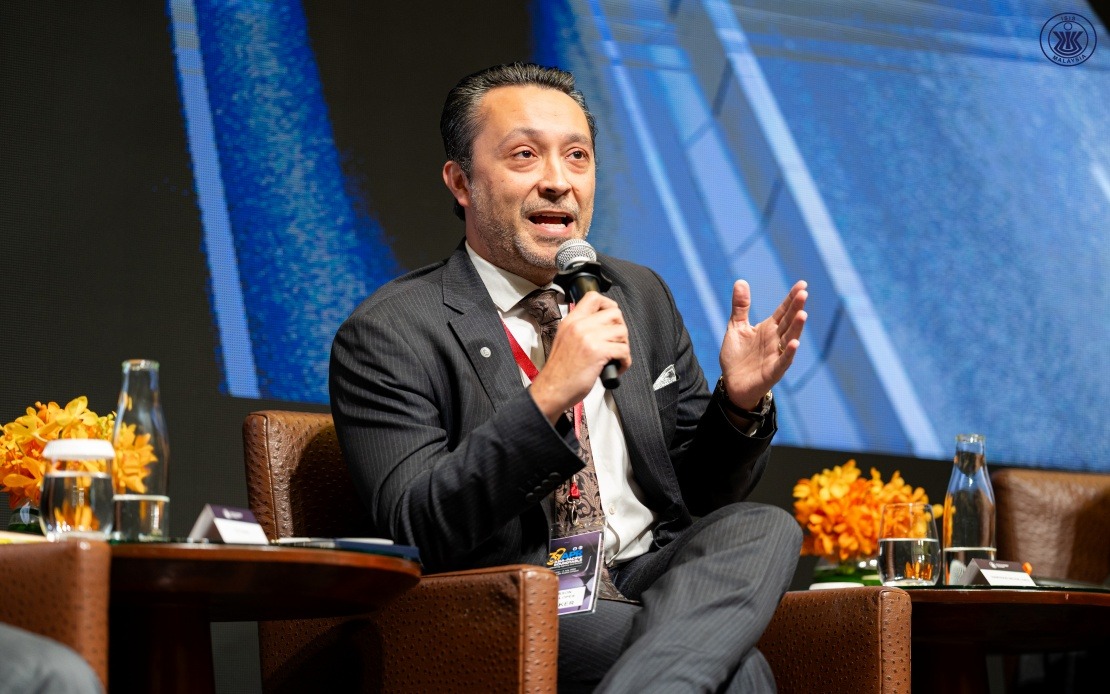
The international landscape is entering a period of fundamental transition, with emerging middle powers including Malaysia, Brazil, India, Indonesia, Turkey, and Mexico needing to establish their own strategic priorities rather than merely following the path set by established developed nations. This argument was advanced during the 39th Asia-Pacific Roundtable in Kuala Lumpur, where international relations scholars examined how nations from the Global South can best position themselves amid sweeping changes to the global system.
Dr Dawisson Belém-Lopes, a professor of international and comparative politics at Federal University of Minas Gerais in Brazil, emphasised that emerging and established middle powers operate from fundamentally different political contexts and should not be treated as interchangeable actors. These emerging economies have distinct historical trajectories and competing national priorities that cannot be overlooked when formulating foreign policy responses to global shifts. The professor's analysis challenges the notion that all middle powers share common interests or face identical constraints in international relations.
A central theme emerging from discussions was the longstanding unease many Global South nations harbour toward the post-1945 international system. Countries comprising the emerging middle power category have never fully embraced the liberal international order designed and led by Western powers in the post-war period. Rather than accept this framework as permanent, these nations have persistently advocated for structural reforms that would redistribute power and influence more equitably across the globe. This dissatisfaction reflects both economic grievances and political aspirations for greater agency in shaping global rules.
Belém-Lopes noted that the position of the Global South has strengthened considerably in recent years. Developing nations now possess greater financial resources and access to institutional platforms—such as the BRICS grouping and various South-South cooperation mechanisms—that were unavailable during earlier decades. This increased capacity provides concrete instruments through which emerging middle powers can advance their collective interests and reduce dependence on Western-dominated institutions. The expansion of alternatives to traditional multilateral bodies signals a potential redistribution of diplomatic and economic leverage.
Peter Varghese, chancellor of the University of Queensland and former secretary of Australia's Department of Foreign Affairs and Trade, characterised the current moment as an interregnum between distinct international orders. The post-war system anchored by American leadership is gradually deteriorating, though this process extends beyond momentary policy shifts in Washington. Deeper structural transformations are simultaneously reshaping the global balance of power, including China's sustained economic and military ascent, the emergence of a multipolar rather than bipolar world, and the declining influence of the Washington Consensus economic model across developing regions.
Varghese highlighted that identity politics and cultural considerations now compete with traditional geopolitical calculations in determining state behaviour and international alignments. This evolution complicates attempts to predict how nations will respond to global developments, as domestic political movements can override conventional strategic calculations. The interplay between internal politics and external relations creates additional uncertainty during a period already characterised by institutional instability and competing visions for global order.
While acknowledging that individual nations and regional groups possess genuine agency to shape outcomes, Varghese cautioned that agency alone cannot generate a functioning new international system. The construction of an effective multilateral order requires sustained cooperation, institutional innovation, and agreement on fundamental principles—elements that remain elusive in the current fragmented landscape. Instead of waiting for a comprehensive new global system to materialise, countries should concentrate their diplomatic energies on deepening regional and cross-regional cooperative frameworks that can deliver concrete benefits regardless of broader systemic developments.
Dr Ken Jimbo of Keio University in Japan offered regional perspectives on Asia's evolving role. Despite the undeniable shifts in American foreign policy and the gradual rebalancing of global power, Asia will retain its centrality to the emerging international architecture. The United States continues to rely heavily on partnerships with regional allies to advance strategic objectives, even as the Trump administration prioritised its "America First" agenda. This enduring dependence on regional partnerships suggests that American disengagement from Asia remains unlikely despite rhetorical changes in Washington.
Japan exemplifies the continued vulnerability of developed Asian nations to disruptions in the existing rules-based order. Economies like Japan depend critically on stable, predictable international rules governing trade, investment, and security for sustained prosperity. Any collapse of the liberal international order threatens the institutional framework that underpins regional stability and economic interdependence. For such nations, the challenge involves adapting to structural changes while preserving the rules-based mechanisms that protect their interests.
The 39th Asia-Pacific Roundtable, organised by Malaysia's Institute of Strategic and International Studies under the theme "Accelerating Agency and Action," brought together leading scholars and former government officials to examine how states should respond to the reconfiguration of global power relationships. The discussions revealed broad agreement that the post-war international system is genuinely transforming rather than experiencing temporary turbulence, requiring proactive strategic adaptation from all nations, particularly those from the Global South seeking greater influence in the emerging order.
For Malaysia and comparable emerging middle powers, the implications are significant. Rather than passively accepting frameworks designed by others or attempting to mimic the strategies of established middle powers, these nations should actively construct coalitions and institutional arrangements reflecting their own interests and values. This approach demands sophisticated diplomacy capable of maintaining beneficial relationships with multiple major powers while advancing independent policy priorities. The current flux in global order presents both risks and opportunities for nations willing to assert themselves strategically.

