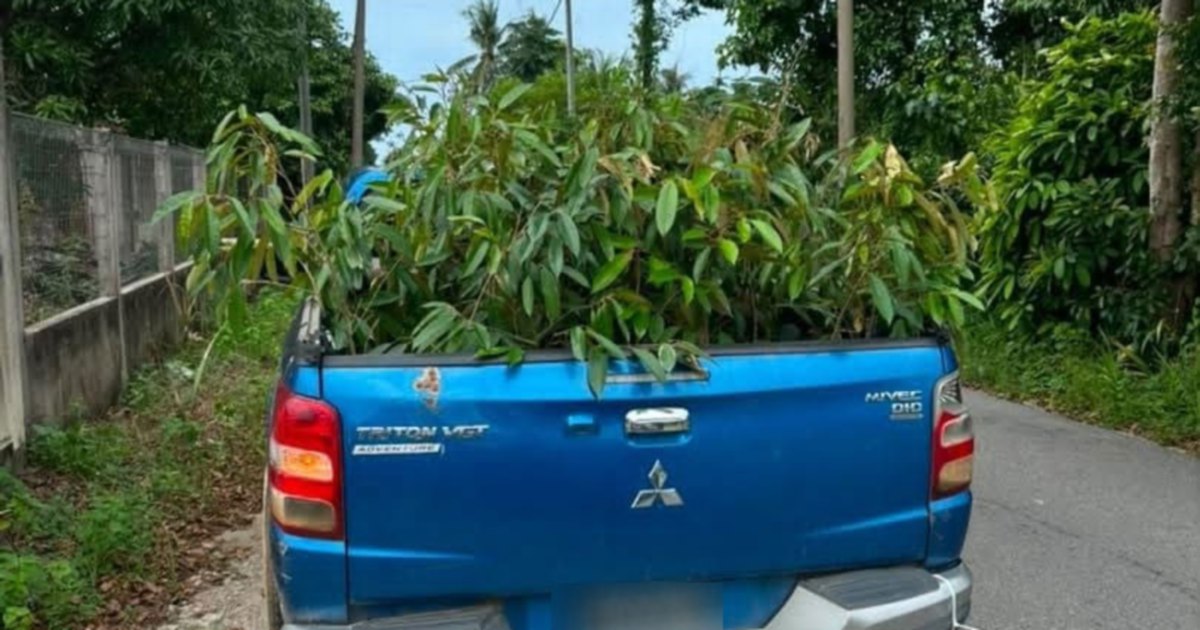
A 55-year-old man from Kelantan has been arrested following the seizure of 52 durian saplings that authorities believe were illegally brought into Malaysia from Thailand. The General Operations Force conducted the operation in Tumpat, a border municipality in Kelantan, uncovering what appears to be a smuggling attempt of the prized fruit plant materials.
The interception marks another chapter in Malaysia's ongoing struggle against agricultural smuggling along its northern border, where porous enforcement remains a persistent challenge. Durian saplings are valuable commodities, commanding high prices in both domestic and international markets, making them attractive targets for illicit traders seeking to bypass customs regulations and export licensing requirements. The seizure reflects the scale of illegal movement of plant materials that continues despite heightened vigilance by law enforcement agencies.
Border communities like Tumpat have historically served as transit points for contraband goods, with criminal networks exploiting geographic proximity to Thailand and established smuggling corridors. The arrest of the individual suggests coordination between authorities aimed at disrupting supply chains rather than merely intercepting goods at ports of entry. Such operations typically require intelligence gathering and ground-level surveillance, indicating a shift toward more proactive enforcement strategies.
The durian, known as the "king of fruits" throughout Southeast Asia, commands premium prices due to its distinctive taste and cultivation requirements. Saplings specifically are sought after because they represent intellectual property in the form of genetic lines and cultivars that breeders have developed over decades. Malaysia's recognition of durian's commercial significance has led to designation of certain premium varieties as protected commodities, with strict protocols governing their movement across borders.
From a regional perspective, illegal plant smuggling threatens the intellectual property interests of agricultural producers who have invested heavily in breeding programs. When saplings are smuggled to neighbouring countries, local growers lose competitive advantage and revenue streams. Thailand, which also cultivates durians extensively, maintains its own regulations against unauthorized export of cultivars, suggesting reciprocal challenges both nations face in protecting horticultural assets.
The timing of the seizure comes as Malaysia seeks to strengthen its agricultural export brand, particularly for premium durian varieties that fetch exceptional prices in Asian markets. Uncontrolled smuggling undermines official export channels and dilutes the value proposition of legitimately marketed Malaysian durians. Authorities view such interdictions as essential to protecting market premiums that benefit licensed growers and exporters operating within regulatory frameworks.
Smuggling of plant materials presents complications beyond simple trade violation concerns. Unauthorized movement of saplings risks introducing pests, diseases, or genetic contaminants to Malaysia's agricultural ecosystem. Quarantine procedures exist specifically to prevent such risks, and circumventing them through smuggling jeopardizes broader horticultural productivity. The 52 saplings, had they entered the market undetected, might have carried undocumented pathological agents affecting wider cultivation areas.
The General Operations Force's involvement indicates that authorities view agricultural smuggling through a security lens rather than treating it as purely commercial transgression. This institutional positioning reflects acknowledgment that organized smuggling networks often operate in conjunction with other illicit activities, from drug trafficking to human smuggling. Border enforcement therefore integrates agricultural crime prevention within broader national security frameworks.
For Malaysian durian growers and exporters, such operations provide reassurance that government institutions are working to maintain orderly markets and prevent unfair competition from smuggled alternatives. However, enforcement sporadic bursts remain insufficient to fully deter organized smuggling operations that employ sophisticated methods and financial resources. The arrest of one individual likely represents merely one actor within larger networks.
The case underscores Malaysia's position within Southeast Asia's agricultural economy, where competitive pressures and economic incentives drive illegal cross-border movement of high-value plant materials. Both Malaysia and Thailand stand to benefit from enhanced bilateral cooperation on quarantine standards and coordinated enforcement at border crossings. Greater intelligence sharing and joint operations could reduce smuggling volumes that currently drain revenue from legitimate agricultural sectors.
Looking forward, this seizure illustrates the need for sustained investment in border infrastructure, personnel training, and technology deployment. Handheld detection equipment, biometric tracking systems, and real-time intelligence databases remain underdeployed in many sections of Malaysia's land borders. Enhanced capacity would enable authorities to increase interdiction rates while reducing resource expenditure per operation, ultimately deterring would-be smugglers through heightened perceived risk.
The incident also highlights the importance of international coordination mechanisms that allow rapid information exchange when suspicious shipments are detected. Involving quarantine specialists and agricultural regulators in border operations ensures seized materials undergo proper assessment rather than automatic destruction, potentially yielding valuable intelligence about smuggling methodologies and source locations. This forensic approach transforms each enforcement action into an intelligence-gathering opportunity.

