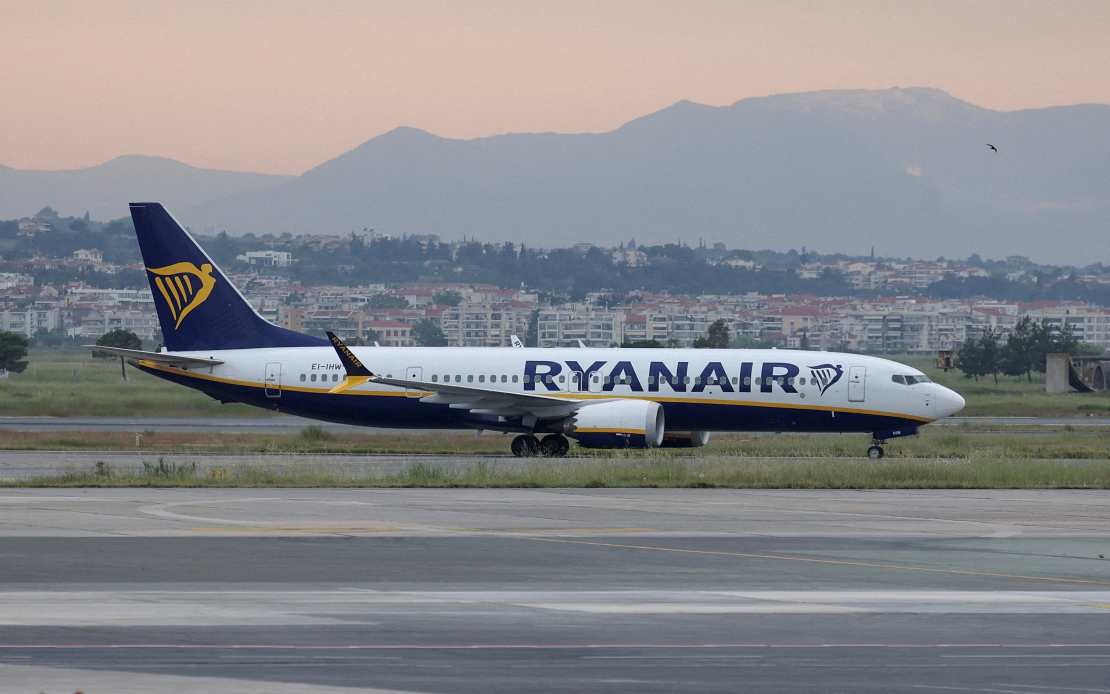
An investigation into a frightening mid-air incident aboard a Ryanair aircraft has uncovered the exact cause of a structural failure that nearly killed a passenger last month. The US National Transportation Safety Board released its findings on Thursday detailing how engine fragments penetrated the fuselage of a Malta Air flight operating under the Ryanair banner, creating a life-threatening breach in the pressurised cabin during ascent from Thessaloniki International Airport in Greece.
The catastrophic sequence of events began when the right engine experienced a fan blade failure whilst the aircraft climbed away from the Greek airport en route to Munich. This mechanical breakdown proved immediately consequential, with the separated blade generating shrapnel that tore through multiple sections of the aircraft's structural integrity. Rather than remaining contained within the engine nacelle as designed, the debris penetrated both the cabin walls and the aircraft's horizontal stabiliser, creating multiple points of compromise in what should have been a sealed pressurised environment.
The investigation revealed with precision the path of destruction caused by the engine failure. Fragments breached the fuselage at two distinct locations: first through a passenger cabin window at row 11, and secondly through the lower lobe fuselage skin positioned behind the right wing-to-body fairing. The damage to row 11 proved particularly severe, as the window was completely dislodged from its frame, transforming what should have been a sealed opening into a direct portal to the outside atmosphere.
The passenger seated in seat 11F experienced an extraordinarily traumatic moment when the sudden pressure differential created by the missing window began drawing them outward through the opening. Investigators determined that the passenger became partially lodged within the damaged window frame, caught between the interior of the aircraft and the exterior void. The forces at work during this situation were extreme—the pressurised cabin environment creating suction that would have pulled with considerable force on anything in the breached opening.
What prevented a tragedy was the swift action of other passengers aboard the flight. Recognising the emergency unfolding before them, fellow travellers acted decisively to pull the partially exposed passenger back into the relative safety of the cabin interior. Their intervention undoubtedly saved the individual's life, as prolonged exposure at cruise altitude would have been fatal. The injured passenger remained aboard as the aircraft initiated emergency procedures to return to Thessaloniki.
The investigation also uncovered evidence pointing to bird ingestion as a contributing factor to the engine's failure. Examiners discovered bird remains, including feathers, distributed throughout several components of the right engine. This finding suggests that a bird strike during the initial climb-out phase may have weakened the fan blade or contributed to conditions that led to its subsequent separation. Bird strikes remain a persistent aviation safety challenge globally, with engines designed to withstand impacts from smaller birds but occasionally failing when conditions align unfavourably.
The incident carries particular significance for regional aviation given Southeast Asia's exposure to bird strike hazards in tropical and subtropical flight corridors. Airlines operating similar equipment through this region, including various Ryanair operations and competitors utilising the same engine type, must view this investigation as a critical data point for maintenance protocols. The ability of an engine component to separate and generate debris capable of breaching the cabin represents a failure in multiple safety systems that engineers had believed were protective.
The aircraft's eventual safe return to Thessaloniki demonstrated that despite the catastrophic nature of the initial failure, the remaining systems and crew response prevented the situation from escalating further. However, the incident illustrates how modern commercial aviation continues to present scenarios where passenger survival depends on collective action and fortunate circumstances rather than designed redundancy alone. The damaged aircraft will require extensive structural repairs and engine replacement before returning to service.
For airlines operating in the region and passengers travelling on similar aircraft, this investigation underscores the importance of rigorous engine maintenance and inspection protocols. The Ryanair incident, occurring in July, serves as a sobering reminder that catastrophic mechanical failures can occur with little warning, and that emergency response training for both crew and passengers remains vital to aviation safety outcomes.

