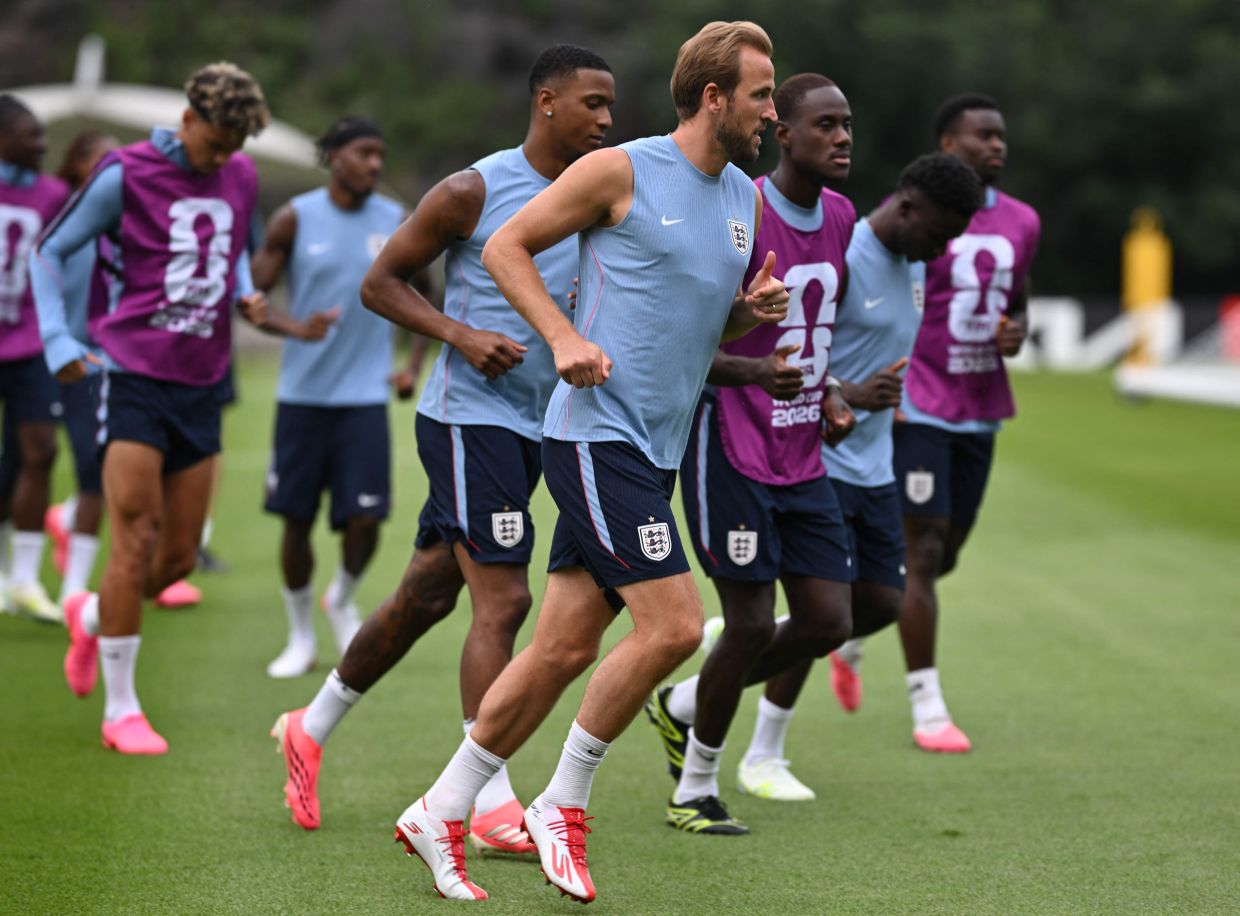
England will attempt to break through Mexico's unbeaten home record at the Estadio Azteca on Sunday in one of the tournament's marquee round-of-16 matchups, as the race for quarter-final berths intensifies following France and Morocco's progression to the last eight. The Three Lions face a Mexican side on a remarkable run at altitude in Mexico City, while simultaneously, Norway's prolific striker Erling Haaland will test his mettle against Brazil at the MetLife Stadium in New Jersey, with both victors earning spots in Miami quarter-finals.
England's path to the knockout rounds has proven far less convincing than their pre-tournament billing suggested. Manager Thomas Tuchel's squad arrived with aspirations of ending six decades without a major trophy, yet struggled considerably during the group phase before requiring a dramatic late intervention from captain Harry Kane to overcome the Democratic Republic of Congo 2-1 and secure progression. The stumbling performance raised significant questions about the team's credentials heading into this formidable assignment, particularly given the demanding environment awaiting them in Mexico's capital.
The Azteca presents a formidable physical challenge beyond the calibre of opposition. Situated 2,240 metres above sea level, the stadium's rarefied air imposes genuine physiological constraints on visiting teams, constraints that cannot be overcome through brief acclimatisation. Tuchel acknowledged this reality before departure, remarking that four days of preparation would prove fundamentally inadequate for the human body to adapt to such altitude. Upon arriving at the stadium, however, the England manager appeared energised by the occasion, describing the venue as an iconic setting where a proper World Cup encounter would unfold. Such historical weight carries considerable bearing; England's last visit to the Azteca remains seared in memory from 1986, when Diego Maradona's disputed hand assisted Argentina's elimination of the English, a phantom goal that reverberates through the decades.
Defensive vulnerabilities represent perhaps England's most pressing concern heading into Sunday's encounter. Throughout the tournament, the backline has demonstrated susceptibility to rapid attacking movements, with the right flank emerging as a particular point of brittleness. Tuchel must synthesise tactical adjustments to shore up these weaknesses against a Mexico side that has proven both consistent and efficient, remaining undefeated across four home matches whilst maintaining a clean sheet throughout. Such defensive solidity suggests Mexico's approach possesses genuine substance beyond mere home advantage.
Mexico's trajectory through the competition starkly contrasts with England's laboured progression. El Tri dismantled Ecuador 2-0 in their knockout qualifier, securing a first World Cup round-of-16 victory on home soil in four decades and igniting genuine possibility of toppling the fourth-ranked English team. Manager Javier Aguirre tempered expectations when pressed about altitude advantages, reframing the contest as a straightforward eleven-versus-eleven proposition where Mexico would require near-flawless execution. The 67-year-old's assessment of England's quality proved respectfully candid, acknowledging the Three Lions' wealth of globally distributed talent and physical prowess, though his team's ranking at tenth place reflects a realistic appraisal of the challenge ahead.
Weather conditions across both venues threaten to introduce unpredictable variables into Sunday's proceedings. Mexico City forecasts indicated thunderstorms developing around the 6pm local kickoff (4am Monday, Malaysian time), though FIFA confirmed the scheduled commencement time would remain unchanged despite considering an earlier start. Meteorological conditions across the Atlantic proved equally unsettled, with severe storm warnings issued for the New Jersey area where Brazil and Norway would contest their clash, the National Weather Service warning of potential flash flooding. Temperature contrasts marked a dramatic divergence from the oppressive conditions witnessed in Philadelphia, where France had previously triumphed in near-record heat approaching 38°C.
Brazil's quadrant presents a distinctly different narrative, though equally fraught with pitfalls. Norway's Erling Haaland has emerged as perhaps the tournament's most lethal individual performer, the Manchester City forward having accumulated five goals across three appearances—a rate of conversion that demands respect from any opposing defence. Facing the five-time world champions, Haaland confronts a back line possessing intimate familiarity with his movement patterns. Gabriel Magalhaes, deployed in Brazil's central defence, contests regularly against Haaland within Premier League competition for Arsenal, whilst Marquinhos has similarly encountered the Norwegian during Paris Saint-Germain duties. Such proximity ought theoretically to diminish Haaland's threat, though his explosive productivity suggests tactical knowledge may prove insufficient against such clinical execution.
Brazil's coach Carlo Ancelotti adopted a notably relaxed demeanor when addressing Haaland's menace, essentially dismissing the need for elaborate defensive instruction given his defenders' extensive experience against the striker. Such confidence appeared warranted given Brazil's pedigree and Haaland's opponents' collective experience, yet Ancelotti's cavalier tone risks underestimating an opponent functioning at exceptional levels. Norway coach Stale Solbakken conversely cautioned his squad against allowing the occasion's magnitude to dictate their approach, urging focused commitment to match principles rather than passive reverence toward the opposition's historical standing. Solbakken's perspective proved notably perceptive; whilst Brazil remained tournament favourites, the gulf separating them from previous editions appeared narrower than historical precedent would suggest.
The broader context of these simultaneous fixtures reveals a tournament where established hierarchies face legitimate challenge. France and Morocco's earlier progression maintained conventional ordering, with the elite nations advancing predictably. Yet England's uncertain progress and Norway's potent attacking threat suggest genuine competitive uncertainty persists. For Malaysian and Southeast Asian observers, these encounters carry particular resonance given the region's substantial football constituencies; both matches will command significant attention across the football-mad populations of Indonesia, Thailand, Vietnam and Malaysia proper, where large diaspora communities maintain passionate connections to English football whilst Brazil's historical appeal transcends geographic boundaries.
The quarter-final locations represent calculated geographic positioning reflecting tournament logistics. Miami will host the winning matchup's progression, establishing a North American venue for continued competition. Such arrangement ensures English audiences face improved timing compared to the Mexico match, though Malaysian viewership simultaneously must adjust to midnight scheduling. These temporal realities underscore the genuinely global nature of modern football's major tournaments, where fixture placement accommodates broadcast audiences spanning multiple hemispheres simultaneously, inevitably disadvantaging supporters in certain zones.
The stakes extending beyond mere progression merit emphasis. England's World Cup narrative requires rehabilitation following uninspiring group-stage performance; victory over Mexico would substantially reframe the tournament's perception of their campaign, providing the psychological foundation necessary for deeper runs. Mexico seeks validation of their status as continental football's established power, whilst Haaland hunts opportunities to rewrite historical expectations regarding smaller nation participation in knockout stages. Brazil, conversely, must defend their historical prestige against upstart challenge. These narrative layers transform what might superficially appear as routine knockout football into genuinely consequential encounters where national pride, individual reputation and historical legacy intersect with sporting outcome.

