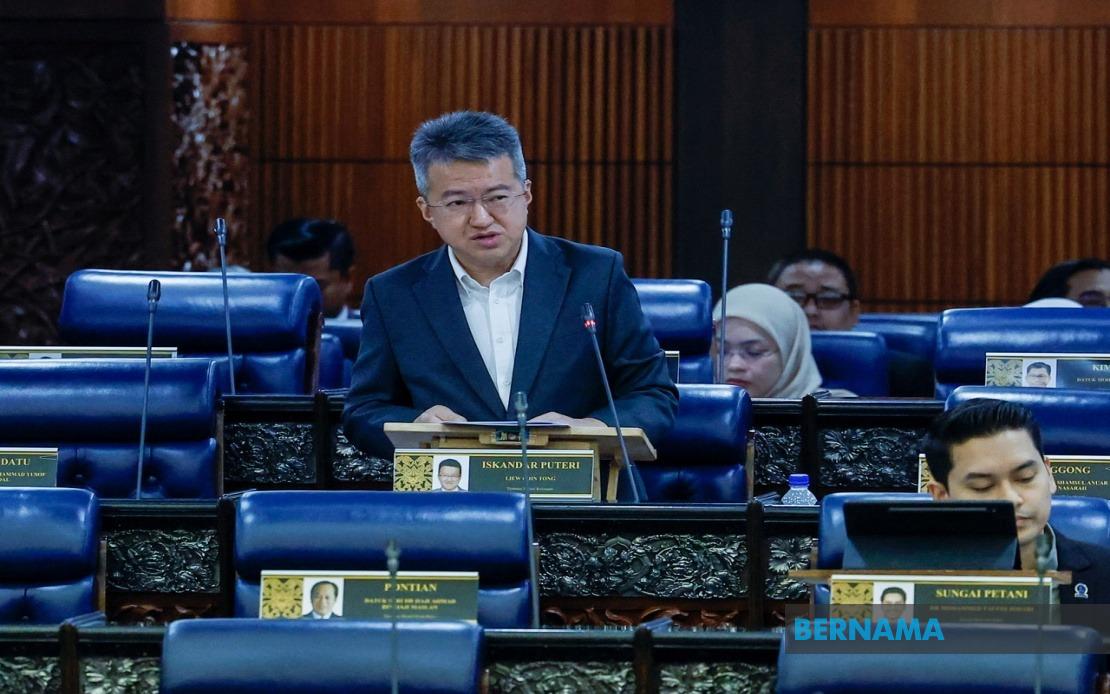
Malaysia's Employees Provident Fund has facilitated the transfer of RM46.3 million in retirement savings through its i-Legasi scheme, with Deputy Finance Minister Liew Chin Tong announcing that 63 applications have received approval and benefited a total of 86 recipients. The programme, which commenced operations on February 1 this year, represents a significant step in addressing the nation's retirement security challenges as the population ages and living costs escalate.
The i-Legasi initiative operates on a straightforward premise designed to balance inheritance planning with retirement adequacy. Members of the EPF who have reached 55 years of age and accumulated retirement savings exceeding the Adequate Savings benchmark of RM650,000 are permitted to channel portions of their surplus funds to the EPF accounts of eligible immediate family members. This mechanism acknowledges both the reality that some retirees accumulate savings beyond their immediate needs and the contemporary financial pressures facing younger family members preparing for their own retirement years.
Liew elaborated on the broader retirement savings landscape during parliamentary proceedings, noting that as of May 31, approximately 3.04 million active EPF members aged between 18 and 60 years have achieved the Basic Savings target corresponding to their respective age brackets. The Basic Savings target, set at RM390,000 by age 60, represents a foundational benchmark that the EPF uses to assess whether members are on track for adequate retirement income. This cohort comprises 38.3 per cent of the total 7.94 million members within this age group, indicating that more than a third of Malaysia's working-age EPF contributors have met this critical savings milestone.
The statistical progress reveals an encouraging upward trajectory in retirement preparedness among Malaysian workers. The proportion of members achieving the Basic Savings target has climbed from 35 per cent, representing 2.71 million individuals, as recorded just over a year earlier on May 31, 2025. This three-percentage-point increase, while seemingly modest in isolation, translates to approximately 330,000 additional members reaching the savings target within a single year. For a nation grappling with demographic challenges and the prospect of becoming an aged society by 2030, such incremental gains in retirement adequacy carry substantial weight.
The question posed by Datuk Seri Aminuddin Harun from Port Dickson had specifically addressed governmental strategies to ensure Malaysian workers maintain adequate retirement savings and income streams amid the dual pressures of rising living costs and population ageing. His inquiry reflected legitimate concerns within Parliament about whether current policy frameworks and individual savings behaviour are sufficient to prevent widespread retirement insecurity. The rising cost of living, particularly evident in housing, healthcare, and daily expenses, has intensified pressure on workers to simultaneously meet current needs and save adequately for future retirement.
Malaysia's demographic transition toward an aged society by 2030 presents both fiscal and social policy challenges that extend well beyond the EPF alone. As the proportion of elderly citizens increases relative to the working-age population, the dependency ratio shifts, potentially affecting both economic productivity and the sustainability of social support systems. The EPF, as the primary retirement savings mechanism for the majority of Malaysian workers, bears significant responsibility in ensuring that this demographic transition does not precipitate a retirement income crisis affecting millions of citizens.
The government and the EPF have committed to deepening their collaborative efforts in designing holistic policy frameworks and financial mechanisms aimed at improving retirement savings adequacy. These initiatives extend beyond the i-Legasi scheme to encompass enhanced contribution incentives that reward members for increasing their voluntary savings and strengthening social protection measures for vulnerable retirees. The emphasis on collaboration between governmental bodies and the EPF suggests recognition that retirement security requires multi-faceted approaches rather than single policy solutions.
The i-Legasi scheme itself exemplifies this nuanced approach by addressing a specific but meaningful gap in retirement planning. Traditional inheritance structures often delay the transfer of assets until after a member's death, potentially leaving younger beneficiaries without timely financial support during their critical earning and savings years. By permitting transfers during the contributor's lifetime, the scheme enables members to provide targeted assistance to family members while simultaneously ensuring that the transferring member retains sufficient savings for their own retirement security. This dual objective—supporting family financial wellbeing while protecting individual retirement adequacy—distinguishes the initiative from less sophisticated wealth transfer mechanisms.
The response from the deputy finance minister also underscores the government's recognition that retirement adequacy is not merely an individual responsibility but a collective societal concern. When significant portions of the working population fail to accumulate adequate retirement savings, the burden inevitably shifts to public welfare systems, healthcare infrastructure, and family support networks. By implementing and monitoring schemes like i-Legasi, the authorities signal their commitment to preventing such scenarios through proactive policy intervention.
For Malaysian workers and families, the i-Legasi initiative offers tangible value beyond its headline transfer figures. The scheme recognises that retirement planning occurs within the context of broader family financial strategies and that inter-generational wealth transfer, when structured appropriately, can strengthen overall household financial resilience. The approval of 63 applications within the first several months of operation suggests meaningful take-up among eligible members, indicating both awareness of the scheme's benefits and the genuine need for such mechanisms among Malaysia's retiree population.
Looking forward, the sustainability of retirement adequacy will depend on continued focus not merely on transfer mechanisms but on fundamental savings behaviour among working-age Malaysians. While the increase from 35 per cent to 38.3 per cent of members achieving Basic Savings targets is positive, it simultaneously indicates that nearly 62 per cent of active contributors aged 18 to 60 remain below their respective age-appropriate savings benchmarks. This substantial proportion of undersavers represents both a policy challenge and an opportunity for targeted interventions aimed at improving savings discipline and contribution rates.

