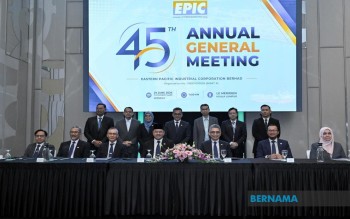
Eastern Pacific Industrial Corp Bhd (EPIC) has unveiled an ambitious growth roadmap targeting RM700 million in annual revenue and RM1 billion in net asset value by 2030, marking a significant escalation from its current financial position. The integrated oil and gas solutions provider unveiled these aspirations through its EPIC Strategic Business Plan 2025-2030 following the company's 45th annual general meeting held in Kuala Lumpur on June 29. The expansion blueprint spans three core business pillars: oil and gas services, port management operations, and renewable energy ventures, positioning the company to capitalise on Malaysia's evolving energy landscape.
Group chief executive officer Dr Ts Muhtar Suhaili outlined the trajectory underpinning these targets during the announcement. Revenue is projected to increase substantially from the current RM411.9 million to RM700 million, while the net asset value—a crucial metric of shareholder wealth—will climb from approximately RM700 million to RM1 billion. This represents roughly 70 percent revenue growth and 43 percent NAV expansion over the five-year planning horizon, reflecting the company's confidence in its strategic positioning and market opportunities.
EPIC's optimism rests on solid recent performance. The company posted net profit of RM20.6 million for the year ended December 31, 2025, up from RM16.6 million in the previous year. Revenue rose to a record RM411.9 million compared with RM403.8 million previously, demonstrating consistent upward momentum since 2022. This strengthening financial foundation suggests the company has successfully navigated the volatile post-pandemic economy and positioned itself favourably within Malaysia's energy sector recovery.
Several factors drove the strong 2025 performance. The acquisition of Rahar Niaga Sdn Bhd expanded EPIC's operational capacity and service offerings. The company secured the Pan Malaysia Maintenance, Commissioning and Modification and Hook-Up and Commissioning contract, a significant win that underpins medium-term revenue visibility. Additionally, higher offshore rig arrivals and increased cargo volumes through its port operations contributed to the upswing. These developments suggest growing activity levels in Malaysia's offshore petroleum industry, a positive indicator for EPIC's service-dependent business model.
Muhtar expressed confidence that 2026 will maintain this momentum, forecasting another record-breaking year driven by an expanding contract pipeline. The group's approved contract value for its oil and gas business currently ranges between RM1.3 billion and RM1.5 billion—a substantial order book that provides revenue security. However, the executive cautioned that actual earnings will fluctuate based on work orders and purchase orders issued under these contracts, reflecting the project-based nature of offshore energy services where client spending can vary quarterly.
Geographic expansion has become increasingly important to EPIC's strategy. The company has successfully penetrated multiple regions beyond its traditional base in Terengganu, securing several Petronas contracts in the southern Peninsular Malaysia region encompassing Pengerang and Melaka. More significantly, EPIC has recently expanded into Sabah, a territory previously underexploited by the group. In February 2025, EPIC's subsidiary EPIC OG Sdn Bhd entered a collaboration agreement with Begas Energy Sdn Bhd to provide project management services for a Terminal Turnaround, Maintenance and Modification contract in Sabah, further solidifying the company's presence across East Malaysia.
Renewable energy represents a critical pillar of EPIC's diversification strategy and long-term sustainability. The company is pursuing opportunities in Malaysia's burgeoning renewable sector, including participation in bidding for a hybrid hydro-solar project at Kenyir in Terengganu, undertaken alongside parent company Terengganu Inc. This venture reflects broader Malaysian policy imperatives toward clean energy transition and positions EPIC to benefit from the country's renewable capacity expansion targets. Success in renewable projects would provide revenue streams less correlated with volatile oil prices, enhancing earnings stability.
Internationalisation forms the third leg of EPIC's expansion strategy. The board has mandated management to pursue growth opportunities in neighbouring Asian markets as part of the 2030 plan, acknowledging that regional energy demand will likely exceed domestic opportunities. Simultaneously, the company continues evaluating West Asia prospects, though the board recognises prevailing geopolitical uncertainties present both risks and opportunities in that region. This balanced approach suggests pragmatic risk assessment while maintaining strategic optionality.
The timing of EPIC's expansion ambitions aligns with several favourable macroeconomic factors. Malaysia's energy sector faces sustained demand from industrial growth and developing infrastructure requirements. The transition toward renewable energy infrastructure is accelerating investments in hybrid and solar projects. Petronas' continued capital expenditure in offshore maintenance and modification work should provide steady contract opportunities. Regional energy demand, particularly from growing Southeast Asian economies, creates pathways for international expansion.
However, execution risks warrant consideration for investors monitoring EPIC's progress toward 2030 targets. The oil and gas sector remains cyclical and vulnerable to commodity price volatility. Competition for major contracts continues intensifying as larger regional and international contractors pursue the same opportunities. International expansion into neighbouring Asian markets requires navigating different regulatory frameworks, local partnerships, and competitive landscapes. The hybrid renewable energy project at Kenyir represents a new venture type for EPIC, introducing execution and technology risks alongside business opportunities.
For Malaysian and Southeast Asian stakeholders, EPIC's growth trajectory demonstrates how domestic service providers can successfully scale operations by diversifying revenue streams, expanding geographically, and aligning with national energy transition priorities. The company's success—or struggles—in executing this plan will provide valuable insights into the viability of mid-tier Malaysian energy service companies competing regionally. Additionally, EPIC's renewable energy aspirations reflect broader industry recognition that energy sector careers and profits increasingly depend on companies' ability to pivot toward cleaner technologies and hybrid solutions.
The path to RM700 million revenue and RM1 billion NAV by 2030 represents an achievable but demanding target requiring disciplined execution across multiple business streams and geographies. EPIC's track record of consistent growth since 2022, coupled with its expanding contract portfolio and strategic positioning in Malaysia's dominant energy markets, provides a credible foundation. However, the company's ability to capture international opportunities, successfully deploy renewable energy capabilities, and maintain service quality amid rapid expansion will ultimately determine whether these aspirations materialise into shareholder value.

