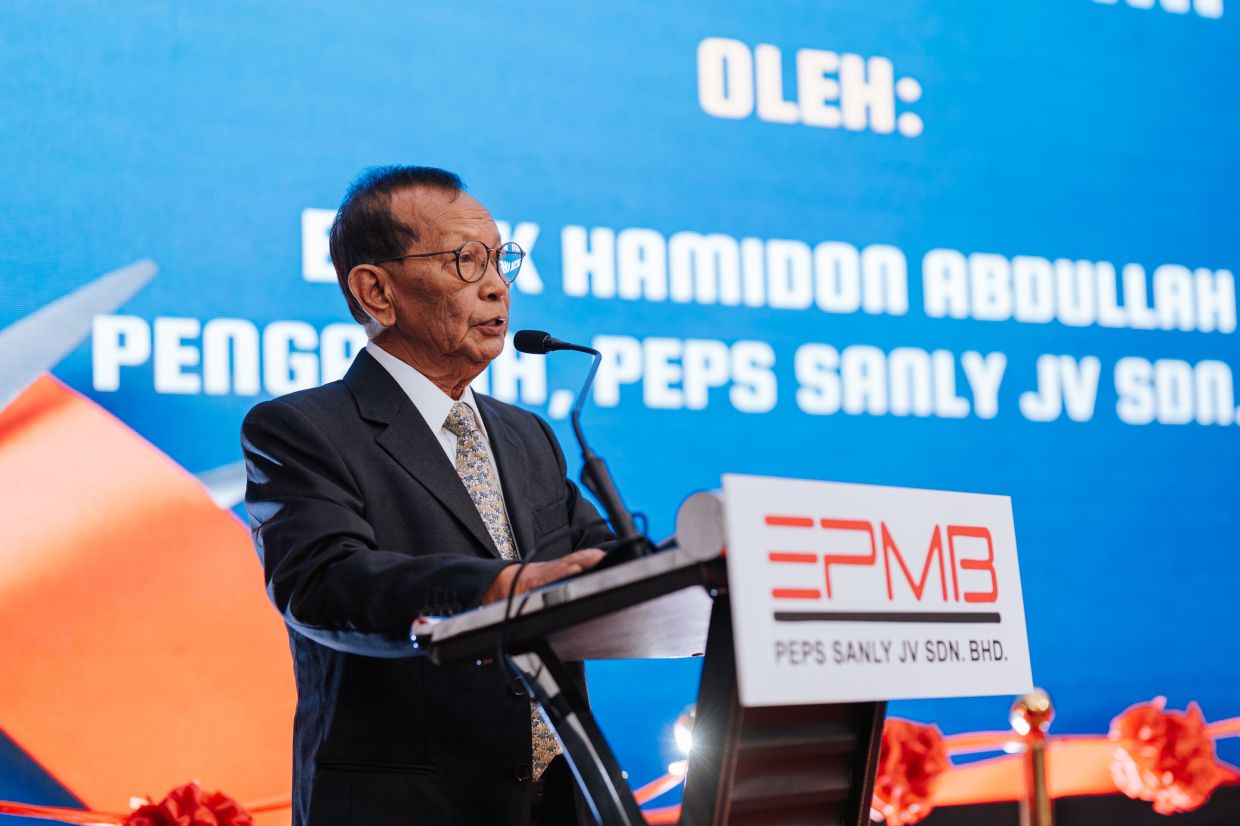
Malaysia's automotive component supplier EPMB has begun operations at a newly constructed facility in Tanjong Malim, Perak, marking a significant expansion of its production capacity for Proton's domestic and regional supply chain. The 9,909 square metre plant, which commenced manufacturing in October 2025, represents a strategic partnership between EPMB and Chinese automotive parts manufacturer Sanly Auto Parts Co Ltd, formalised earlier this year through their joint venture entity Peps Sanly JV Sdn Bhd.
Located within the Automotive High Technology Valley development in Perak, the facility brings considerable production muscle to the local automotive sector. With a monthly output capacity of 40,000 vehicle component sets, the plant is capable of delivering up to 480,000 complete sets annually—a scale that underscores EPMB's ambitions to consolidate its position as a critical supplier within Proton's manufacturing ecosystem. This volume represents meaningful capacity injection into Malaysia's automotive supply chain at a time when local manufacturers face intensifying competition and cost pressures from regional competitors.
The Tanjong Malim facility specialises in manufacturing complex chassis and structural assemblies essential to modern vehicle construction. The plant will produce front corner modules, subframe modules and rear axle module assemblies destined for Proton's existing portfolio including the AMA01 platform vehicles—the Saga, Persona and Iriz models—as well as the yet-to-be-launched AMA02 and AMA05 models. This breadth of application demonstrates the versatility of the manufacturing operation and indicates EPMB's deep integration into Proton's product development cycle.
The partnership between EPMB and Sanly Auto Parts emerged from a formalised joint venture agreement concluded in February 2025, with an explicit mandate to localise the manufacturing of chassis components for Proton vehicles. The timing of this collaboration reflects broader strategic considerations within Malaysia's automotive industry: as Proton pursues aggressive regional expansion and transitions its product range toward electric vehicle platforms, the company requires domestic suppliers capable of meeting both quality and cost benchmarks competitive with regional alternatives. By establishing this partnership, EPMB addresses that requirement while simultaneously securing its relevance to its principal customer.
Executive chairman Hamidon Abdullah articulated the strategic rationale underpinning the collaboration with Sanly, emphasising the competitive advantages derived from accessing the Chinese partner's expertise and industrial networks. Sanly Auto Parts brings specialised knowledge across metalworking, assembly techniques, and automotive chassis systems—capabilities increasingly critical as vehicles incorporate more sophisticated suspension, structural reinforcement and integrated chassis components. Equally significant, Sanly maintains established relationships with Geely and other major Chinese original equipment manufacturers, granting EPMB exposure to manufacturing methodologies, supply chain optimisation practices and cost structures that characterise China's competitive automotive industry.
The competitive cost dimension proves particularly consequential for Malaysian automotive manufacturing, an industry segment facing persistent margin compression as regional competitors capitalise on lower labour costs and manufacturing economies of scale. By tapping into Sanly's operational infrastructure and cost management frameworks, EPMB positions itself to supply Proton at price points that enhance the national carmaker's own competitiveness in price-sensitive market segments and emerging markets where Proton is targeting growth. This efficiency advantage becomes especially relevant as Proton expands its international footprint throughout Southeast Asia and beyond.
The partnership simultaneously addresses quality assurance imperatives that increasingly dominate automotive supply chain expectations. Sanly's established track record with major Chinese OEMs implies manufacturing disciplines, testing protocols and defect management systems aligned with contemporary automotive standards. This quality commitment proves essential as Proton navigates increasingly stringent emissions regulations, safety requirements and durability standards across its target markets, including challenging Southeast Asian operating environments where chassis components must withstand demanding climatic conditions and road infrastructure variations.
EPMB's relationship with Proton spans nearly four decades, establishing deep institutional knowledge of the carmaker's technical specifications, production scheduling requirements and strategic objectives. The new Tanjong Malim facility builds upon this long-established foundation while injecting fresh manufacturing capability and technological expertise into the partnership. Rather than displacing existing EPMB operations, the facility expands the supplier's total productive capacity and permits production optimisation across its operational network.
Proton's strategic roadmap increasingly emphasises regional growth targets alongside an accelerating electric vehicle transition. These dual objectives create substantial implications for the automotive supply chain. EV platforms require fundamentally different chassis architectures than traditional internal combustion engines, with lower centres of gravity, integrated battery housings and modified suspension geometries. A supplier positioned to support both Proton's existing model lineup and its emerging electric vehicle platforms—as EPMB aspires through this partnership—becomes strategically indispensable. The Tanjong Malim facility's current production focus on conventional platforms positions EPMB to readily adapt its processes and capabilities toward electric vehicle component manufacturing as Proton's product transition accelerates.
The facility's establishment also reflects broader Malaysian policy objectives supporting automotive industry development and component manufacturing sophistication. High-value manufacturing activities centred in designated technology parks like the Automotive High Technology Valley align with Malaysia's pursuit of moving beyond low-cost assembly toward higher-margin component design and precision manufacturing. EPMB's investment reinforces the Perak location as a significant automotive manufacturing node, potentially catalysing further supplier clustering and infrastructure development that enhances ecosystem competitiveness.
Looking forward, the Tanjong Malim operation demonstrates how Malaysian suppliers can strengthen international competitiveness through strategic partnerships that combine local market knowledge and customer relationships with advanced manufacturing expertise and cost advantages available through cross-border collaboration. The EPMB-Sanly partnership model—Malaysian company maintaining customer relationships and market understanding while leveraging Chinese operational excellence—may offer a template applicable across Malaysia's component supplier ecosystem.

