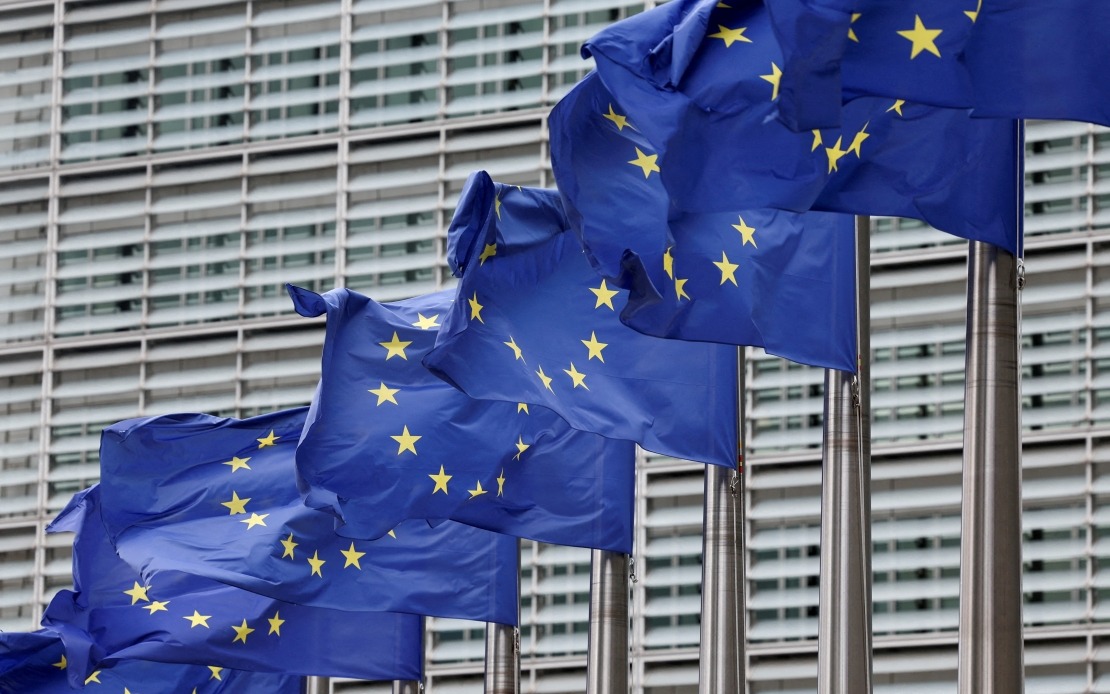
European Union foreign ministers convened in Brussels this week to examine escalating tensions in West Asia, with particular focus on whether the bloc should escalate its response to Israeli settlement expansion in the occupied West Bank through tougher trade measures and economic sanctions. The gathering underscored the European Union's struggle to forge unified policy on one of the most contentious geopolitical issues facing the bloc, revealing fundamental splits between member states on how aggressively to confront Israel's settlement activity.
The European Commission had prepared an array of potential measures for ministerial consideration, ranging from selective import restrictions to comprehensive bans on goods originating from Israeli settlements. These options reflected months of deliberation within the Commission about how the EU might intensify economic pressure on settlement activity without triggering broader trade wars or complicating relations with other strategic partners in the Middle East. The proposals signalled growing frustration within EU institutions over what officials view as the continuous expansion of settlements that contravenes international law and complicates peace prospects.
Yet the path toward collective action remains fraught with difficulty. Spain, Ireland, and Belgium have emerged as vocal advocates for imposing stringent sanctions on Israel, arguing that the settlement policy demands forceful European response. These nations have pushed for measures that would meaningfully constrain Israel's economic interests and signal strong disapproval from the bloc. Conversely, Germany and other member states have resisted such escalation, citing concerns about unintended consequences, the complexity of enforcement, and the risk of further destabilising the region.
The mechanics of EU decision-making compound these philosophical disagreements. Should the EU classify any new measures as foreign policy sanctions—a designation with significant implications—adoption would require unanimous consent from all 27 member states, an enormously high threshold that virtually guarantees deadlock when significant divisions exist. This unanimity requirement has historically prevented the EU from pursuing bold action on contentious issues where member states prioritise different interests or relationships. Even if measures were categorised differently, they would still demand a qualified majority comprising at least 15 of the 27 member states representing minimally 65 percent of the bloc's total population, a substantial but more achievable benchmark.
The settlement question reflects deeper tensions within the EU regarding its role in Middle Eastern affairs and its relationship with Israel. Smaller EU nations, particularly those with substantial Arab and Palestinian diaspora communities, view aggressive action as a moral imperative reflecting the bloc's stated commitment to international law and human rights. Larger European powers, especially those maintaining significant strategic and economic relationships with Israel, fear that unilateral sanctions could undermine their diplomatic flexibility and narrow their capacity to influence events through other channels. This clash between principle and pragmatism has repeatedly stalled EU efforts to adopt cohesive Middle East policies.
Beyond the settlements debate, ministers addressed several other urgent matters on the international agenda. Developments surrounding the conflict in Iran featured prominently in discussions, reflecting ongoing European concerns about regional escalation and nuclear proliferation risks. The Russian invasion of Ukraine remained a central preoccupation, with ministers expected to approve additional sanctions targeting Russian individuals, entities, and organisations involved in the war effort. However, considerable uncertainty persisted regarding whether an expansive new sanctions package encompassing broad trade restrictions could secure sufficient support for immediate implementation.
The attendance of Ukrainian Foreign Minister Andrii Sybiha underscored Ukraine's centrality to European security discussions. His participation in informal consultations with EU counterparts provided an opportunity for Ukraine to directly convey its priorities and concerns to the bloc's foreign policy establishment. The presence of Ukrainian leadership served as a reminder that European geopolitical attention remains substantially consumed by the ongoing conflict in Eastern Europe, potentially affecting bandwidth for addressing other critical international disputes.
For Southeast Asian observers, the EU's internal divisions on Israeli settlements carry broader implications. The bloc's struggles to achieve consensus on West Asia policy suggest that Europe increasingly confronts limitations in projecting unified diplomatic and economic influence. This fragmentation may create openings for other global actors, including rising Asian powers, to expand their roles in mediating regional conflicts and shaping international norms. Malaysia and other Southeast Asian nations have long advocated for stronger international action against Israeli settlement policies, viewing them as violations of Palestinian rights and international law. The EU's continued inability to implement forceful collective measures may reinforce perceptions that multilateral institutions require fundamental reform to effectively address persistent global conflicts.
The settlement expansion question also intersects with broader debates about international law's relevance in contemporary geopolitics. If a bloc as wealthy and institutionalised as the EU struggles to enforce norms against settlement expansion, questions naturally arise about the efficacy of rules-based international order—a concept that Southeast Asian nations have increasingly championed as essential for protecting smaller states' interests in an era of great power competition. The EU's inability to act decisively may undermine confidence in multilateral mechanisms that developing nations depend upon for security and stability.
Looking forward, the EU faces mounting pressure to demonstrate that it can translate stated principles into concrete policy measures. Continued inaction on settlements risks appearing cynical to allies in the Global South and potentially emboldening further Israeli expansion. Conversely, aggressive sanctions without broad consensus could fracture the bloc further and provoke retaliatory measures from Israel and its supporters. This dilemma—between maintaining unity and enforcing principles—will likely persist unless member states find new frameworks for reconciling their divergent interests and values regarding the Middle East.

