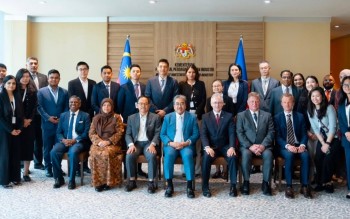
A high-level European business delegation concluded three days of intensive discussions with Malaysian government agencies, signalling renewed momentum in bilateral economic cooperation and investment partnership between Europe and Malaysia. The EU-ASEAN Business Council (EU-ABC) visit, which ran from August 4 to 6, brought together more than 70 delegates representing over 25 European companies for direct engagement with Malaysian ministers and senior officials on policy direction, regulatory frameworks, and sectoral opportunities.
Chris Humphrey, executive director of the EU-ABC, characterised the visit as a success in building mutual understanding between European investors and Malaysian policymakers. The delegation's itinerary covered substantive meetings across multiple government agencies, reflecting the breadth of commercial and strategic interests that Europe holds in Malaysia. At the Economy Ministry, European business representatives received detailed briefings on Malaysia's ongoing reform packages and expressed strong support for the government's green transition agenda. The discussions encompassed sustainable development frameworks, circular economy initiatives, and digital transformation—all areas where European expertise and capital could play a meaningful role in accelerating Malaysia's transition away from traditional economic models.
The Finance Ministry engagement proved equally productive, with talks focusing on investment financing mechanisms, taxation frameworks, corporate governance standards, and the broader investment climate. European investors are acutely interested in understanding how Malaysia's fiscal policy and institutional arrangements create pathways for long-term capital deployment. According to Humphrey, these discussions were marked by an optimistic tone from Malaysian officials, suggesting receptiveness to European partnership proposals and a commitment to creating investor-friendly conditions. This positive reception reflects Malaysia's strategic positioning as it seeks to diversify its source markets and investment origins beyond traditional partners.
Governor of Bank Negara Malaysia Datuk Seri Abdul Rasheed Ghaffour participated in the delegation's meetings, underscoring the importance attached to these discussions at the central banking level. Investment, Trade and Industry Minister Datuk Seri Johari Abdul Ghani and Economy Minister Akmal Nasrullah Mohd Nasir also engaged directly with the European representatives, indicating that Malaysia's government recognises the significance of deepening economic ties with Europe. These high-level encounters signal that Malaysia views the European business community not merely as a source of capital, but as a strategic partner in shaping the country's economic transformation agenda.
One particularly significant strand of the discussions centred on customs modernisation and digital transformation of trade procedures. The delegation plans detailed engagement with the Royal Malaysian Customs Department and the Malaysian Investment Development Authority, focusing on expediting customs clearances and implementing digitalisation measures that would reduce friction in bilateral trade flows. Humphrey highlighted that combating illicit trade, particularly in tobacco products, represents a priority area where European businesses are willing to contribute expertise and resources. Such cooperation demonstrates how commercial engagement can extend into law enforcement and public health domains, creating shared value across multiple policy pillars.
The healthcare sector emerged as another promising avenue for collaboration, with European companies signalling interest in supporting Malaysia's evolving healthcare needs. Discussions with the Health Ministry explored innovative financing mechanisms for medical infrastructure and pharmaceutical supply, as well as promoting wellness and self-care initiatives. Given Europe's advanced healthcare innovation ecosystem, this sector represents an opportunity for Malaysian patients to access cutting-edge treatments while providing European firms with market expansion opportunities. The breadth of sectoral engagement—spanning agriculture, food security, transport, digital infrastructure, and tourism—demonstrates that European investment interest extends well beyond extractive or manufacturing sectors into knowledge-intensive and service-oriented domains.
Malaysia's geographic positioning, infrastructure quality, workforce capabilities, natural resource endowment, and abundant land have long featured in European investment calculus, but recent policy reforms have heightened the country's appeal. The EU is currently Malaysia's fifth largest trading partner, with bilateral goods trade reaching €48.9 billion in 2025. Malaysian exports to Europe totalled €30.3 billion, while European exports to Malaysia amounted to €18.6 billion, reflecting Malaysia's position as both a significant consumer of European manufactured goods and a major supplier of raw materials and intermediate products. Beyond trade, European investment stock in Malaysia has reached €33.1 billion as of 2024, establishing Europe as a substantial source of foreign direct investment and signalling confidence in Malaysia's medium to long-term economic trajectory.
The most strategically consequential outcome of these discussions concerns acceleration of the Malaysia-European Union free trade agreement (FTA) negotiations. Both parties are targeting finalisation by 2027, with four rounds of negotiations already completed and a fifth scheduled for late September in Brussels. Humphrey expressed confident optimism that sufficient momentum exists to conclude the agreement by September 2026, providing a 12-month cushion before the stated target. The commencement of a potential sixth negotiation round before the year's end would further accelerate progress, he suggested. An FTA would fundamentally reshape the trade and investment relationship by eliminating tariff barriers, harmonising regulatory standards, and providing long-term certainty for European and Malaysian business planning.
The timing of this delegation visit assumes added significance given Malaysia's broader strategic repositioning within global trade and investment architecture. With traditional multilateral trading relationships facing strain and geopolitical tensions reshaping commerce patterns, Malaysia's cultivation of the European partnership offers valuable portfolio diversification. Europe represents not merely a market and source of capital, but a model of green transition implementation and digital governance from which Malaysian policymakers can extract lessons and best practices. The EU's own energy transition and circular economy imperatives align with Malaysia's stated environmental commitments, creating scope for technology transfer and collaborative innovation.
For Malaysia, deepening engagement with European business leadership provides tangible validation of its reform trajectory and reassurance to international investors concerned about political stability and policy consistency. The visible participation of Malaysian government officials at the most senior levels demonstrates governmental commitment to the reform agenda and investor engagement. For Europe, the visit reinforces Malaysia's status as a premier investment destination in Southeast Asia and a gateway to ASEAN markets, justifying the commitment of executive-level business attention and resources to bilateral relationship cultivation.
The breadth of sectoral coverage and governmental participation in this visit distinguishes it from routine business delegations. Rather than focusing narrowly on trade volume or sectoral investment, the discussions encompass institutional reform, regulatory modernisation, and alignment on global challenges such as climate transition and digital transformation. This holistic approach reflects European recognition that successful long-term investment in Malaysia depends upon sound macroeconomic management, institutional effectiveness, and policy predictability. As Malaysia navigates ongoing economic transformation and seeks to reposition itself in regional and global value chains, the calibre and substance of engagement reflected in this European delegation visit suggests that the country remains an attractive and credible partner for advanced economies pursuing strategic investment diversification and commercial expansion.

