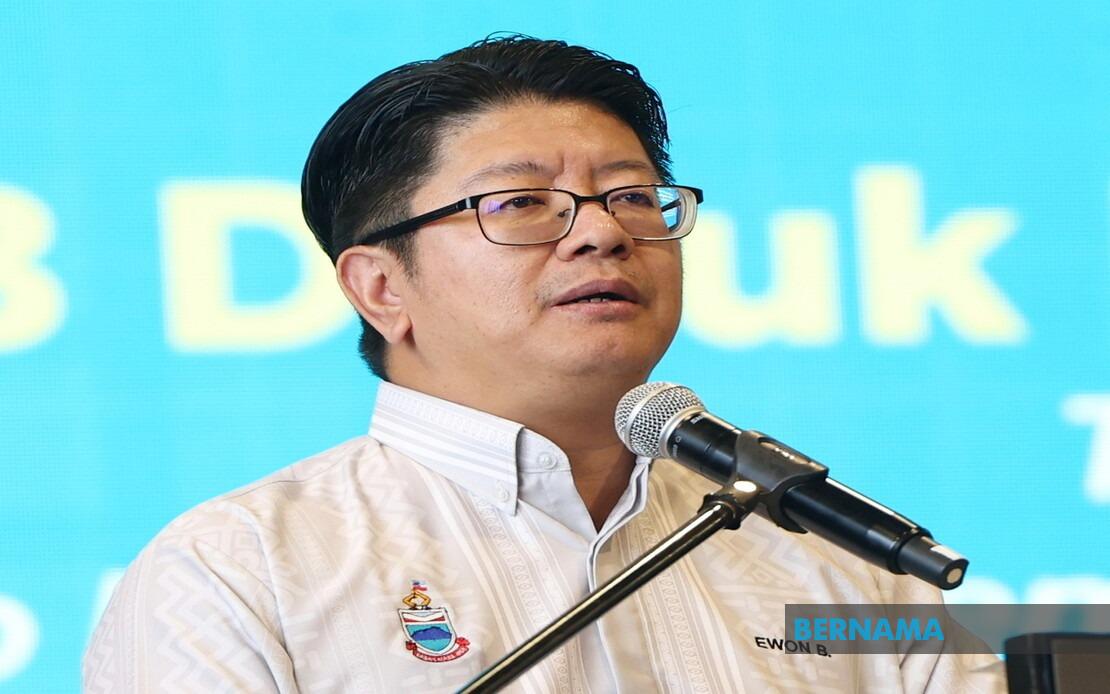
Datuk Ewon Benedick and Datuk Donald Peter Mojuntin have secured uncontested re-election as president and deputy president of the United Progressive Kinabalu Organisation (UPKO) for the 2026-2029 term, cementing their grip on the Sabah-based political party's leadership structure. The leadership renewal took place during the 17th UPKO triennial delegates conference held in Penampang on August 10, where the party's top two positions faced no rival candidates, allowing both men to continue steering the organisation without competitive challenge.
The stability in UPKO's uppermost tier extends beyond the president and deputy president roles. The party's slate of five vice-presidents—comprising Jairaiaz Joseph, Datuk Wong Thien Fook, Datuk Pangiran Lalung, Datuk Basari Sarikun, and Datuk Dr Laurentius Nayan Ambu—similarly encountered no opposition during the electoral process, indicating a cohesive consensus among party delegates regarding the direction and personnel of the main governing body. This pattern of unopposed victories at the senior level suggests that UPKO's membership has consolidated around its existing power structure, at least in this electoral cycle.
During his closing remarks at the conference, Ewon articulated a vision of unity and democratic propriety, emphasising that the election outcome should galvanise rather than fracture the party's internal cohesion. He framed the electoral process as a mechanism for strengthening organisational bonds rather than creating divisions, describing UPKO's membership as components of a single extended family united by common political purpose. His messaging reflected an effort to manage the optics of uncontested elections, which in some party contexts can suggest either strong consensus or suppressed dissent depending on interpretation.
Ewon's remarks also delineated the practical responsibilities awaiting the newly confirmed leadership. He underscored that elected officials and party representatives bear an obligation to articulate UPKO's policy positions to higher government echelons, with particular emphasis on conveying party interests to Sabah Chief Minister Datuk Seri Hajiji Noor in his capacity as chairman of the Gabungan Rakyat Sabah (GRS), the broader coalition within which UPKO operates. This framing positions UPKO as a constituent entity within a larger political alliance, requiring its leadership to navigate both internal party dynamics and interparty coalition relationships.
The reference to parliamentary and state legislative advocacy indicates that UPKO views elected representation as a primary channel for advancing party resolutions. Ewon outlined that UPKO's parliamentarians and state assemblypersons would utilise formal debate mechanisms in both the federal Parliament and the Sabah State Legislative Assembly to articulate party positions on policy matters. This emphasis on institutional forums suggests UPKO's commitment to working within established legislative structures rather than pursuing extra-institutional strategies, a posture consistent with a coalition partner operating within a larger political framework.
While the top tier of UPKO leadership proceeded without electoral contests, several subordinate party structures experienced leadership transitions that warrant attention. The UPKO Youth wing underwent a generational transition, with Carlye Lajimin assuming the role of chief and Newbaxter Tibin taking on the deputy chief position. This changing of the guard in the youth structure potentially signals UPKO's attempt to refresh its appeal among younger cadres and voters, a demographic consideration increasingly important across Malaysian political parties facing evolving electorate composition.
Within the party's women's wing, Mohina Sidom successfully defended her position as chief, providing continuity in that sector while Lomiti Jahan was newly elected as deputy chief. The retention of Sidom suggests confidence in her leadership among women party members, while the elevation of Jahan indicates the party's effort to broaden feminine representation in secondary leadership roles. These appointments reflect broader trends across Malaysian political parties to expand women's participation in organisational hierarchies, though questions remain regarding actual influence wielded by these wing leaders within party decision-making structures.
The United Progressive Kinabalu Organisation serves as a regionally significant political actor within Sabah, one of Malaysia's most electorally volatile states where coalition configurations frequently shift in response to local grievances and communal calculations. UPKO's positioning within the broader GRS coalition means its internal dynamics carry implications for Sabah's political stability and the sustainability of the current state government alignment. The party's role in bridging various Sabahan communities and interests makes its internal cohesion a matter of regional relevance.
The uncontested nature of UPKO's 2026-2029 leadership elections raises questions about democratic vitality within the party structure. In Malaysian political organisations, unopposed victories can indicate either genuine solidarity around existing leaders or the suppression of alternative voices through structural or informal mechanisms. The absence of contested positions might suggest that potential challengers either lack sufficient support or face barriers to mounting campaigns. Understanding the depth of grassroots conviction behind these uncontested results would require examining whether lower-tier party members genuinely endorse the incumbent leadership or whether factional competition has been sublimated rather than resolved.
Ewon's emphasis on presentational unity and family metaphors suggests party leadership is conscious of potential fragmentation risks. Coalition politics in Sabah has historically proven volatile, with partner organisations sometimes departing alliances when they perceive inadequate accommodation of their interests. UPKO's messaging around unity and democratic legitimacy can be interpreted as prophylactic positioning against potential future defections or internal challenges. The party faces the practical challenge of maintaining relevance within a coalition while advancing its community-specific constituencies and policy priorities.
Looking toward the 2026-2029 term, UPKO under Ewon's continued stewardship will need to balance several competing pressures: sustaining its position within the GRS coalition structure, maintaining internal party cohesion across factional lines, adapting to evolving community expectations in Sabah, and positioning itself advantageously ahead of the next electoral cycle. The party's stability in top-tier leadership provides some continuity for medium-term strategy development, though the effectiveness of that stability will ultimately depend on whether the leadership delivers tangible benefits to UPKO members and the constituencies it claims to represent across Sabah's diverse communities.

