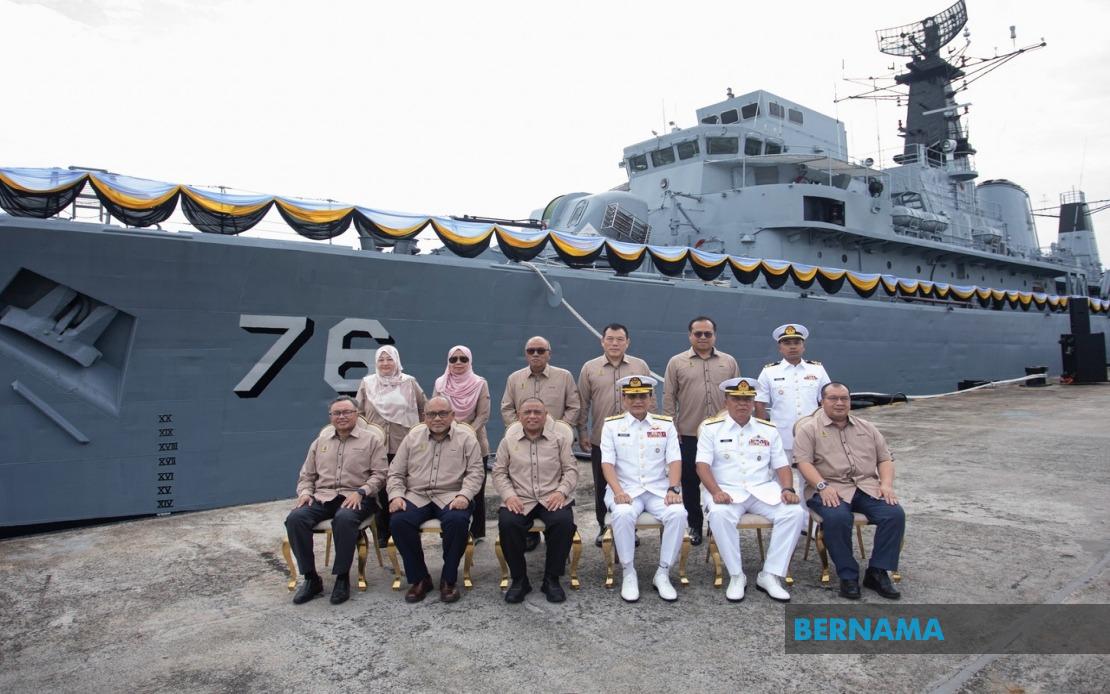
The Perak state government has taken possession of the Ex-Hang Tuah, a decommissioned Royal Malaysian Navy vessel, which will be redeveloped into the Royal Ship Hang Tuah Memorial Museum. The handover ceremony took place on July 27 at the Lumut Naval Base, with the Western Fleet Commander Vice Admiral Datuk Baharudin Wan Md Nor representing the RMN. Menteri Besar Datuk Seri Saarani Mohamad confirmed that the ambitious initiative aims to create a significant new tourism destination while honouring the contributions of naval personnel to Malaysia's maritime security.
The converted museum is scheduled to welcome visitors in 2027 and represents a multifaceted approach to heritage preservation and regional economic development. Rather than allowing the historic vessel to fall into disrepair, the state government has envisioned a comprehensive project that weaves together historical narratives, educational programming, visitor attractions and tangible community benefits. This approach reflects a growing recognition among Malaysian policymakers that heritage assets, when properly activated, can generate meaningful economic returns whilst strengthening cultural connections to national identity.
The development will occur through a public-private partnership arrangement between Menteri Besar Incorporated (MB Inc) Perak and Aero Art Sdn Bhd, with the latter responsible for coordinating project execution. The initial phase alone carries a projected cost of RM30 million, with implementation occurring incrementally over time. This partnership structure allows the state to leverage private sector expertise and resources whilst maintaining public oversight of this culturally significant asset, a model increasingly favoured across Southeast Asia for heritage tourism projects.
The memorial museum will encompass substantially more than simply preserving the vessel itself. The development blueprint includes a freely accessible public park designed to serve residents and visitors alike, thereby embedding tourism within broader community spaces. A dedicated commercial zone will provide opportunities for local entrepreneurs to establish businesses, whether through food service, souvenir retail or hospitality ventures. The facility will also incorporate family-oriented recreational areas and community gathering spaces, alongside infrastructure for hosting exhibitions, conferences and organised programmes that can extend the venue's appeal beyond maritime history enthusiasts.
For Lumut specifically, this project carries considerable significance for urban revitalisation efforts. The Marina Wing and Esplanade precincts have long held untapped potential as waterfront destinations. By introducing a major heritage attraction with anticipated steady visitor flow, the state government anticipates catalysing broader commercial activity throughout these areas. The resulting foot traffic and visitor spending should stimulate local businesses whilst creating employment opportunities spanning hospitality, retail, food service and tourism-related sectors. This multiplier effect represents the economic logic underlying heritage tourism initiatives across the region.
The initiative aligns with the broader Perak Sejahtera 2030 Plan, the state's medium-term development framework emphasising sustainable growth that delivers tangible benefits to residents. Within this context, the memorial museum represents one component of a larger strategy to diversify Perak's economic base beyond traditional sectors. By expanding maritime tourism offerings, the state can attract visitor spending from both domestic and international tourists, whilst strengthening its competitive position relative to other Malaysian destinations. The integration of heritage preservation with economic development reflects contemporary thinking about sustainable tourism that balances commercial considerations with cultural stewardship.
The military tourism dimension introduced through this project warrants particular attention. Malaysia, like neighbouring countries, possesses rich naval heritage reflecting centuries of maritime engagement. By creating a dedicated space honouring naval service and sacrifice, the memorial museum serves as a public acknowledgment of the Royal Malaysian Navy's ongoing role in protecting national maritime interests and territorial sovereignty. This educational component resonates especially in Southeast Asia, where maritime security concerns remain prominent amid regional geopolitical developments and competing maritime claims.
The Ex-Hang Tuah itself carries historical weight deserving preservation. As naval technology evolves and older vessels reach the end of their operational lives, thoughtful conversion into heritage attractions represents a preferable alternative to scrapping or abandonment. The vessel embodies decades of service and represents tangible connection to naval personnel and their families. Rather than viewing the ship's decommissioning as merely the end of its functional life, the state government has recognised an opportunity to extend its significance into a new educational and cultural context.
From a Malaysian perspective, this project illustrates how regional governments are activating heritage assets to address contemporary development challenges. Perak, like several other Malaysian states, has sought to diversify its economic profile and enhance its tourism competitiveness. The transformation of a naval vessel into a functioning cultural institution demonstrates creative thinking about resource utilisation. It also reflects broader Southeast Asian trends toward heritage-based tourism, as nations increasingly recognise that cultural attractions command visitor spending comparable to conventional leisure destinations.
The 2027 opening timeline provides a reasonable implementation horizon for a project of this scope. Three years allows adequate time for architectural planning, securing necessary approvals, managing public-private coordination and executing construction work. The phased implementation approach suggests realistic recognition of funding constraints and construction challenges. For Malaysian readers, particularly those in Perak, the project represents a concrete instance of how maritime heritage can be commercially activated whilst serving educational and community purposes.
The success of this venture will partly depend on effective marketing and programming strategies post-opening. Simply preserving the vessel and constructing surrounding facilities will prove insufficient without sustained efforts to attract and retain visitor interest. The state government and private partner will need to develop compelling exhibitions and experiences that resonate with diverse audiences—schoolchildren, history enthusiasts, tourists seeking unique experiences, and families. Regular programming including lectures, temporary exhibitions, educational workshops and cultural events will be essential to maintaining momentum beyond the initial novelty period.
Looking ahead, the memorial museum concept has potential replication value across Southeast Asia. Other nations possess decommissioned naval vessels that could similarly be converted into heritage attractions. The Perak model—combining public park access, commercial opportunities for local entrepreneurs, educational programming and military commemoration—offers a template worthy of study by other jurisdictions considering similar projects. If successfully implemented and managed, the Royal Ship Hang Tuah Memorial Museum could become a marquee cultural attraction whilst demonstrating how thoughtful heritage preservation can align with regional economic development objectives.

