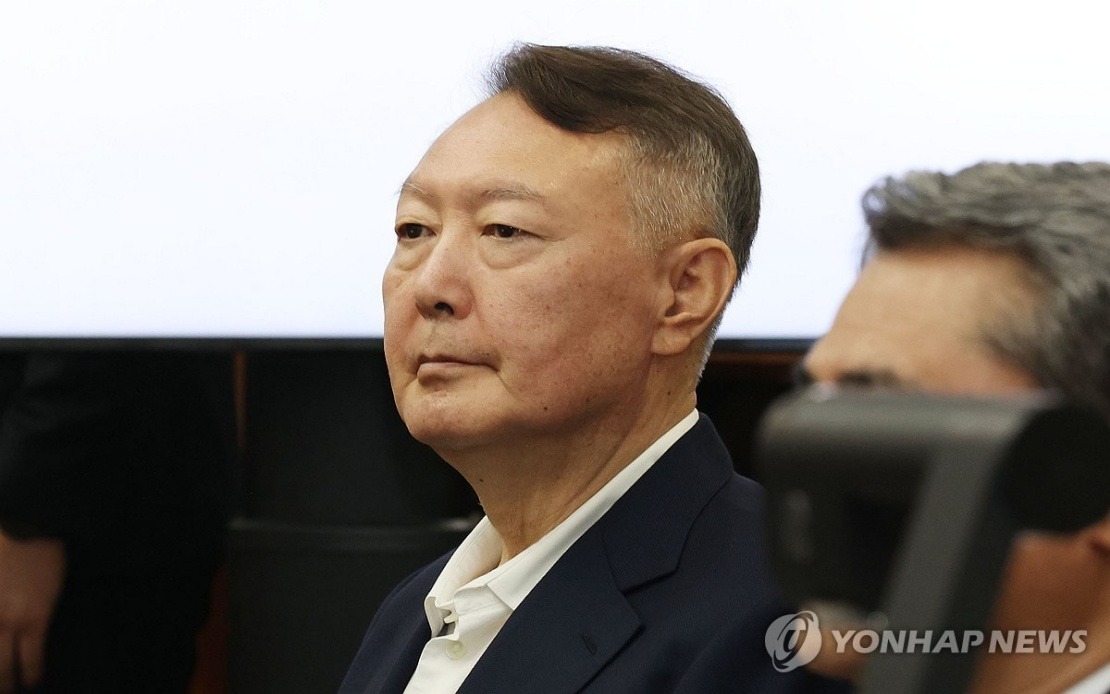
A Seoul court has delivered a significant political blow to South Korea's main opposition People Power Party by convicting former President Yoon Suk Yeol of election law breaches on Monday, a development with far-reaching consequences for the party's finances and his political legacy. The Seoul Central District Court found Yoon guilty of making deliberately false statements while serving as the PPP's presidential candidate before the March 2022 election, imposing an 18-month prison sentence that has been suspended for three years. This conviction sets in motion a financial penalty that could reshape opposition party politics in Seoul: if the verdict withstands appellate review, the PPP will be compelled to return approximately 39.7 billion won (US$27.3 million) that was reimbursed as campaign expenses following Yoon's electoral victory that year.
The legal framework underpinning this potential financial recovery illustrates how South Korea's election laws hold political parties accountable for dishonesty by their candidates. Under the election law regime, parties receive reimbursement for campaign spending when their presidential contender crosses the 15 per cent vote threshold. However, this windfall comes with strict conditions: if the candidate subsequently receives a finalised criminal fine exceeding 1 million won or a prison sentence specifically for election law violations, the entire reimbursement must be surrendered to the state. Yoon's conviction now triggers this mechanism, creating substantial financial exposure for the PPP—a sum that represents a meaningful portion of campaign budgets and could constrain the party's operations during the coming political cycle.
The specific allegations centred on two instances where prosecutors argued Yoon deliberately disseminated false information to influence voters. During a December 2021 press event, the former president claimed he had never made an introduction between a lawyer and a former tax official—a statement special counsel Min Joong-ki's team alleged was patently untrue. In a separate instance the following January, Yoon gave a media interview in which he stated that a party official rather than his own wife had introduced him to shaman Jeon Seong-bae, and he categorically denied meeting Jeon alongside his spouse, Kim Keon Hee. The court sided entirely with the prosecution's counter-narrative, determining that Yoon had indeed performed the lawyer introduction and that his wife had been present during his encounter with the shaman.
Judges articulated a harsh assessment of Yoon's conduct, emphasizing that the gravity of his deception extended beyond ordinary political exaggeration. The court stated that the nature of the offence was particularly egregious because false information relating to matters of substantial voter concern had been disseminated into the public domain. This judicial language underscores a principled distinction between typical campaign rhetoric and deliberate fabrications about matters the court deemed consequential to electoral decision-making. Prosecutors had sought a harsher punishment, requesting a two-year prison term, indicating they viewed Yoon's dishonesty as warranting tougher consequences than the court ultimately imposed.
Yoon's legal team has signalled their intention to challenge the verdict through the appellate process, asserting that the ruling contains multiple substantive and procedural errors. This appeal will now enter South Korea's judicial pipeline under statutory constraints that mandate resolution on demanding timelines. Under the special counsel law governing Min's investigations, cases in the appellate phase must be concluded within three months, with any Supreme Court review requiring another three-month window. If the case proceeds to the nation's highest court, legal observers anticipate a final determination by January of next year, though the suspension of the sentence means Yoon will not immediately enter incarceration regardless of the outcome at this stage.
This conviction arrives amid an extraordinary period of legal jeopardy for the former president. Yoon has been incarcerated and is currently navigating multiple concurrent trials stemming from his ill-fated attempt to impose martial law in December 2024. In a particularly severe outcome from that separate proceeding, he was sentenced to life imprisonment in February for leading an insurrection through the failed martial law decree, a conviction he is also appealing. The election law case, while less severe in its immediate custodial implications due to the suspended nature of the sentence, carries distinct symbolic and political weight because it directly concerns the legitimacy of his electoral victory and the integrity of the campaign process that brought him to power.
For Malaysian and Southeast Asian observers of Korean politics, this case illuminates the tensions inherent in democracies attempting to police electoral conduct while protecting political speech. South Korea's election law framework demonstrates a commitment to punishing deliberate fabrications by candidates—a standard higher than mere partisan spin or contested interpretation of facts. Yet the application of such laws inevitably raises questions about definitional boundaries and the subjective nature of determining what constitutes prosecutable falsehood versus permissible campaign positioning. The fact that Yoon's statements involved matters that prosecutors and judges deemed sufficiently material to voters suggests a system willing to scrutinize candidate claims closely, a posture that both strengthens electoral integrity and creates potential avenues for politically motivated prosecutions depending on how judges interpret evidentiary thresholds.
The financial ramifications for the PPP warrant close attention from political finance observers across the region. The loss of 39.7 billion won, if the verdict becomes final, represents approximately US$27.3 million—a substantial sum that would diminish the party's campaign treasury at a politically sensitive moment. In comparative perspective, such forced repayments are rare instruments in most Asian democracies, making South Korea's approach distinctive. The mechanism serves as a powerful deterrent against campaign dishonesty because it distributes punishment not only to the individual candidate but to the entire party organization, creating internal incentive structures for vetting candidate claims before public disclosure. For parties in other democracies, this model presents both cautionary lessons and potential policy innovations.
The timeline for resolution of Yoon's various legal troubles remains compressed by the statutory frameworks governing special counsel investigations and appellate procedures. His legal strategy has consistently centred on appealing unfavourable verdicts at every stage, a posture that may produce some tactical delays but ultimately cannot indefinitely forestall judicial finality given the time-bound nature of the special counsel law. The concentration of multiple serious cases—ranging from the election law violations to the much more grave insurrection charge carrying a life sentence—creates an unusual scenario where a single legal actor faces simultaneous exposure across the entire spectrum of democratic accountability mechanisms, from electoral integrity enforcement to the prosecution of political violence.
Yoon's political standing and that of his party face cumulative damage from these proceedings, regardless of how appellate courts ultimately rule. The public perception of dishonesty in campaign-period statements, reinforced by a court judgment finding him guilty, creates reputational costs that transcend whatever criminal consequences may ultimately follow. For the PPP, the prospect of campaign fund repayment adds concrete financial losses to the broader political capital expended in defending the former president through multiple trials. The intersection of criminal liability, party financial exposure, and reputational damage creates a compounding effect that illustrates how electoral systems with robust accountability mechanisms can impose consequences extending far beyond individual penalties to reshape party-level incentives and resources.
Looking forward, this conviction contributes to an accumulating legal record that may influence how South Korean voters, political institutions, and democratic observers assess the relationship between electoral conduct and subsequent political legitimacy. Whether the courts ultimately uphold this conviction through final appellate judgment will partially determine the scope of the PPP's financial obligations, but the court's willingness to convict on election law charges has already redrawn some contours of political accountability in Seoul. For Southeast Asian democracies grappling with their own questions about candidate integrity and party finance transparency, the Korean case offers a concrete example of how judicial systems can enforce electoral standards, while also demonstrating the complexity and extended timeline required to move from prosecution through final judgment in high-stakes political cases.

