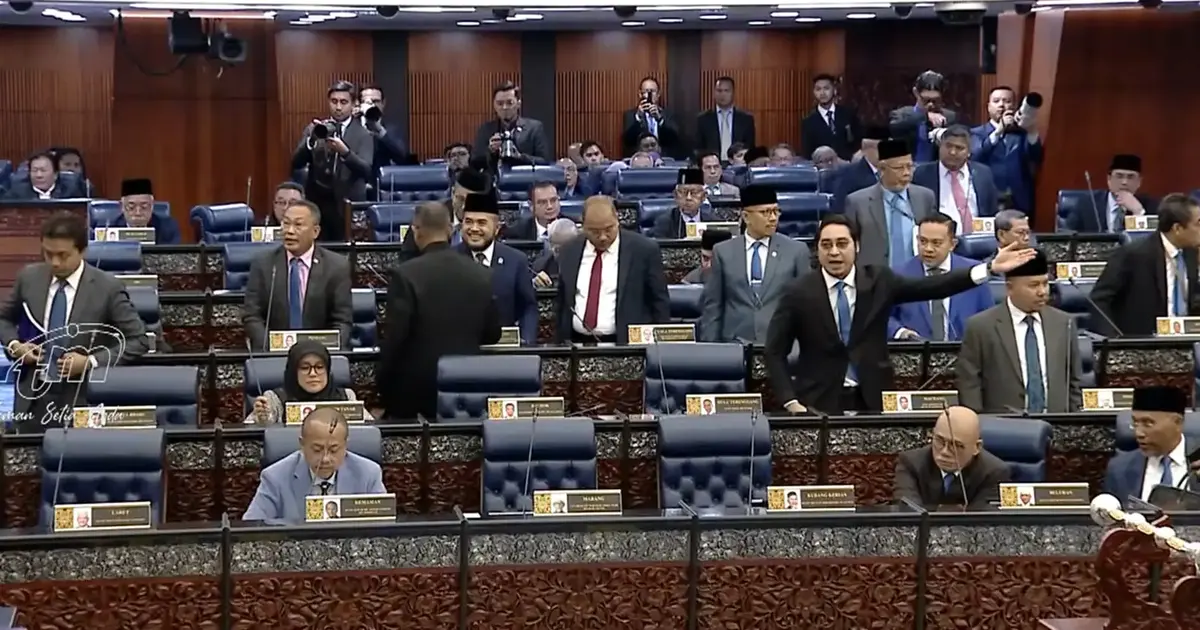
Communications Minister Fahmi Fadzil has highlighted the participatory conduct of Bersatu parliamentarians during proceedings related to the Tabung Haji Royal Commission of Inquiry, drawing a deliberate distinction between their approach and that adopted by other Perikatan Nasional coalition legislators who chose to abandon the sitting.
Fahmi's commendation reflects an emerging fracture within the broader opposition alliance, where individual component parties are increasingly demonstrating divergent political strategies when confronting government-initiated investigative mechanisms. The Tabung Haji Royal Commission inquiry, which focuses on the governance and financial management of the Islamic pilgrimage fund, has become a flashpoint for tensions between the ruling coalition and the opposition bloc, with each side employing distinct tactics to advance their respective interests.
The Bersatu delegation's decision to remain seated throughout the proceedings carries significant implications for coalition cohesion. As Malaysia navigates a period of fragmented parliamentary arithmetic, where no single bloc commands overwhelming dominance, the willingness of individual parties to engage constructively—or conversely, to withdraw—with investigative bodies signals their confidence in either their position or their political calculations. Bersatu's participation suggests calculated confidence in the inquiry's outcome or a strategic preference to maintain engagement channels with governmental processes.
The Perikatan Nasional bloc's partial walkout represents a more confrontational stance, likely designed to delegitimise the inquiry in the eyes of supporters or to disrupt proceedings as a protest against what they perceive as a politically motivated investigation. This departure from the chamber has become an increasingly common tactic within Malaysian opposition politics, serving both as a symbolic rejection of perceived injustice and as a means of generating media attention for grievances without requiring substantive engagement with institutional mechanisms.
Fahmi's praise for the Bersatu contingent should be understood within the context of governing coalition dynamics. By publicly recognising Bersatu's cooperative approach, the communications minister signals approval of opposition members who prioritise institutional engagement over theatricality. This diplomatic acknowledgment may serve to widen existing cracks within the Perikatan Nasional alliance, particularly between Bersatu—which has previously demonstrated flexibility in its political positioning—and more ideologically rigid coalition partners.
Tabung Haji itself remains a deeply sensitive institution in Malaysian politics. The pilgrimage savings fund manages substantial resources allocated by Muslim depositors across the nation, making its governance a matter of considerable public concern. Any perception of mismanagement or impropriety triggers intense public reaction, particularly among middle-class and working-class Muslims who depend on Tabung Haji for their hajj aspirations. An investigation into the institution therefore carries weight beyond typical parliamentary inquiries, touching on religious sensibilities and personal financial anxieties.
The Royal Commission of Inquiry mechanism represents one of Malaysia's formal investigative tools, typically reserved for matters of significant public importance. The choice to establish such a body regarding Tabung Haji underscores governmental concern about the institution's operations, though critics in the opposition contend that the timing and composition of such inquiries often reflect partisan considerations rather than purely technical requirements.
Bersatu's positioning within this controversy merits closer examination. The party, which separated from United Malays National Organisation to form the backbone of the Perikatan Nasional coalition, has demonstrated a pattern of pragmatic political maneuvering. Its decision to participate in the Tabung Haji inquiry sitting, despite coalition pressure to boycott, may indicate either confidence in exonerating evidence or strategic calculation that wholesale non-engagement would prove politically counterproductive among constituents dependent on the institution.
The broader implications for Malaysian governance extend beyond this single inquiry. Parliament functions optimally when all stakeholders engage with investigative mechanisms, however controversial their findings may prove. The practice of walkouts, while dramatic and symbolically powerful, undermines the institutional legitimacy that elected bodies require to function effectively. Fahmi's commendation of Bersatu suggests that within the current administration, there exists appreciation for opposition members who maintain institutional engagement rather than resort to boycotts.
Looking ahead, the Tabung Haji inquiry's findings will likely generate significant political reactions. Should the investigation uncover substantial governance failures, opposition parties will leverage these discoveries to challenge government competence. Conversely, should the inquiry find limited wrongdoing, the government may cite opposition walkouts as evidence of their unwillingness to face scrutiny. Bersatu's attendance positions the party to claim engagement with the truth-seeking process regardless of eventual outcomes, a hedging strategy characteristic of parties navigating complex coalition politics.
The communications minister's statement also reflects broader governmental messaging around accountability and transparency. By praising constructive engagement, Fahmi subtly encourages a narrative wherein governmental processes represent legitimate frameworks for addressing public concerns, provided participants approach them seriously rather than dismissively. This framing becomes particularly important in Southeast Asia, where public confidence in institutions requires consistent demonstration of good faith from both government and opposition actors.
As Malaysian politics continues to evolve within a multipolar parliamentary landscape, gestures like Fahmi's recognition of Bersatu cooperation acquire expanded significance. They signal to smaller parties that principled engagement with institutional mechanisms generates recognition and potential political rewards, potentially reshaping how the opposition bloc coordinates future responses to government-initiated investigations.

