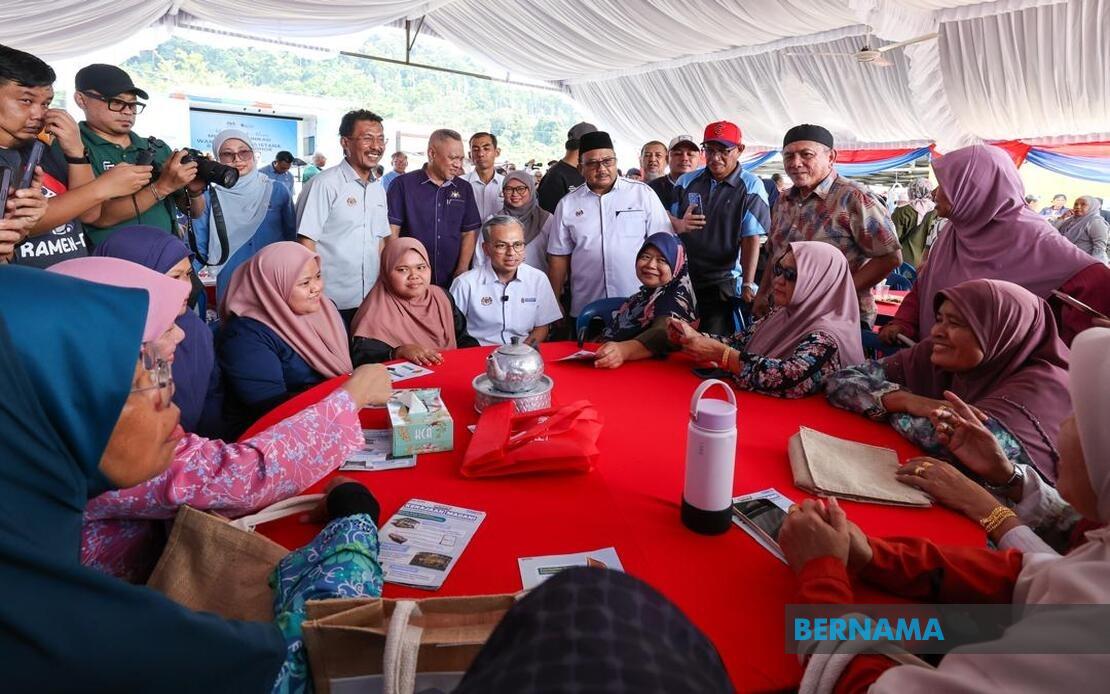
Pakatan Harapan's Communications director and Minister Datuk Fahmi Fadzil has defended the coalition's decision to unveil its 'Johor for All' manifesto on Friday, arguing the timing coincided appropriately with the second week of the state election campaign. Speaking during a walkabout in Batu Pahat on July 4, Fahmi dismissed concerns that the delayed rollout would hamper PH's electoral momentum, characterising such criticism as disconnected from ground realities.
The manifesto launch had drawn scrutiny from within the opposition itself, with former Bangi MP Ong Kian Ming warning that slower preparation could disadvantage PH's campaign machinery against Barisan Nasional. Ong had specifically flagged several perceived vulnerabilities: the absence of a named menteri besar candidate, insufficient presence of senior party figures in contested seats, weak campaign messaging, and what he saw as tardy manifesto deployment. These factors, he predicted, would translate into a landslide defeat for the coalition in the July 11 state election across 56 seats.
Fahmi countered by emphasising PH's methodical approach to policy finalisation. The Communications Minister explained that the coalition had prioritised comprehensive content development and obtained explicit endorsement from senior leadership, including Prime Minister Datuk Seri Anwar Ibrahim, before making the document public. Rather than indicating weakness or poor planning, Fahmi framed this deliberative process as evidence of serious governance intent. He positioned the Friday launch as strategically sound, arguing it allowed PH time to introduce candidates first before moving into the manifesto presentation phase.
The minister's comments came during a community engagement session in Kampung Istana, where he shared the platform with Felicia Poh Rui Ling, PH's candidate for the Penggaram state seat, and Communications Ministry secretary-general Datuk Abdul Halim Hamzah. This grassroots focus reflected PH's strategy of maintaining direct voter contact even as broader campaign narratives drew elite-level scrutiny.
Fahmi also took the opportunity to rebut criticism from former UMNO Youth leader Khairy Jamaluddin, who had characterised the PH manifesto as a "copy and paste" exercise mirroring BN's platform. Rather than engaging directly with the substance of Khairy's allegation, Fahmi pivoted toward a comparative observation about campaign vigour. He noted that Khairy appeared to be canvassing more energetically than Johor Menteri Besar Datuk Onn Hafiz Ghazi, the chief BN spokesperson for the state contest. Fahmi went further, suggesting that if Onn Hafiz possessed Khairy's political acumen and public standing, the outcome might look different—before offering a barbed inversion: that Onn Hafiz might benefit from borrowing Khairy's dynamism.
This indirect approach reflected broader intra-coalition dynamics within BN, where UMNO's dominance has coexisted with concerns about the menteri besar's profile and campaign effectiveness. The comment signalled to observers that PH was noting fissures within the ruling coalition, even as it faced its own internal pressures.
Fahmi addressed another significant challenge facing the coalition: fallout from social media allegations concerning Democratic Action Party (DAP) leadership's stance on a presidential pardon for former Prime Minister Datuk Seri Najib Tun Razak. Former Skudai assemblyman Marina Ibrahim had recently posted that she was withdrawing from politics, citing disillusionment with what she termed the "charade" of DAP's handling of the pardon issue. Such departures, particularly involving long-serving incumbents, can signal deeper grassroots dissatisfaction and provide ammunition for opposition attacks.
Yet Fahmi expressed confidence that these tensions would not derail PH's campaign. His optimism rested primarily on observable turnout at coalition events across the campaign trail, which he characterised as displaying strong and consistent grassroots enthusiasm. He cited Ng Yak Howe, PH's DAP-affiliated candidate for the Bentayan state seat, as evidence that the party's presence remained robust despite the controversy. By invoking concrete attendance figures and voter energy rather than abstract assurances, Fahmi attempted to reframe the narrative around DAP's internal difficulties as manageable rather than catastrophic.
The Johor state election represents a critical test for both coalitions. With 172 candidates vying across 56 seats, and early voting scheduled for July 7 before general polling on July 11, the contest carries implications well beyond Johor's boundaries. For PH, the election tests its capacity to govern outside its strongholds on Peninsular Malaysia's western coast and to compete against BN in a state where the latter has traditionally dominated. For BN, victory would reinforce its electoral resilience despite ongoing federal-level challenges.
Fahmi's defence of the manifesto launch timing, while seemingly procedural, actually touches on deeper strategic questions about campaign sequencing and message coherence. In contemporary Malaysian elections, the first fortnight of campaigning typically determines whether candidates and messaging frameworks gain traction, making timing genuinely consequential. The minister's insistence that the coalition had prioritised quality over speed suggests confidence in the manifesto's substantive content to move voters once introduced.
However, the persistence of questions about manifesto timing, leadership visibility, and internal party management indicated that PH continued operating in a compressed timeframe. With just over a week until polling day when these comments were made, the coalition had limited runway to build momentum from its now-launched platform. How effectively the manifesto's contents resonated with Johor voters—particularly in contests where BN's incumbency advantage traditionally looms large—would ultimately determine whether Fahmi's strategic judgement proved sound or merely optimistic.

