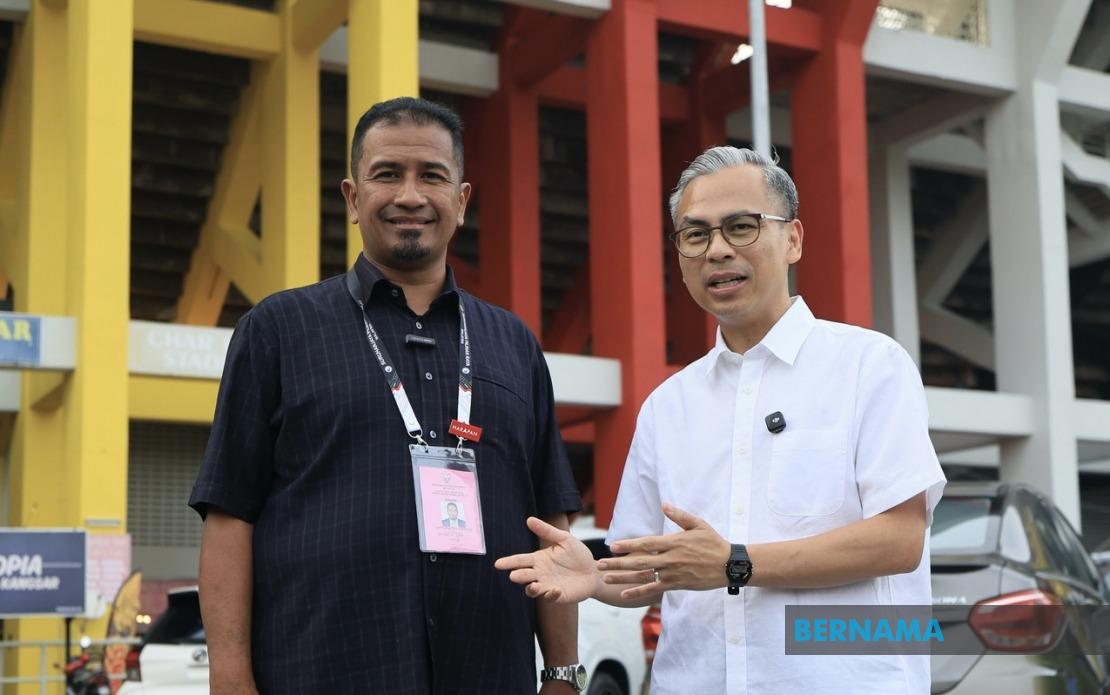
Communications Minister Datuk Seri Fahmi Fadzil has issued a strong appeal for all political parties to maintain campaign standards during the Negeri Sembilan state election, emphasising that contest should revolve around substantive ideas and verifiable facts rather than personal attacks or destructive behaviour. The call comes in response to incidents involving vandalism of campaign materials belonging to a Pakatan Harapan candidate, highlighting growing concerns about conduct standards as the August 1 election approaches.
The billboards damaged belong to Rantau state constituency candidate Dr Azizul Hakim Mahdi, whose campaign infrastructure has become a target for vandalism during the ongoing campaign period. Evidence of these incidents has circulated on social media platforms, with several posts purporting to show individuals in the act of defacing the promotional materials. Rather than pursuing these matters through political channels, Fahmi indicated that authorities have been informed and will investigate the incidents according to law, noting that vandalism and sabotage constitute criminal offences that warrant formal investigation.
Fahmi's remarks were delivered during a campaign visit to Seremban, where he accompanied Nur Azman Mohamad, the Pakatan Harapan candidate for the Sikamat state seat, during a walkabout at Paroi Stadium. His intervention reflects broader concerns within the ruling coalition about maintaining electoral propriety and preventing the campaign from descending into confrontational tactics that could undermine democratic norms. The minister explicitly encouraged all competing parties to raise their campaign standards and resist the temptation to employ sabotage as a political weapon.
The vandalism incidents represent a test of the election commission's capacity to manage fair competition and protect candidates' rights to campaign without fear of property damage or intimidation. For Malaysian voters observing the contest, such behaviour raises questions about the maturity and responsibility of various political actors. Fahmi's decision to publicly address the issue signals that the Pakatan Harapan coalition will not tolerate such conduct passively and expects the electoral apparatus to respond appropriately.
Looking at the broader campaign trajectory, Fahmi suggested that the election race remains in its early phases, with political parties not yet fully mobilizing their resources and messaging strategies. He characterised the current campaign intensity as relatively measured, comparable to vehicles running in lower gears with substantial room for acceleration in coming weeks. This assessment suggests that the campaign could grow significantly more intense and contested as voters approach the final decision point, making questions of campaign civility increasingly salient.
Prime Minister Datuk Seri Anwar Ibrahim has already begun intensifying his personal campaign presence, with multiple appearances scheduled across different locations to amplify the governing coalition's message. Fahmi indicated that additional party leadership will join the campaign trail in the coming days, signalling a coordinated effort to elevate Pakatan Harapan's visibility and engagement with voters. This escalation of high-level political engagement reflects the strategic importance of the Negeri Sembilan contest within the broader Malaysian political landscape.
The Election Commission has structured the campaign timeline to culminate in voting on August 1, with early voting opportunities available to certain eligible voters on July 28. This compressed timeline creates pressure for campaigns to achieve maximum impact within a relatively brief window, potentially increasing incentives for aggressive or inappropriate tactics. Fahmi's proactive messaging about campaign standards appears designed to establish clear norms before the final intensive phase of competition.
For Malaysian democracy, the outcome of how political parties respond to this call for restraint carries significance beyond the immediate Negeri Sembilan contest. The state election serves as a test case for whether Malaysian politics can sustain competitive campaigns without descending into vandalism, intimidation, or other destructive practices. International observers and regional democratic institutions often scrutinize such details when assessing the health of electoral processes.
The Negeri Sembilan election also carries implications for federal political dynamics, as state-level contests frequently influence broader power balances and voter sentiment toward national leadership. A campaign marred by vandalism and sabotage could damage public confidence in the electoral process and create cynicism among voters who expect political competition to occur within established rules. Conversely, a campaign characterised by substantive policy debate and respectful competition could reinvigorate public engagement with democratic participation.
Fahmi's intervention reflects the Pakatan Harapan coalition's interest in maintaining the moral high ground in political competition, particularly given its positioning as a reformist alternative. By calling for elevated standards and entrusting investigations to authorities rather than pursuing political revenge, the government seeks to demonstrate that it operates with greater maturity and respect for democratic norms than competitors. This approach also potentially raises public expectations for all parties' conduct, creating reputational pressure to comply.
The broader message from the Communications Ministry appears calibrated to appeal to Malaysian voters' presumed preference for campaigns focused on governance, economic development, and policy alternatives rather than personal attacks or destructive behaviour. As the campaign enters its final phase, Fahmi's remarks will likely be cited whenever instances of inappropriate conduct emerge, establishing a benchmark against which all parties' behaviour will be measured by both voters and media observers.

