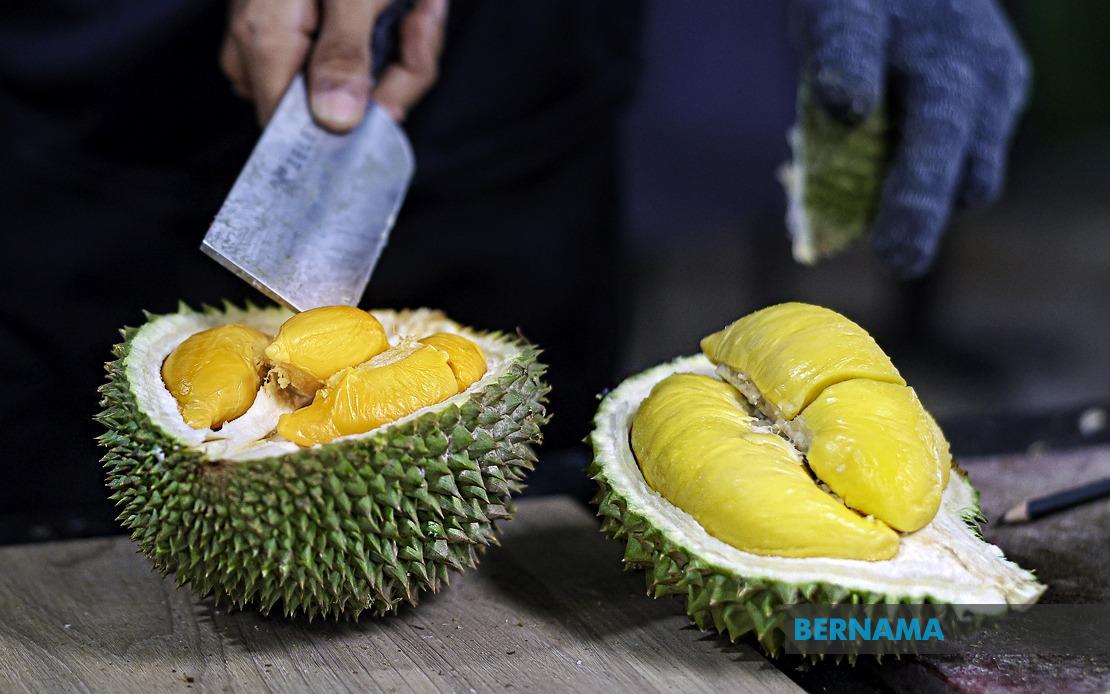
The Federal Agricultural Marketing Authority (FAMA) is preparing to fortify Penang's durian sector during the forthcoming peak sales period from June through August, launching a comprehensive marketing and intervention strategy designed to stabilise prices and expand market access for local growers. The intensified push comes as the state's production trajectory climbs to an estimated 18,000 metric tonnes this year, representing a modest but meaningful increase from approximately 17,000 metric tonnes in the previous season. Speaking at the launch of the Penang Durian Festival alongside the Road to MAHA 2026 programme at Nibong Tebal, Penang FAMA director Mohd Hafiz Nurulhuda outlined the multifaceted approach to ensure growers receive fair value despite anticipated supply pressures affecting durian markets across major producing regions nationally.
The intervention framework addresses supply-side concerns with particular attention to kampung durian—the traditional, lower-cost variety that comprises roughly 30 per cent of Penang's harvest. While elevated production across Malaysia's traditional durian heartlands threatens to depress prices, Penang's market dynamics remain relatively insulated given its concentration on premium cultivars. The state's reputation for quality fruit has already begun to differentiate its product offering within competitive national and regional markets, providing some natural price resilience that Mohd Hafiz emphasised will limit the severity of supply-driven downturns.
FAMA has committed to purchasing approximately 85 metric tonnes of durian through forward agreements with growers, providing production certainty at a time when oversupply anxieties could otherwise prompt hasty, below-cost sales. More significantly, the authority has established a protective price floor of RM2.70 per kilogramme for kampung durian varieties, guaranteeing growers a minimum return should market prices deteriorate. This safety-net mechanism shields smallholders and traditional producers from catastrophic revenue collapses, a critical protection for farming families whose livelihoods depend on seasonal harvests. Premium varieties including Black Thorn and Musang King have maintained robust pricing between RM30 and RM40 per kilogramme, reflecting strong domestic and export demand for Malaysia's signature fruit brands.
Physical infrastructure expansion represents a second pillar of FAMA's strategy, with two temporary collection centres now operating in Balik Pulau and Seberang Jaya to consolidate production and streamline distribution logistics. These facilities have processed approximately 50 metric tonnes since the season commenced, representing improved throughput that reduces post-harvest losses and transport inefficiencies endemic to scattered farm-level sales. The authority has simultaneously supplied 310 metric tonnes to its network of marketing outlets, effectively bypassing middlemen and directing revenue toward producers. Strategic expansion of direct sales channels into the Klang Valley, Malaysia's largest metropolitan consumption centre, positions Penang durians to capture higher margins from urban consumers willing to pay premium prices for certified quality and fresh provenance.
Beyond immediate commercial objectives, FAMA is investing in longer-term sectoral development through agro-tourism initiatives and orchard facility upgrades. These initiatives recognise that Penang's durian industry requires transformation beyond commodity production toward experiential and value-added economics. Agro-tourism projects create supplementary revenue streams while elevating the state's profile as a premium durian destination—a positioning that differentiates Penang from competitors in Johor, Pahang, and Terengganu. Improved orchard infrastructure enhances production quality, enables climate-resilience investments, and signals to investors that Penang intends to maintain technological parity with global agricultural standards. This developmental vision acknowledges that Malaysian durian producers face mounting competition from Thai suppliers, particularly in Southeast Asian export markets where price sensitivity constrains Malaysian competitiveness.
The timing of FAMA's intensified intervention reflects broader economic considerations for Penang's agricultural sector, which has faced structural pressures from urbanisation and land conversion. Durian production represents a high-value exception to agriculture's declining contribution to state GDP, generating employment across farming, processing, transport, and hospitality sectors. The crops' reputation for quality creates natural price premiums unavailable to commodity staples, and Penang's geographic proximity to major consuming centres reduces transport costs relative to more distant producers. Supporting this sector through market interventions aligns with state government objectives to maintain agricultural viability and rural employment, themes that Chief Minister Chow Kon Yeow emphasised during the festival launch.
FAMA's approach also reflects recognition that Malaysian durian growers operate within increasingly sophisticated global supply chains. Export-oriented producers targeting Singapore, Hong Kong, and Chinese markets require consistency, quality certification, and reliable supply volumes—characteristics that individual smallholders struggle to deliver alone. Centralised collection and marketing infrastructure enhances aggregation capacity, enabling FAMA to negotiate bulk contracts and access international markets at scale. This institutional framework increasingly differentiates successful regional producers from those dependent on volatile domestic spot markets. Penang's historical investment in horticultural excellence positions it to capitalise on these opportunities, provided supply-chain coordination and quality assurance receive sustained official support.
The broader sectoral context reveals durian marketing as a proxy for questions regarding Malaysia's agricultural future. As demographic trends and educational attainment push younger Malaysians away from farming, maintaining producer viability through improved market access and price supports becomes essential for sustaining the sector. FAMA's interventions acknowledge that markets alone do not automatically deliver sustainable incomes for smallholders, particularly when oversupply conditions depress prices below production costs. Strategic buying programmes, price floors, and infrastructure investment represent conscious policy choices to correct market failures and preserve a sector with deep cultural significance alongside genuine economic value.
For Malaysian consumers and exporters alike, FAMA's Penang initiative carries implications extending beyond state borders. Penang's success in premium durian marketing strengthens Malaysia's international positioning within a fruit category where the nation commands substantial global market share. Stable producer incomes and improved market conditions encourage continued investment in quality improvement and innovation, maintaining competitive advantage against Thai and Indonesian suppliers. Conversely, failure to support growers during supply-surplus periods risks gradual sector contraction as marginal producers exit farming, eventually tightening supplies and potentially ceding market share to competitors better positioned to capitalise on capacity gaps.
Looking ahead, the effectiveness of FAMA's 2026 intervention programme will largely depend on global market conditions and consumer demand trajectories that remain beyond immediate official control. Rising incomes across Southeast Asian economies favour premium durian consumption, potentially absorbing Penang's increased output without significant price pressure. Conversely, economic slowdown could concentrate demand among price-conscious consumers, amplifying kampung durian oversupply challenges. FAMA's forward contracting and price-support mechanisms provide temporary buffers against such downturns, but long-term sustainability requires complementary investments in value-addition, branding, and export-market development that extend beyond the current intervention framework.

